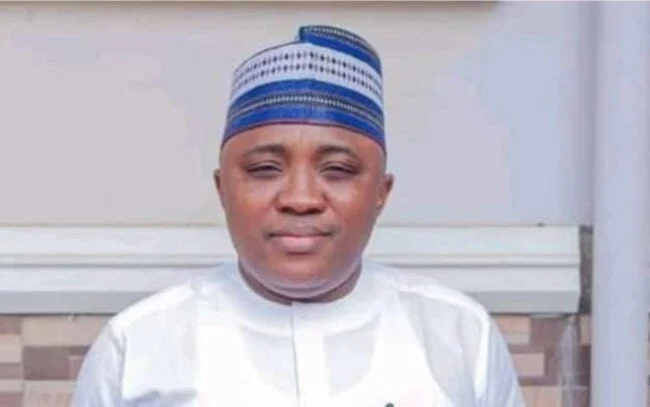
The political landscape in Nigeria frequently serves as a crucible for intense rivalry, where public demonstrations, civic actions, and institutional criticisms often intersect with partisan calculations. Recently, this dynamic came to the forefront when Alhaji Murtala Yakubu Ajaka, a prominent political figure, found himself thrust into a controversy surrounding a public demonstration directed at the Independent National Electoral Commission (INEC). Responding swiftly to claims connecting him to the unrest, Ajaka issued an unequivocal disclaimer, distancing himself entirely from the protests and condemning what his camp described as a calculated campaign of character assassination and political blackmail.
The controversy erupted following a public statement released by a socio-political organization operating under the banner of the "Igala Vanguard." In the publication, which was credited to an individual identified as Engineer Lawrence Ankpa, assertions were made directly linking Ajaka to a recently staged demonstration against the electoral umpire. The demonstration, purportedly organized to voice grievances regarding perceived electoral anomalies or administrative concerns, quickly became a flashpoint for local political friction, drawing scrutiny from various stakeholders across the region.
Main Facts and the Core Disclaimer
According to the official rebuttal issued by Ajaka’s office, the claims made by the Igala Vanguard are entirely false, misleading, and devoid of factual backing. The statement, signed by Prince Tijani Dauda, Head of Media and Public Communications for Ajaka, forcefully stated that the politician neither authorized, sponsored, directed, commissioned, nor coordinated the protest in question.
The media office maintained that linking Ajaka to the actions of independent citizens was a deliberate, malicious attempt to mislead the public and drag his name into an arena of controversy where he has no stake or involvement. The rebuttal emphasized that public demonstrations by citizens are protected expressions of civic engagement and should not be automatically weaponized or attributed to political actors seeking opportunistic leverage.
Furthermore, Ajaka’s camp defended the constitutional right of citizens, particularly youths from the Igala ethnic nationality, to assemble peacefully and express legitimate concerns regarding matters affecting their communities, political representation, and collective future. The statement pointedly questioned the rationale behind automatically tethering the independent actions of aggrieved citizens to Ajaka simply because of his prominent profile in the region’s political hierarchy.
Chronology of Events and the Escalation of Rhetoric
To understand the gravity of the current exchange, it is essential to examine the sequence of events that culminated in the recent media spat. The timeline began with simmering tensions at the grassroots level, driven by community concerns over governance, representation, and the management of electoral processes within the region.
In the weeks preceding the protest, various local groups had expressed dissatisfaction with administrative frameworks and institutional responses to local political developments. These grievances eventually crystallized into a public street demonstration, where participants voiced their discontent outside designated administrative buildings, drawing the attention of law enforcement and local media outlets.
Shortly after the conclusion of the demonstration, the Igala Vanguard published its statement attributing the mobilization and logistical backing of the protest to Alhaji Murtala Yakubu Ajaka. This publication gained traction across various digital platforms and local news outlets, prompting immediate concern within Ajaka’s political network. Recognizing the potential fallout of allowing such allegations to go unchallenged, Ajaka’s communications team prepared and disseminated a comprehensive counter-statement within 48 hours of the initial publication, effectively halting the unverified narrative from cementing itself in public discourse.
Background Context: The Role of INEC and Civic Protests in Nigerian Politics
The Independent National Electoral Commission occupies a uniquely sensitive position within Nigeria’s democratic framework. As the statutory body responsible for organizing, conducting, and supervising national and sub-national elections, INEC is frequently the focal point of public scrutiny. Political actors, civil society organizations, and aggrieved electorates routinely direct their frustrations toward the commission whenever electoral outcomes, administrative procedures, or structural policies fail to meet their expectations.
In recent years, the intersection between political figures and public protests targeting independent institutions like INEC has become increasingly complex. On one hand, freedom of assembly and freedom of expression are guaranteed under Chapter Four of the 1999 Constitution of the Federal Republic of Nigeria (as amended), enabling citizens to voice their discontents without needing clearance from political elites. On the other hand, political elites are frequently accused by opponents of either secretly sponsoring demonstrations to exert pressure on independent bodies or, conversely, being unfairly blamed for organic uprisings driven by genuine public frustration.
In Ajaka’s specific case, his rising political profile, particularly following recent high-profile electoral contests in Kogi State, has made him a frequent subject of intense political posturing. Every major civic event or institutional critique within his sphere of influence is often subjected to hyper-analysis by political opponents seeking to diminish his standing or entangle him in administrative controversies.
Official Responses and Demands for Accountability
Beyond merely denying involvement in the protest, the statement from Ajaka’s media office launched a scathing critique of the methods employed by his detractors. The communications team accused unnamed individuals and opposing political factions of utilizing fictitious associations, pseudo-identities, and shadowy platforms to engage in systematic character assassination.
The statement issued a stern warning to those allegedly operating behind these fabricated fronts, demanding an immediate cessation of the practice of using Ajaka’s name for political propaganda, manufactured controversies, and cheap blackmail. In a bold challenge, the camp dared anyone harboring genuine allegations against Ajaka to step forward openly, drop the veil of anonymity, utilize their real names, and present verifiable facts and concrete evidence capable of withstanding public scrutiny in a court of law or the court of public opinion.
Significantly, the rebuttal also took pains to clarify Ajaka’s official stance regarding the leadership and institutional integrity of the electoral commission. Far from being an adversary to the electoral body, the statement underscored that Ajaka holds the Chairman of INEC and the entire commission in high esteem. He reportedly respects the immense constitutional responsibilities entrusted to the electoral leadership and maintains unwavering confidence in the capacity of the institution to discharge its duties with fairness, professional rigor, and strict adherence to the rule of law.
Broader Impact and Implications for Regional Politics
The fallout from this incident highlights several broader implications for political communication, civic engagement, and governance in Nigeria. First, it underscores the growing vulnerability of public figures to targeted disinformation campaigns. In an era dominated by rapid digital communication and social media propagation, unverified claims and statements attributed to pseudo-groups can spread faster than factual rebuttals, necessitating robust, proactive public relations and legal readiness from political actors.
Second, the controversy sheds light on the delicate balance between authentic grassroots activism and political manipulation. When civic groups express genuine grievances, the immediate reflex of opponents is often to search for a political sponsor behind the scenes. This tendency tends to trivialize legitimate public concerns, reducing organic demonstrations of civic dissatisfaction to mere chess pieces in a larger game of elite political chess. By defending the right of Igala youths to protest independently, Ajaka’s camp sought to decouple genuine community advocacy from the partisan fray, even while defending the politician’s own detachment from the specific event.
Finally, the incident reaffirms the importance of institutional respect within Nigeria’s democratic consolidation process. By explicitly praising the constitutional role of INEC and expressing faith in its professionalism, Ajaka sought to reassure stakeholders that his political engagements remain anchored within legal and democratic boundaries, distancing himself from any implication that he seeks to undermine statutory bodies through extra-legal pressure tactics.
Conclusion
As the dust begins to settle on the controversy sparked by the Igala Vanguard’s publication, the episode serves as a cautionary tale regarding the perils of unverified attributions in politically charged environments. Alhaji Murtala Yakubu Ajaka has firmly closed the door on speculations linking him to the anti-INEC demonstration, demanding transparency and accountability from his critics while reaffirming his respect for the nation’s democratic institutions. Moving forward, observers and the general public have been urged to exercise discernment, dismiss misleading narratives, and demand factual substantiation before accepting claims made by anonymous or partisan interest groups.