In an extraordinary convergence of international military administration and British royal family politics, Uganda has officially withdrawn from the Invictus Games. The abrupt policy reversal was orchestrated by General Muhoozi Kainerugaba, Uganda’s Chief of Defence Forces and the son of long-serving President Yoweri Museveni. What began merely two months prior as a celebrated diplomatic and athletic milestone for East Africa—marking Uganda’s historic entry into the international sporting community for wounded, injured, and sick service personnel—has now dissolved into a striking diplomatic maneuver ostensibly rooted in absolute loyalty to the British Crown.
The decision has stunned international observers, sports administrators, and diplomatic circles alike. By explicitly tying a national defense and veterans’ rehabilitation policy to perceived grievances within the House of Windsor, General Kainerugaba has transformed a domestic ideological factionalism within the Ugandan military into an unprecedented foreign policy statement. As international sports federations and Commonwealth nations attempt to decipher the realpolitik behind the decision, the episode underscores the unpredictable nature of civil-military dynamics in contemporary East African politics and the lingering, complex cultural footprint of the British monarchy across the globe.
A Sudden Reversal: Chronology of Uganda’s Short-Lived Invictus Tenure
The trajectory of Uganda’s involvement with the Invictus Games was exceptionally brief, transitioning from groundbreaking regional inclusion to abrupt geopolitical disengagement in a matter of weeks.
The timeline of events highlights the rapid escalation:
- Two Months Prior: Uganda made history by officially joining the Invictus Games community, becoming the first East African nation to participate in the international adaptive sports movement. Defense officials at the time lauded the move as a vital psychological and physical rehabilitation avenue for Ugandan veterans recovering from combat wounds sustained in regional operations, including missions against insurgent groups like the Allied Democratic Forces (ADF) and peacekeeping deployments under the African Union Transition Mission in Somalia (ATMIS).
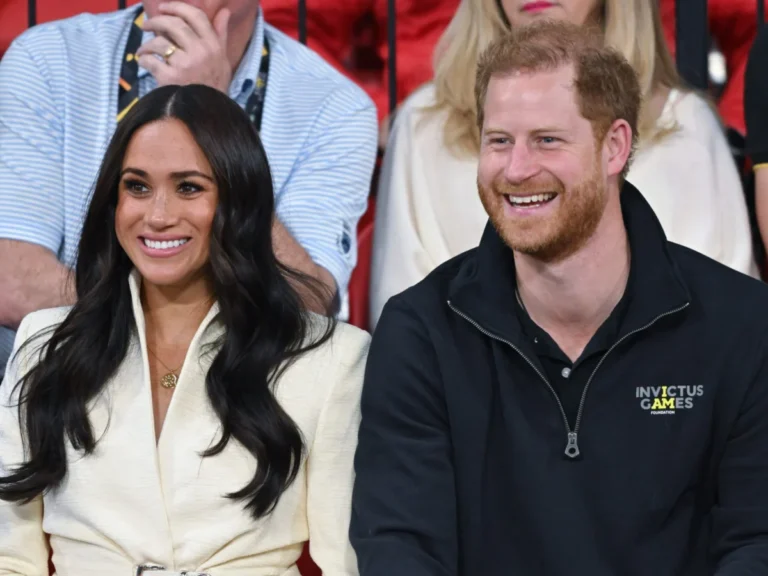
- Recent Weeks: Buckingham Palace issued formal administrative clarifications reiterating that Prince Harry, Duke of Sussex, and Meghan, Duchess of Sussex, operate entirely in a private capacity and are no longer working members of the royal family following their stepping down from royal duties in 2020. This routine institutional boundary setting in London somehow reverberated intensely within military command structures in Kampala.
- The Announcement: General Kainerugaba took to social media and subsequent exclusive interviews to announce the immediate withdrawal of Ugandan forces and veterans from all Invictus-related programming. He justified the move by stating that the nation could not support initiatives lacking the direct sanction of reigning monarch King Charles III.
The General’s Proclamation: Internal Divisions and Uncompromising Royal Allegiance
The catalyst for the withdrawal appears to stem from a sharp internal disagreement within the Ugandan Ministry of Defence. According to statements given by General Kainerugaba to international media outlets such as The Times, military leadership in Kampala was internally divided over whether to maintain ties with an event closely associated with the Duke of Sussex.
Kainerugaba asserted that he personally intervened to suppress pro-participation factions within the defense ministry who favored maintaining involvement, dismissing their stance as supportive of what he colloquially termed "Harry-Meghan nonsense." In a characteristic display of unvarnished commentary, the 52-year-old general firmly declared his stance to the press, stating unequivocally, "I support the monarch. Period."
To prevent any official or public perception that Kampala harbored anti-royal sentiments or opposition to His Majesty King Charles III—whom Kainerugaba claimed the East African military deeply reveres—the high command opted for total disengagement. Consequently, Ugandan wounded veterans have been stripped of the opportunity to compete on an international stage designed to foster resilience, physical recovery, and camaraderie among global military personnel.
The Genesis and Mission of the Invictus Games
Founded in 2014 by Prince Harry, the Invictus Games was inspired by the Prince’s visits to the Warrior Games in the United States, where he witnessed firsthand the transformative and rehabilitative power of adaptive sports for wounded warriors. The word "Invictus," meaning "unconquered," represents the fighting spirit of wounded, injured, and sick service personnel and veterans worldwide.
Over the past decade, the Games have evolved into a premier international sporting event, hosting thousands of competitors from dozens of nations in disciplines ranging from wheelchair basketball and sitting volleyball to indoor rowing and track-and-field events. For developing military establishments, particularly in nations grappling with prolonged counter-insurgency campaigns, participation offers standardized pathways to psychological trauma recovery, peer support, and institutional recognition for sacrifices made in the line of duty.
Uganda’s withdrawal deprives its armed forces of these structured rehabilitation frameworks. Defense analysts note that while Western nations view the Invictus Games as a charitable and therapeutic endeavor championed by a prominent royal patron in a private capacity, certain foreign military leaders interpret the organizational hierarchy through strict diplomatic and state-to-state prisms, mistakenly conflating private philanthropic initiatives with official royal patronage.
General Muhoozi Kainerugaba: Power, Ambition, and Digital Diplomacy
To fully comprehend the weight of this foreign policy intervention, one must examine the unique political architecture surrounding General Kainerugaba. Born in 1974, Kainerugaba is widely regarded as the presumptive successor to his father, President Yoweri Museveni, who has maintained an iron grip on power in Uganda since seizing control through a guerrilla insurgency in 1986.
Kainerugaba’s career has been characterized by rapid military advancement balanced against persistent controversies regarding his political ambitions and social media presence. Appointed Chief of Defence Forces in 2024, he commands the totality of Uganda’s military apparatus. Simultaneously, he has made no secret of his civilian political aspirations, explicitly announcing plans to contest the Ugandan presidency in the 2031 general elections, banking heavily on the foundational political networks established by his father. Although he previously floated campaigns for earlier electoral cycles, including 2026, his strategic alignment toward the next decade signals a calculated transition from military command to outright political succession.
However, Kainerugaba’s tenure as a public figure has repeatedly courted international controversy, largely driven by uninhibited commentary on digital platforms:
- The 2022 Kenya Crisis: While serving as commander of Uganda’s land forces, Kainerugaba published a series of provocative social media posts threatening to invade neighboring Kenya and capture the capital city of Nairobi within weeks. The diplomatic fallout forced President Museveni to issue formal apologies to Nairobi and temporarily restrict his son’s public communications.
- Domestic Political Confrontations: Kainerugaba has consistently locked horns with Uganda’s domestic political opposition, most notably popular musician-turned-politician Robert Kyagulanyi, widely known as Bobi Wine, who leads the National Unity Platform (NUP) and represents the most potent electoral threat to the ruling National Resistance Movement (NRM).
- Geopolitical Posturing: The general has frequently weighed in on complex international geopolitical conflicts, offering blunt assessments that often complicate Uganda’s official diplomatic alignments with Western partners, regional neighbors, and multilateral bodies.
Implications for Uganda’s Foreign Relations and Military Strategy
The decision to pull out of the Invictus Games over royal family politics carries multiple layers of implication for Uganda’s international standing and military administration.
First, the move illustrates the extent to which personalization of power can dictate state actions down to minor international sporting affiliations. A decision that would typically be handled by sports ministers, veterans’ affairs directorates, or logistics officers was instead unilaterally resolved by the nation’s highest-ranking military general through the lens of personal ideological alignment with the British Crown.
Second, it highlights the delicate and often paradoxical nature of post-colonial diplomatic optics in East Africa. While modern Uganda maintains robust trade, security, and developmental partnerships with the United Kingdom, projecting hypersensitivity to internal British tabloid drama and royal family estrangements risks projecting diplomatic unpredictability.
Finally, the withdrawal deals a tangible blow to the morale of Uganda’s active-duty soldiers and veterans. By sacrificing a proven international rehabilitation program in favor of a symbolic gesture of fealty to King Charles III—who himself has no administrative control over or formal association with private foundations run by his relatives—the military leadership has prioritized symbolic geopolitical posturing over the tangible welfare of its wounded troops.
As the dust settles on General Kainerugaba’s latest digital and diplomatic intervention, international sporting bodies are left to adjust to the reality that in Uganda, the line between national defense policy, royal fandom, and succession politics is fainter than ever before.