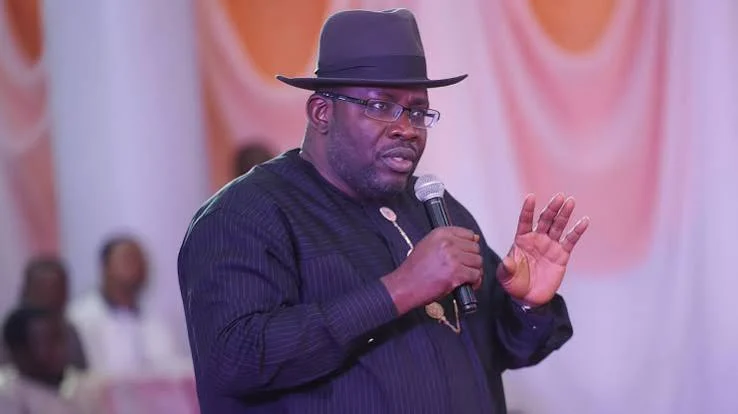
The landscape of Nigerian politics is undergoing a subtle yet profound realignment as opposition parties begin positioning themselves for the high-stakes 2027 general elections. Amidst this flurry of strategic planning, the National Leader of the Nigeria Democratic Congress (NDC), Seriake Dickson, has addressed the growing momentum behind the G100 initiative—a coalition effort aimed at forging a consensus presidential candidate to challenge the ruling administration. Speaking during an appearance on Arise Television’s flagship current affairs program, Prime Time, Dickson articulated the NDC’s nuanced perspective on cross-party collaboration, acknowledging the value of opposition unity while firmly asserting the strength, readiness, and electoral viability of the NDC’s own presidential ticket.
The remarks by the senior political figure shed light on the delicate negotiations currently unfolding behind closed doors within Nigeria’s opposition circles. While collaborative platforms like the G100 seek to aggregate opposition strength to prevent the fragmentation of votes against the incumbent All Progressives Congress (APC) and President Bola Tinubu, individual political parties remain protective of their institutional autonomy and internal candidate selection processes. Dickson’s intervention serves as both an endorsement of the spirit of opposition cooperation and a clear declaration that the NDC views its electoral platform as the premier vehicle for national redemption in 2027.
The Genesis of the G100 Alliance and Opposition Mobilization
The G100 initiative has rapidly emerged as one of the most talked-about political developments in the buildup to the upcoming electoral cycle. The alliance recently made headlines when opposition leaders, strategists, and political stakeholders converged at the prestigious Shehu Musa Yar’Adua Centre in Abuja for the high-profile G100 Alliance Summit. The gathering was designed to serve as a crucible for unity, bringing together critical actors from across the political spectrum to bridge historical divides and formulate a coherent strategy for the 2027 polls.
The Abuja summit notably attracted representatives from at least six distinct opposition political parties. These stakeholders engaged in intense deliberations regarding potential areas of cooperation, resource sharing, policy harmonization, and the ultimate objective of producing a single, consensus presidential candidate. The core philosophy driving the G100 is rooted in the hard-earned lessons of past general elections in Nigeria, where a fractured opposition frequently split the anti-establishment vote, thereby handing advantages to well-entrenched ruling parties.
By attempting to build a formidable, unified political front, the G100 aims to mount a credible and robust challenge against the ruling APC and President Bola Tinubu. Political analysts have long argued that defeating an incumbent administration in Nigeria requires unprecedented levels of institutional discipline, coalition-building, and strategic discipline among opposition factions. The G100’s efforts to establish a common platform are thus viewed as a crucial step toward realizing this strategic imperative, even as formidable logistical and ideological hurdles remain.
Seriake Dickson’s Assessment: Principle Versus Pragmatism
During his comprehensive television interview, Seriake Dickson demonstrated a balanced approach to the G100’s mission, validating the organizers’ intentions while maintaining strict clarity on the NDC’s institutional priorities. Confirming that he had held direct consultations with the conveners of the alliance—specifically mentioning figures such as Saliu and his organizing team—Dickson praised the patriotic commitment of the individuals behind the initiative.
“My friends who are organising the G100 came to see me, Saliu and his people,” Dickson stated during the broadcast. “They are great Nigerians doing a great job, and their thinking is not misplaced. The NDC is aware of the moves and the efforts they are making. The NDC, in principle, endorses what they are doing, and we have made it clear that, well, the general commitments are good. Their assignment really is, they say, the devil is in the details.”
This measured endorsement highlights a pragmatic streak within the NDC leadership. By acknowledging the validity of the G100’s goals in principle, the party avoids alienating reform-minded civil society actors and allied political groups. However, by pointing out that "the devil is in the details," Dickson subtly underscored the immense practical difficulties associated with forcing diverse political parties, egos, and regional interests to surrender their ambitions in favor of a single consensus candidate.
The Strength and Appeal of the NDC Ticket
While validating the broader coalition-building conversation, Dickson was unequivocal regarding the internal stability and political appeal of the NDC. He emphasized that the party has already completed its foundational homework, having settled its presidential ticket well ahead of schedule. According to the NDC National Leader, the party’s chosen ticket represents the most competitive, vibrant, and balanced option available to the Nigerian electorate.
“Our position is very clear,” Dickson asserted. “We have the most exciting ticket. We have the most vibrant ticket. We have an appealing ticket. We have a balanced ticket. We have a ticket that resonates with the Nigerian people at home and abroad. We are the strongest ticket, and I believe that they know that. I believe that every Nigerian knows it. And this is without any form of disrespect or dishonour to any other candidate or any other party.”
This bold assertion reflects the NDC’s broader strategic communication strategy as the 2027 cycle approaches. By projecting absolute confidence in the quality of its candidates, the party aims to position itself as the natural focal point for all anti-establishment and reform-minded sentiment across the country. Rather than viewing the party as merely one component of a larger, cobbled-together coalition, Dickson’s framing casts the NDC as the anchor around which other political forces should naturally gravitate.
The Strategy Moving Forward: Independent Campaign and Open Doors
Balancing institutional pride with electoral mathematics, Dickson outlined a two-pronged approach for the NDC’s 2027 campaign. On one hand, the party is moving full steam ahead with its independent campaign machinery, taking its policy message directly to citizens across the federation and the diaspora. On the other hand, the leadership remains entirely open to external endorsements and collaborative support from other political formations.
“Therefore, we remain committed to working with everybody,” Dickson explained. “In principle, no problem, but we are going into the election as NDC. If other parties and candidates support us, which we think they should do, well and good. But we are working to win the election. But we’ll be happy if they see what we’re doing and endorse us so that we can win the election for the Nigerian people.”
This stance reflects a clear calculation: the NDC believes its structural reach and brand equity make it the most viable opposition platform. Consequently, the party appears disinclined to submerge its identity entirely into a newly manufactured coalition, preferring instead that smaller parties and independent political movements rally behind its established flagbearers. This approach mirrors historical precedents in Nigerian electoral politics, where major opposition parties often absorb smaller factions rather than dissolving into untested third-force alliances.
Broader Implications for Nigeria’s Political Landscape Ahead of 2027
The interplay between grassroots coalition efforts like the G100 and the institutional strategies of major opposition parties like the NDC will likely dictate the trajectory of Nigerian politics over the next several months. As the country grapples with complex socioeconomic challenges—including inflation, fiscal reforms, security concerns, and structural adjustments—the electorate is increasingly looking toward credible, unified political alternatives.
The emergence of initiatives such as the G100 Alliance underscores a widespread consensus among opposition stakeholders that fragmentation is a luxury the political opposition cannot afford against an entrenched incumbent. However, reconciling divergent regional interests, party ideologies, and personal ambitions remains a formidable hurdle. Historical attempts at opposition mergers in Nigeria have frequently encountered turbulence when individual leaders are required to step down for the greater good of a consensus arrangement.
For the NDC, navigating this complex landscape requires walking a strategic tightrope. By expressing principled support for unity initiatives while aggressively marketing its own ticket, the party is attempting to capture the best of both worlds: projecting an image of cooperation and statesmanship while aggressively pursuing its primary institutional goals.
As the electoral timetable advances and political parties begin conducting their formal primaries and convention activities, the true viability of the G100’s consensus model will be put to the test. Whether other major opposition heavyweights will follow the NDC’s lead in asserting their independence or whether genuine compromises will ultimately yield a unified opposition ticket remains one of the most compelling narratives of the current political cycle. For now, the NDC remains steadfast in its course, betting that its vibrant ticket, combined with a receptive electorate, will provide the winning formula required to secure victory at the polls in 2027.