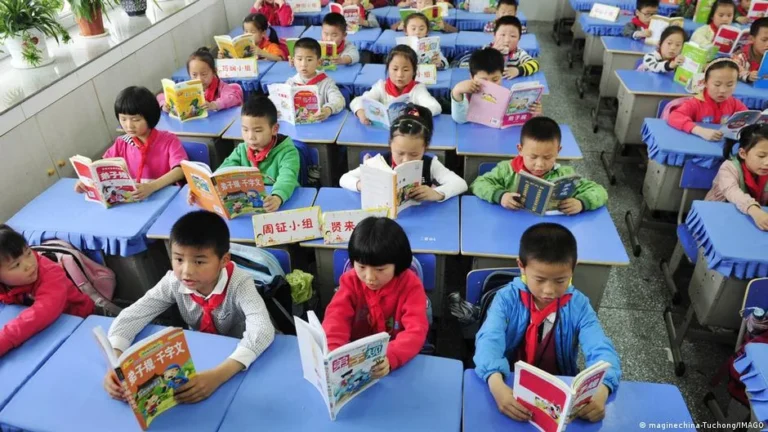
In the interconnected landscape of 21st-century global commerce, academia, and digital communication, English has long reigned as the undisputed lingua franca. With an estimated 1.5 billion speakers worldwide—roughly one in five people on Earth—the language serves as the primary conduit for international discourse. However, within China, a provocative movement led by prominent figures like mathematics professor Tang Jiafeng is challenging the structural dominance of English in the nation’s education system, sparking a nationwide debate over cultural identity, pedagogical efficiency, and China’s future role on the world stage.
The Core of the Controversy
Tang Jiafeng, a respected academic known for his expertise in vector algebra, has ignited public discourse by advocating for the removal of English as a core, compulsory subject in Chinese elementary schools, secondary schools, and universities. Tang’s argument is rooted in the belief that China has placed an unprecedented, and perhaps disproportionate, emphasis on English acquisition compared to any other nation.
"Our children desperately begin learning English even before they have properly mastered their native language," Tang stated in a widely circulated social media post. "Yet we are a civilization that dates back thousands of years. English is just a tool. It is sufficient to be able to use it. The tradition of revering and emulating Western cultures must come to an end."
For critics of the current system, the issue is not the utility of the language itself, but the systemic burden it places on the student body. In China, English is a mandatory component of the curriculum starting in the third grade. It holds significant weight in high-stakes assessments, including the Zhongkao (the entrance exam for secondary school) and the Gaokao (the national college entrance exam), where English accounts for up to 150 points—a score equal to that of Chinese or mathematics.
A Chronology of Educational Policy
The role of English in China has shifted significantly over the past half-century, reflecting the country’s evolving geopolitical strategy:
- 1977: The restoration of the Gaokao after the Cultural Revolution marks the beginning of the modern emphasis on English as a key subject for academic advancement.
- 1980s–1990s: As China implements its "Reform and Opening-up" policy, English proficiency is prioritized to facilitate international trade, scientific exchange, and technological catch-up.
- 2001: China joins the World Trade Organization (WTO), further cementing the status of English as an essential skill for professional competitiveness.
- 2010s: The expansion of English language tutoring becomes a massive private industry, leading to concerns regarding social inequality and the high costs incurred by families.
- 2020s: A rising tide of nationalistic sentiment and a desire to reduce the academic workload on children leads to calls for policy reform.
Economic and Pedagogical Implications
The debate is fueled by both practical concerns and technological shifts. Proponents of reducing the English requirement point to the rapid advancement of artificial intelligence and machine translation tools. "Why cram for English when artificial intelligence can translate everything in seconds?" asked one Beijing-based social media user, capturing a sentiment that is gaining traction among parents and students alike.
Data indicates that the immense time investment required to achieve fluency—often involving years of after-school private tutoring—may offer diminishing returns for the average student. Critics argue that the current emphasis forces students to sacrifice time that could be better spent on domestic history, literature, or advanced STEM subjects. Furthermore, the mandatory nature of English for master’s program admissions has led to concerns that otherwise brilliant scientists and researchers may be sidelined if their linguistic proficiency does not match their technical aptitude.
Official Stances and Counterarguments
While the grassroots movement against mandatory English is vocal, it faces significant opposition from policymakers and public figures who view language acquisition as an essential pillar of modernization. Hu Xijin, the former editor-in-chief of the state-run Global Times, has emerged as a key voice in favor of maintaining the status quo.
Hu argues that foreign language skills are a prerequisite for being a global citizen in an era defined by globalization. "China’s opening up is not only state policy but also expands people’s scope of action," Hu noted, rejecting the idea that prioritizing English is a betrayal of traditional Chinese culture. He contends that framing the issue as a conflict between foreign language learning and the study of Chinese history is a false dichotomy that risks politicizing education and limiting the long-term competitiveness of the Chinese workforce.

The Structural Evolution of Higher Education
The pressure to adapt is already being felt in the higher education sector. Many universities, particularly those specializing in foreign studies, are pivoting away from pure language degrees. Beijing Foreign Studies University, for instance, has pioneered a "foreign language plus major" model, where English is studied strictly in tandem with law, information technology, or economics. This shift suggests that the academic community is attempting to find a middle ground: keeping the language as a tool for professional utility while discarding the "academic prestige" formerly associated with English literature and linguistics programs.
This shift is reminiscent of the "Self-Strengthening Movement" of the late 19th century, during the Qing Dynasty, when Chinese scholars famously debated the necessity of adopting "superior skills from abroad" to modernize the nation. The historical precedent emphasizes a recurring theme in Chinese history: the tension between preserving cultural sovereignty and acquiring the necessary tools to engage with a globalized world.
Broader Implications and Future Outlook
As the debate persists, the potential for reform remains a distinct possibility. Suggestions from various provinces include reducing the weight of English in the Gaokao—for instance, lowering the maximum score from 150 to 120—to alleviate the pressure on students.
However, the international context cannot be ignored. As other nations, including those in Africa and the Middle East, increasingly incorporate Mandarin into their own school curricula, China finds itself in a unique position. It is moving from a country that primarily imports knowledge and language from the West to one that is actively exporting its own cultural and technical expertise, particularly in high-growth sectors like automotive battery technology, renewable energy, and humanoid robotics.
Ultimately, the trajectory of English language education in China will likely be determined by a balance between the pragmatic need for international communication and the desire to reassert the primacy of the national education system. While it is unlikely that English will be abolished entirely, the era of unquestioned, high-stakes dominance for the subject appears to be waning. Future policies will likely focus on tailoring language education to specific vocational and academic needs rather than maintaining a universal, one-size-fits-all requirement. As China continues to grow as a technological and economic superpower, the role of foreign languages will continue to be reassessed, not as an end in itself, but as one of many strategic assets in a changing global order.