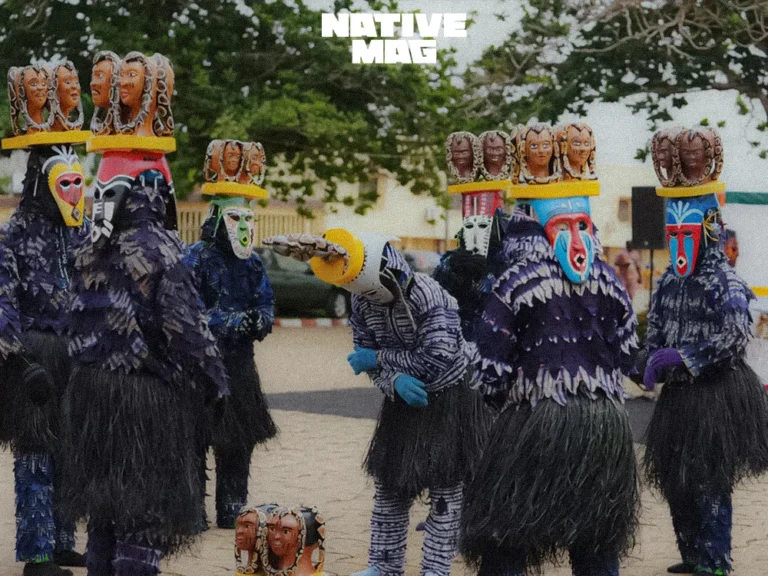
Under the sweltering July sun in Porto Novo, the capital of the Republic of Benin, the rhythmic cadence of drums and the swirling dust of ancestral performance transform the city streets into a living museum. The annual Festival of Masks, now in its third year, has evolved from a local celebration into a sophisticated instrument of national identity. As thousands of spectators—ranging from local practitioners to international tourists—converge on the capital, they are witnessing more than a spectacle; they are observing a calculated, state-backed effort to dismantle centuries of colonial misinterpretation and reposition Benin as the intellectual and spiritual custodian of Vodun heritage.
A Chronology of Cultural Restoration
The origins of the Festival of Masks are deeply intertwined with a broader national initiative to repatriate and recontextualize Benin’s history. Following decades where the nation’s cultural artifacts were housed in European institutions—often stripped of their spiritual significance—the government of President Patrice Talon launched a multi-pronged strategy in the early 2020s.
The timeline of this cultural pivot is marked by several pivotal milestones:
- 2021: The return of 26 royal treasures looted from the Kingdom of Dahomey by French colonial forces in 1892 serves as a catalyst for national pride.
- 2022: The establishment of the International Vodun Museum provides a permanent, state-sanctioned space for the study of indigenous belief systems.
- 2024: The inaugural Festival of Masks is launched, formalizing the role of masks as pedagogical tools rather than mere decorative costumes.
- 2026: The third edition of the festival achieves a new scale of international diplomacy, marked by the inclusion of global delegations and an integrated scientific symposium.
Defining the Mask: Beyond the Colonial Lens
A central challenge addressed by the Committee of Vodun Rites is the linguistic and conceptual limitation of the term "mask." Professor Mahougnon Kakpo, President of the Committee, has frequently noted that the French term masque is inherently reductionist. Within the Vodun belief system, the physical object is not a covering, but a vessel. When a performer dons the costume of the Egungun, they are not acting; they are undergoing a spiritual transformation where the human identity is submerged to allow for the manifestation of an ancestral presence.
This distinction is vital to the festival’s mission. By hosting an international scientific symposium alongside the performances, Benin is attempting to shift the discourse from "folklore" to "indigenous philosophy." The event invites historians, anthropologists, and traditional leaders to debate the ontological status of these rituals, effectively demanding that the international community treat these traditions with the same rigor applied to classical Western art or theology.
Global Expansion and Strategic Diplomacy
The 2026 edition of the festival represented a significant departure from previous years by incorporating international participants, most notably Chinese lion and dragon dance troupes. While some observers might view this as a dilution of the event’s West African focus, Professor Kakpo frames it as an act of diplomatic and intellectual maturity. By inviting foreign delegations to perform alongside the Zangbèto (the "night watchers") and the Gèlèdè, Benin is asserting that the use of masks to bridge the gap between the physical and metaphysical worlds is a universal human impulse.
This strategic expansion serves an economic purpose as well. As Benin seeks to diversify its economy away from agricultural dependence, cultural and religious tourism has been identified as a key growth lever. According to data from the Ministry of Tourism, Arts and Culture, the investment in heritage infrastructure—including the Museum of the Epic of the Amazons and Kings of Danxomè—has contributed to a steady increase in tourist arrivals over the last 24 months, with a specific uptick in interest from the African diaspora and global researchers.
The Dynamics of Performance and Ritual
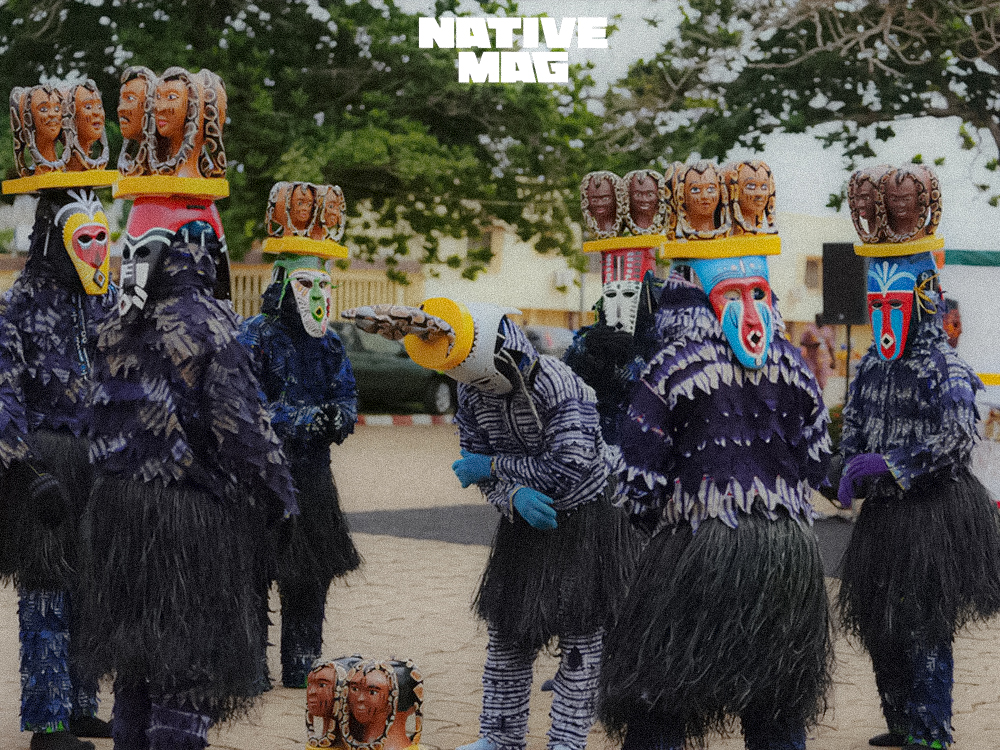
The procession itself is a meticulously curated experience. The Zangbèto, with their towering, conical raffia structures, lead the display, symbolizing the protection of the community. They are followed by the Egungun, draped in intricate embroidery, who serve as direct conduits for ancestral wisdom. The Gèlèdè, rooted in Yoruba tradition, provides a counter-narrative, honoring the power of women and the importance of justice in society.
Each of these traditions maintains its own internal hierarchy. The Committee of Vodun Rites enforces strict protocols regarding what is suitable for public display and what remains the exclusive domain of initiated societies. This "gatekeeping" is a deliberate policy. By refusing to compromise the sanctity of private rites for the sake of mass consumption, the state reinforces the legitimacy of the tradition. It signals to the world that these customs are not for sale, but are available for respectful observation.
Economic and Sociological Implications
The societal impact of this movement is profound. For decades, the narrative of Benin was shaped by external perspectives—primarily colonial missionaries and ethnographers who characterized Vodun as "superstition" or "barbarism." Today, the narrative is being reclaimed by the descendants of those who created these systems.
From an economic perspective, the Festival of Masks acts as a catalyst for local businesses in Porto Novo. The influx of visitors sustains a local ecosystem of artisans, hospitality providers, and cultural guides. However, the true "ROI" (Return on Investment) for the Beninese state is the intangible value of "soft power." By establishing itself as the global capital of Vodun, Benin is securing a unique position in the global tourism market, one that cannot be easily replicated by neighboring nations.
Balancing Preservation and Accessibility
The central tension for the future of the festival lies in the friction between global attention and local integrity. As the event gains prominence, the pressure to make it more "accessible" to foreign audiences grows. The Committee of Vodun Rites has remained firm in its mandate: the festival is a tool for cultural education, not a commercialized show.
"The mask is the expression of an identity," Professor Kakpo has stated. This identity is inherently complex, rooted in the specific histories of the Yoruba, Fon, and other ethnic groups that comprise the Beninese mosaic. By keeping the reins of the festival within the hands of local authorities and traditional custodians, Benin ensures that the "message" of the mask is not lost in translation.
Conclusion: A Sovereign Narrative
The 2026 Festival of Masks serves as a definitive statement on the power of cultural sovereignty. By reclaiming the right to define their own history, the people of Benin are effectively rewriting the terms of their engagement with the world. Through the intersection of museum curation, scientific inquiry, and vibrant public performance, the state has transformed its most maligned traditions into its most potent assets.
As the sun sets on the final day of the festival, the lasting impression is not one of a nation looking back with nostalgia, but one of a nation leveraging its past to architect a robust, independent future. In the streets of Porto Novo, the masks continue to spin, and for the first time in centuries, the world is finally watching on Benin’s terms.