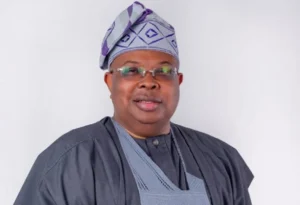
The landscape of African commerce and industrialization is standing at a historic crossroads, marked by unprecedented capital mobilization, massive infrastructure development, and a growing narrative surrounding wealth democratization. Dr. Sijibomi Ogundele, the Managing Director of the Sujimoto Group, has projected that the shares of the newly prominent Dangote Petroleum Refinery and Petrochemicals could surge exponentially, potentially reaching N5,000 before the dawn of 2030. This ambitious valuation forecast comes on the heels of the highly anticipated N2.15 trillion initial public offering (IPO) announced by the multinational industrial conglomerate, a financial milestone that is expected to reshape capital markets across the West African subregion and redefine how everyday citizens interact with large-scale corporate wealth.
Speaking on the broader economic implications of the massive refinery project located in the Ibeju-Lekki free trade zone of Lagos State, Ogundele lauded Africa’s richest man, Aliko Dangote, characterizing him as an enduring "beast of industry" whose unyielding vision has shattered historical glass ceilings. However, the Sujimoto boss quickly pivoted from individual praise to a collective macroeconomic challenge. He articulated an urgent, visionary appeal for the emergence of at least ten additional industrial champions distributed strategically across Nigeria’s diverse geopolitical zones. In his view, a sustainable $1 trillion Nigerian economy cannot be built on the back of a single corporate titan; instead, it demands a sprawling ecosystem of productive powerhouses capable of transforming raw capital into tangible factories, export goods, and millions of sustainable, high-paying jobs.
The Mechanics of the N2.15 Trillion IPO and Wealth Democratization
At the core of the current market excitement is the Dangote Refinery’s landmark N2.15 trillion initial public offering. The corporate strategy involves making 4.1 billion ordinary shares available to the public at an introductory price of N525 per share. Designed with financial inclusivity in mind, the offering establishes a minimum subscription threshold of just 10 shares, translating to an accessible entry point of N5,250 for prospective investors.
Financial analysts and market observers note that this low barrier to entry is a strategic departure from traditional high-capital corporate offerings that typically favor institutional investors, sovereign wealth funds, and ultra-high-net-worth individuals. By opening the doors to retail investors—ranging from young corporate entry-level workers and university graduates to small business owners and civil servants—the IPO serves as a vehicle for wealth redistribution.
Dr. Ogundele emphasized that this corporate transaction transcends traditional balance sheets and revenue projections. It fundamentally alters the psychological and economic relationship between ordinary Nigerians and the country’s most valuable industrial assets. For decades, the wealth generated by heavy industries remained concentrated within closed corporate circles. Now, through fractionalized public ownership, citizens across various income brackets have a viable mechanism to secure an equity stake in a facility that controls a massive share of the regional petroleum product supply chain. If Ogundele’s projection of a N5,000 share price by 2030 holds true, early retail investors who commit the minimum N5,250 entry capital could witness unprecedented portfolio growth, fundamentally changing household financial trajectories.
A Five-Year Retrospective: Decoding the Industrial "Beast"
Recalling his initial visit to the sprawling Dangote Refinery site in Ibeju-Lekki approximately five years ago, Ogundele shared how the sheer magnitude of the construction effort left an indelible impression on his entrepreneurial outlook. At the time, the project was mired in complex engineering challenges, immense logistical hurdles, and immense capital outlays that many skeptics believed would derail the enterprise.
In response to what he witnessed during that formative site visit, Ogundele penned an insightful editorial titled "Dangote Is a Beast." Clarifying the metaphor, the Sujimoto Managing Director stressed that the designation was never a commentary on sheer monetary capital or ruthless corporate accumulation. Rather, it was a tribute to extraordinary vision, unyielding audacity, and an appetite for undertaking ventures of monumental scale.
The Dangote Refinery, spanning over 2,635 hectares of land with a processing capacity of 650,000 barrels of crude oil per day, stands today as a monument to overcoming systemic adversity. The facility was brought to completion despite punishing macroeconomic headwinds, including soaring inflation, severe foreign exchange volatility, crippling infrastructure deficits, and protracted supply chain bottlenecks. For Ogundele, observing this journey firsthand served as validation that indigenous African enterprises can conceptualize and execute world-class infrastructure projects that rival—and often surpass—global counterparts.
Beyond a Single Titan: The Call for Ten Regional Industrial Champions
While paying glowing tribute to Aliko Dangote’s monumental accomplishments, Ogundele’s thesis pivots toward a critical structural critique of the Nigerian economy: the danger of relying on a single industrial monolith. He argued passionately that Nigeria’s ultimate developmental objective must extend far beyond the creation of one or two familiar corporate billionaire names.
Instead, the nation requires a deliberate, systemic strategy to foster specialized industrial champions across critical sectors of the economy. Ogundele mapped out a compelling vision for this industrial decentralization across the country’s geopolitical landscape:
- A "Dangote of Steel" anchoring heavy manufacturing in Kaduna State;
- A "Dangote of Pharmaceuticals" driving advanced medical production in Anambra State;
- A "Dangote of Agriculture" transforming food security and value-chain processing in Niger State;
- A "Dangote of Technology" leading digital infrastructure and software development in Lagos State;
- A "Dangote of Manufacturing" scaling light industries and export production in the industrial hubs of Aba and Nnewi;
- Regional "Dangotes of Housing and Infrastructure" spearheading real estate and civil engineering developments across every geopolitical zone.
According to the Sujimoto CEO, the economic problem facing Nigeria is not merely a shortage of wealthy individuals, but a severe deficit of structured industrial enterprises that can convert idle capital into sustainable productive capacity. "Ten Dangotes cannot mean ten more names on a billionaire list," Ogundele asserted. "Nigeria already has wealthy people. What we need are industrialists who convert capital into factories, technology, exports, supply chains, apprenticeships, taxes, and millions of productive jobs."
Navigating the Operating Environment: The Need for "Patient Capital"
To achieve this ambitious industrial renaissance, Ogundele issued a direct call to action directed at the Federal Government, monetary authorities, and financial institutions. He emphasized that the prevailing macroeconomic operating environment in Nigeria remains hostile to the emergence and scaling of large-scale businesses.
Citing the astronomical cost of doing business—driven primarily by systemic power deficits, inadequate logistics networks, and suffocating interest rates—he argued that local entrepreneurs are forced to shoulder infrastructural burdens that should ordinarily be provided by the state. Using a vivid athletic metaphor, he noted, "You cannot tie an entrepreneur’s legs together and then complain that he cannot run like Usain Bolt."
Ogundele proposed a collaborative framework where the government actively identifies proven industrialists across strategic sectors, extends targeted financial support and infrastructural backing, and institutes strict, measurable accountability targets linked to job creation, local raw material sourcing, technology transfer, and export volumes. Central to this proposal is the concept of "patient capital"—long-term, low-interest financing vehicles designed to insulate foundational industrial projects from the volatile shocks of short-term commercial lending.
Furthermore, this structural alignment is viewed as a prerequisite for fulfilling broader national development blueprints, specifically aligning with President Bola Tinubu’s stated ambition of building a robust, $1 trillion Nigerian economy. Economic analysts agree that achieving this ambitious monetary milestone requires exponentially expanding the nation’s Gross Domestic Product (GDP) through domestic industrial output, import substitution, and aggressive foreign exchange earnings, rather than over-reliance on primary commodity exports like crude petroleum.
The Petrochemical Expansion and Global Competitiveness
Looking beyond the immediate refining of automotive gas oil (diesel), aviation turbine kerosene (jet A-1), premium motor spirit (petrol), and low pour fuel oil, Ogundele drew attention to the next strategic phase of the Dangote enterprise: its massive expansion into petrochemicals and polypropylene production. This forward-looking approach demonstrates the core philosophy of long-term strategic thinking necessary for businesses to exert foundational influence over national and continental economies.
For decades, the African continent has labored under a classic colonial economic model—exporting raw, unprocessed natural resources at depressed global prices and subsequently importing finished goods at exorbitant costs, laden with imported inflation and foreign exchange depletion. The operationalization of the Dangote Refinery and its associated petrochemical complexes directly disrupts this historical anomaly. By refining crude oil domestically and producing raw materials for plastics, pharmaceuticals, and packaging industries locally, the complex is positioned to save billions of dollars in foreign exchange, stabilize the domestic currency, and establish Nigeria as a regional refining and chemical export hub.
Comparing Dangote’s industrial significance to historic global figures who built the economic foundations of contemporary superpowers, Ogundele emphasized that Africa must look inward to build resilient domestic value chains. The ability to add value to domestic resources within Nigerian borders creates a multiplier effect across secondary and tertiary industries, giving birth to thriving ancillary service providers, logistics firms, equipment maintenance outfits, and specialized technical training institutions.
Inspiring a New Generation of Indigenous Entrepreneurs
Beyond the immediate financial valuations, market capitalization figures, and industrial blueprints, Ogundele believes the most enduring legacy of the Dangote industrial journey lies in the realm of psychological transformation. For younger generations of Nigerian and African entrepreneurs navigating an environment characterized by systemic friction, the success of the refinery serves as irrefutable proof that scale is achievable.
Reflecting on his own entrepreneurial trajectory at the helm of the Sujimoto Group—a luxury real estate and construction conglomerate known for pushing architectural boundaries in Nigeria—Ogundele noted that difficult operating conditions should never dictate the ceiling of an entrepreneur’s vision. Competence, resilience, and an unwavering commitment to solving complex problems remain the non-negotiable prerequisites for modern business success.
As millions of prospective retail investors prepare to subscribe to the historic Dangote Refinery IPO, the event represents far more than a standard portfolio diversification opportunity. It stands as a watershed moment for popular capitalism in Nigeria.
Concluding his reflections, Ogundele encapsulated the ultimate promise of this industrial milestone not merely in the financial returns it may yield for individual shareholders, but in the ideological awakening it offers to the nation’s youth. "The Dangote Refinery IPO may allow millions of Africans to own part of one extraordinary enterprise," he reflected. "The greater opportunity is for an entire generation to inherit his audacity. That is the greater dividend: a Nigeria where one Dangote becomes ten."