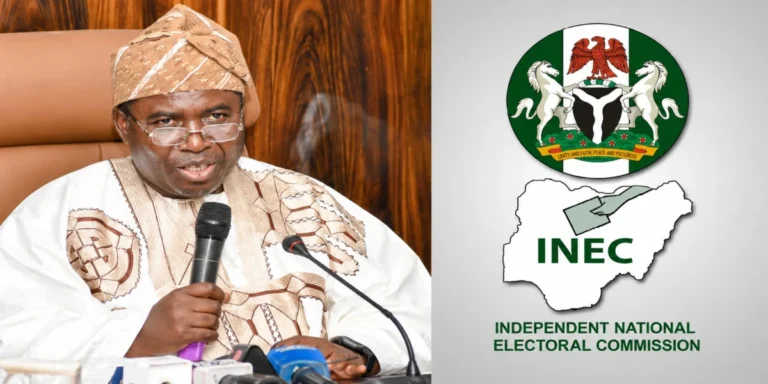
The Chairman of the Independent National Electoral Commission (INEC), Prof. Joash Ojo Amupitan, SAN, has embarked on a series of high-level diplomatic and technical engagements with global technology giants and electoral support organizations in Ottawa, Canada. These strategic meetings, held on the sidelines of the Global Conference on Responsible AI and Elections, represent a proactive shift in the Commission’s strategy to bolster its technological infrastructure, enhance cybersecurity protocols, and integrate artificial intelligence responsibly as the country prepares for the 2027 general elections. Accompanied by the Commission’s Director of Information and Communication Technology (ICT), Dr. Lawrence Bayode, Prof. Amupitan’s presence at the conference underscores Nigeria’s commitment to aligning its electoral processes with international best practices and safeguarding the integrity of the ballot in an increasingly digital era.
The Ottawa Conference: A Hub for Electoral Innovation
The three-day Global Conference on Responsible AI and Elections, held from September 9 to 11, served as a critical nexus for election management bodies (EMBs) worldwide. Participants included representatives from various national electoral commissions, international NGOs such as the International Foundation for Electoral Systems (IFES), and private sector technology leaders. The central theme of the gathering was the dual nature of artificial intelligence in democracy—specifically, its potential to optimize administrative efficiency versus the significant risks it poses regarding misinformation, voter suppression, and the compromise of digital electoral infrastructure.
For INEC, the timing of this conference is significant. As Nigeria navigates the aftermath of the 2023 electoral cycle, which was heavily scrutinized for its reliance on the Bimodal Voter Accreditation System (BVAS) and the INEC Result Viewing Portal (IReV), the Commission is under pressure to refine its digital deployment. Prof. Amupitan’s presentation at the conference, which detailed Nigeria’s specific experiences in institutionalizing AI within electoral administration, highlighted both the successes and the formidable challenges of managing technology in a country with over 90 million registered voters.
Strategic Engagements with Tech Titans
A major focus of the delegation’s visit was the direct engagement with Microsoft and Google, two entities that provide the backbone for many global digital services and cybersecurity frameworks. In meetings with Microsoft’s Emerging Tech and Cyber Lead, Ethan Chumley, and Programme Manager, Ariana Molina, the INEC team explored technical pathways to harden the Commission’s cyber-defenses. Cybersecurity remains a top-tier priority for INEC, particularly in light of the frequent distributed denial-of-service (DDoS) attempts and other cyber-threats that have historically targeted the Commission’s web-based portals during peak election periods.
Following the Microsoft consultations, Prof. Amupitan engaged with David J. Lopez, Google’s Global Lead for Civic Responsibility. This discussion was framed around the mitigation of AI-generated misinformation—often referred to as "deepfakes"—which poses a significant threat to voter trust. By collaborating with global platforms, INEC aims to establish more robust communication channels to ensure that official electoral data is easily verifiable and that malicious actors are unable to manipulate the digital narrative surrounding the 2027 elections.
Institutional Support from IFES
The collaboration with the International Foundation for Electoral Systems (IFES) adds a layer of democratic institutionalism to these technical efforts. In a meeting with Dr. Lisa Poggiali, Chief AI Advisor at IFES, the INEC leadership discussed the ethical deployment of AI. The conversation centered on the adoption of global best practices, such as transparent algorithmic auditing and the use of AI for internal logistical planning, rather than voter-facing applications that could be subject to bias or manipulation. IFES has long been a partner of INEC, and this renewed focus on AI governance is expected to result in a framework for a "responsible AI policy" for the 2027 cycle, ensuring that any technological advancement is grounded in established electoral laws.
Fact-Based Analysis: The Stakes for 2027
The integration of AI into election management is not merely a technical upgrade; it is a fundamental shift in how trust is maintained. For Nigeria, the implications are profound. According to recent data from the Global Digital Report, internet penetration in Nigeria has exceeded 50%, with mobile connectivity being the primary driver. This high level of connectivity means that any failure or perceived vulnerability in INEC’s digital infrastructure resonates instantly across social media platforms, often fueling skepticism.
By proactively seeking partnerships with Microsoft and Google, INEC is attempting to move from a defensive posture to a collaborative one. The objective is to leverage the "security-by-design" approach that these corporations utilize, which could significantly decrease the likelihood of system failure during result collation. Furthermore, the use of AI to analyze logistical data could assist INEC in optimizing the deployment of sensitive electoral materials, thereby reducing the delays that have characterized previous polling days.
Chronology of INEC’s Technological Evolution
- 2011–2015: Introduction of the Smart Card Reader (SCR) to verify Permanent Voter Cards (PVCs) and reduce electoral fraud.
- 2019: Expansion of digital data collection, though the process remained largely manual in terms of result collation.
- 2023: Full-scale deployment of BVAS and IReV, marking the most significant shift toward digital accreditation and real-time result viewing in Nigeria’s history.
- 2024: INEC leadership initiates global technical consultations, focusing on AI and advanced cybersecurity to address the bottlenecks observed in the previous cycle.
- 2027 (Projected): Implementation of an "AI-fortified" electoral process, incorporating lessons from international engagements to ensure transparency and resilience.
Challenges and Official Responses
Despite the optimism surrounding these partnerships, experts remain cautious. Critics have pointed out that technology alone cannot solve the fundamental challenges of electoral integrity, such as voter intimidation, vote-buying, and the physical logistical hurdles of reaching remote areas. During the conference, Prof. Amupitan acknowledged these realities, stating that technology is a tool to support, not replace, the fundamental tenets of human-managed electoral administration.
In an official statement released by the Commission, INEC noted that these engagements are vital for building a sustainable technological ecosystem. "The collaboration with leading global technology and electoral institutions is a deliberate effort to enhance the security, resilience, transparency, and efficiency of Nigeria’s electoral process," the statement read. The Commission emphasizes that these meetings are not one-off events but part of a long-term strategy to ensure that by the time the 2027 elections commence, the infrastructure will be capable of handling the high-volume data traffic and potential threats inherent in a modern democratic election.
Broader Implications for African Democracy
Nigeria’s approach to the 2027 elections is being closely watched by other African nations. As the continent moves toward greater digitalization, Nigeria’s experiences with BVAS and AI-driven security will serve as a case study for the region. The ability of INEC to successfully bridge the gap between high-tech solutions and grassroots electoral management will be the ultimate test of its reform agenda.
Furthermore, the involvement of global tech companies in domestic elections raises questions about data sovereignty and the balance between private sector influence and national electoral authority. INEC’s insistence on "responsible" AI suggests an awareness of these concerns, with the Commission likely to seek models that keep the final decision-making power firmly within the hands of Nigerian election officials, while utilizing the technical expertise of its international partners to maintain a secure and transparent framework.
As the countdown to 2027 continues, the success of these international engagements will be measured by the Commission’s ability to translate technical concepts into tangible improvements in the electoral experience. From the registration of voters to the final announcement of results, the integration of advanced technology—if executed with the transparency and cybersecurity rigour promised by Prof. Amupitan—could set a new benchmark for electoral integrity in the West African sub-region. The current diplomatic and technical outreach signifies that INEC is taking the lessons of the past seriously, aiming to build a more robust, technology-driven future for the Nigerian electorate.