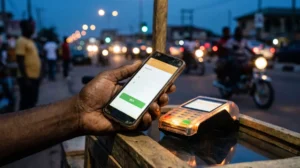
Zambian fintech firm Zoyk has received formal authorization from the Banque Centrale du Congo (BCC) to introduce its payment aggregation platform, Zoykpay, into the Democratic Republic of Congo (DRC). This milestone, announced on September 10, 2026, marks a pivotal step in the company’s regional growth strategy, providing a legal framework for its entry into one of Central Africa’s most complex but high-potential payment markets. While the company has secured the regulatory green light, it remains in the implementation phase, navigating local compliance and technical integration requirements before full-scale commercial operations commence.
The entry into the DRC is part of a broader trend of cross-border consolidation among African fintech players. The DRC’s payment ecosystem is famously fragmented, characterized by a disparate collection of mobile money providers, traditional banking institutions, and independent financial service providers. Zoyk’s business model is designed to mitigate this fragmentation by acting as a central hub. By integrating multiple payment channels into a single interface, the company aims to simplify transaction management, reconciliation, and payment collection for businesses that would otherwise be forced to maintain separate, costly integrations with every individual service provider.
The Evolution of Zoyk’s Regional Infrastructure
Zoyk’s expansion strategy is rooted in a deliberate sequence of regulatory and technical milestones. Domestically, the company has spent the last two years cementing its position as a key player in the Zambian digital economy. In May 2024, the Bank of Zambia formally designated Zoyk Pay Zambia Limited as an authorized payment aggregator, a status that facilitated its evolution from a basic processor to a comprehensive service provider.

This regulatory maturation was followed in June 2026 by a high-profile partnership with Visa. By leveraging Visa Direct, Zoyk introduced an interoperable digital payment solution aimed at bridging the gap between Zambia and the broader Southern African Development Community (SADC) region. This move served as a precursor to its current push into the DRC, Tanzania, Malawi, Zimbabwe, and South Africa. With Angola identified as the next target market, Zoyk is positioning itself as a foundational layer for cross-border African commerce, attempting to solve the “last mile” connectivity issues that have historically stifled intra-regional trade.
Lesaka Technologies: A Financial Turnaround and Strategic Acquisition
Concurrent with regional shifts in payment infrastructure, the South African financial services sector is witnessing a significant transformation through Lesaka Technologies. Following a challenging 2025 fiscal year, which saw a net loss of R1.65 billion, the company reported a robust recovery in its 2026 fiscal results. With a net profit of R39.8 million and a 20% increase in net revenue to R6.33 billion, Lesaka is demonstrating the efficacy of its aggressive diversification strategy.
The core of this turnaround lies in the company’s shift toward a diversified fintech ecosystem. The consumer business has been a standout performer, with revenue climbing 38% to R2.4 billion. However, the most anticipated component of Lesaka’s future remains its acquisition of Bank Zero. Originally announced in June 2025 for approximately R1.1 billion, the deal is designed to integrate a fully digital, zero-fee banking architecture into Lesaka’s existing payment and merchant service operations.
While the South African Competition Tribunal has cleared the acquisition, the deal remains subject to final regulatory sign-offs, including approval from the Prudential Authority. In June 2026, the parties extended the long-stop date for the transaction to January 31, 2027. Market analysts suggest that if the deal closes, the synergy between Lesaka’s distribution network and Bank Zero’s modern, legacy-free technology stack could pose a serious challenge to South Africa’s traditional banking incumbents.

Ghana’s Race to 70% 5G Coverage
In West Africa, the digital landscape is undergoing a different type of pressure as Ghana accelerates its efforts to reach 70% 5G coverage by March 2027. This deadline is strategically timed to coincide with the nation’s 70th independence anniversary. The "70 percent coverage for Ghana at 70" initiative is not merely a branding exercise but a critical component of a national effort to modernize infrastructure and bridge the digital divide.
On September 9, the National Communications Authority (NCA) announced the shortlist of candidates competing for vital spectrum in the 700 MHz, 2.3 GHz, and 3 GHz bands. MTN Ghana, Telecel Ghana, and Goal Telecommunications have qualified, while Infrav Ltd was disqualified from the process. This spectrum auction follows a significant policy shift in July 2026, when the NCA stripped Next Gen Infraco (NGIC) of its wholesale 5G exclusivity. By opening the market to competitive bidding, the Ghanaian government hopes to catalyze the infrastructure investment necessary to move beyond basic connectivity.
The implications for rural development are profound. Communications Minister Samuel Nartey George has emphasized that the goal is to retire legacy 2G and 3G sites that currently hinder the adoption of digital agriculture, e-learning, and remote telemedicine. While the technical challenge of deploying high-speed broadband across diverse geography remains significant, the government’s move to end monopolies and encourage private-sector competition is seen as a necessary precursor to achieving true digital inclusion.
The Creator Economy: X Shifts Toward Originality
Beyond infrastructure and fintech, the digital landscape is also experiencing a shift in how value is assigned to human-generated content. X (formerly Twitter) has officially phased out its legacy Creator Revenue Sharing program, replacing it with a new "Original Content Rewards" system. The transition, which began on September 8, 2026, represents a fundamental change in the platform’s incentive structure.

Under the previous model, creators were incentivized to drive engagement—often through controversial or polarizing posts—because revenue was tied to ad impressions in replies. Critics argued that this encouraged "rage-bait" and superficial engagement. The new Original Content Rewards model shifts the focus toward high-quality, original content, including videos, articles, and expert commentary. Payouts are now calculated based on qualified impressions from X Premium users viewing content on their Home Timeline.
This policy change includes strict eligibility criteria, requiring creators to maintain an active subscription, possess at least 500 verified followers, and generate 500,000 Home Timeline impressions from verified users within a 90-day window. Furthermore, the platform has explicitly disqualified automated content, mass reposting, and plagiarism from the reward pool.
Strategic Implications and Future Outlook
The developments across these diverse sectors—fintech expansion in the DRC, the consolidation of banking technology in South Africa, the race for 5G in Ghana, and the restructuring of the creator economy—point to a broader trend of maturation in digital markets.
In the fintech space, companies like Zoyk are moving toward a "utility" model, where the success of the business is predicated on the ability to connect fragmented systems rather than just owning the consumer relationship. For Lesaka, the focus is on achieving scale through technological acquisition, banking on the idea that legacy-free digital banks are the future of financial services in the SADC region.

In Ghana, the telecommunications sector is transitioning from an era of state-backed infrastructure exclusivity to a more competitive, market-driven deployment of 5G. The success of this transition will be measured not by the number of licenses issued, but by the tangible improvement in data speeds and connectivity for users in underserved regions.
Finally, the pivot by X illustrates the growing pains of the global creator economy. As platforms grapple with the negative externalities of engagement-driven algorithms, the move to reward "originality" suggests that the next phase of the digital content era will prioritize the quality of user interaction over sheer volume.
For stakeholders and investors, the next six months will be critical. The successful integration of Bank Zero into Lesaka, the ability of Ghana to meet its ambitious 5G rollout, and the efficacy of X’s new incentive model will provide a litmus test for the sustainability of these current growth strategies. Across Africa and in the digital global space, the emphasis is clearly shifting from rapid, unregulated growth toward the stabilization of infrastructure and the refinement of business models for long-term viability.