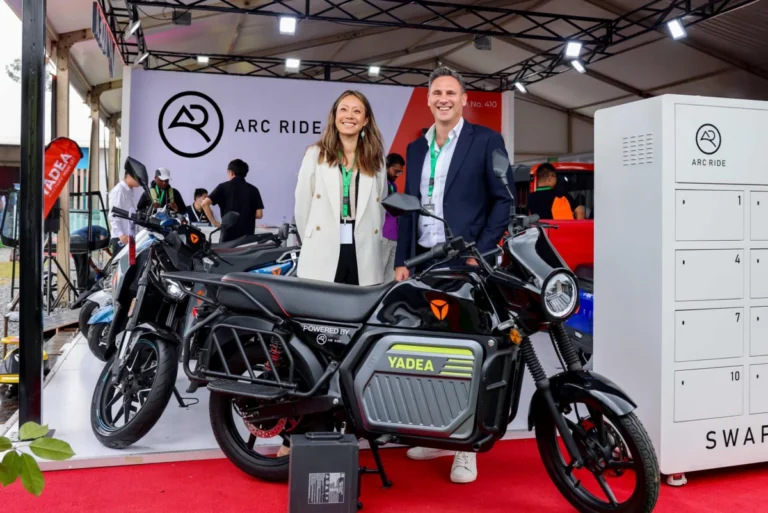
Nairobi, Kenya — In a landmark development for the continent’s green transportation sector, Nairobi-based electric mobility startup ARC Ride has successfully secured USD 33.3 million in a major funding round. Founded in 2018 by Jo Hurst Croft, ARC Ride has steadily positioned itself at the forefront of sub-Saharan Africa’s transition away from fossil-fueled transport. The fresh capital injection is earmarked to accelerate the deployment of electric two- and three-wheelers, densify critical battery-swapping infrastructure, and fuel an aggressive regional expansion strategy targeting several high-growth markets across the continent.
The funding round was spearheaded by a prominent consortium of venture capital firms and impact investors, led jointly by Novastar Ventures and Norrsken22. The syndicate also saw robust participation from premier development finance institutions (DFIs), including the International Finance Corporation (IFC), British International Investment (BII), Proparco, and strategic corporate and private investors such as Musashi Seimitsu and Talanton. Additionally, the financing package includes strategic debt components extended by BII’s Kinetic programme and Mirova. This follows a previous USD 10 million investment made by Mirova in September 2025, underscoring a continuous and deepening commitment from institutional backers who recognize the transformative potential of decentralized, sustainable urban mobility in developing economies.
The Evolution and Core Model of ARC Ride
Since its inception, ARC Ride has focused on solving one of the most stubborn friction points in the adoption of electric vehicles (EVs) in emerging markets: range anxiety and the high upfront cost of batteries. Traditional electric vehicle models often struggle in developing regions due to prohibitive battery replacement costs, long charging times, and the scarcity of reliable power grids.
To circumvent these hurdles, ARC Ride pioneered a robust Battery-as-a-Service (BaaS) infrastructure model tailored specifically for electric two- and three-wheelers—commonly known locally as boda-bodas and tuk-tuks, which form the literal backbone of urban and rural public transit across East Africa. Rather than purchasing expensive batteries outright or waiting hours for a vehicle to recharge, commercial riders utilize ARC Ride’s network of smart swap stations. A driver pulls into a station, exchanges a depleted battery for a fully charged one in a matter of seconds, and returns to the road with minimal downtime.
This infrastructure-first approach has transformed the economics of commercial riding. For drivers who depend on daily mileage to sustain their livelihoods, reducing downtime translates directly into higher daily earnings. Furthermore, eliminating the need to purchase gasoline shields commercial operators from volatile global fossil fuel price fluctuations, securing more stable, predictable profit margins for thousands of independent drivers.
Strategic Allocation of the USD 33.3 Million Capital
With USD 33.3 million now secured, ARC Ride is poised to scale its operations exponentially over the next few years. Company executives have outlined a comprehensive deployment plan designed to strengthen every layer of its operational ecosystem.
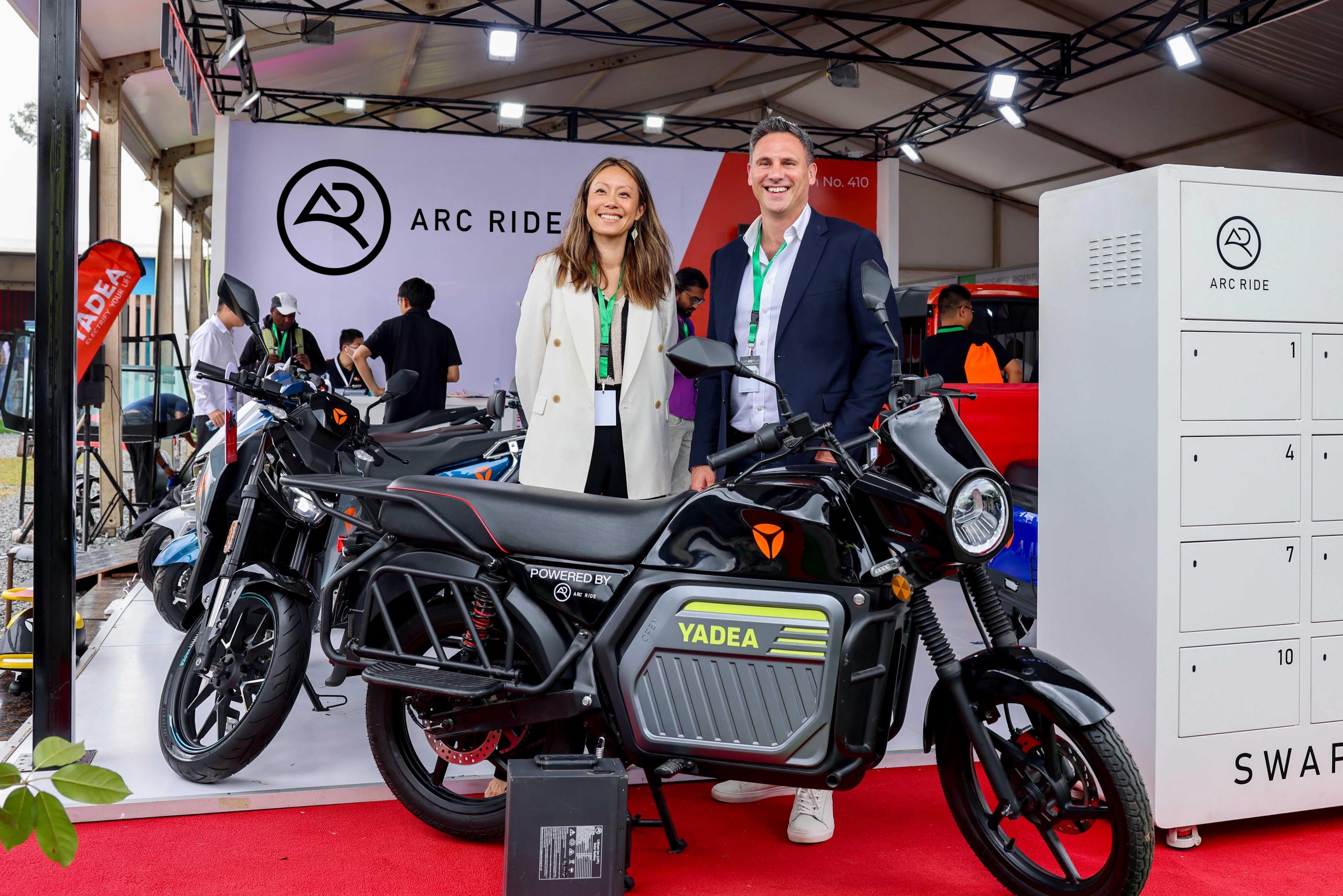
First, the firm will introduce an additional 5,000 electric motorcycles into its existing fleet network. This massive influx of clean vehicles is expected to dramatically cut carbon emissions in congested urban centers while displacing thousands of internal combustion engine (ICE) motorcycles that currently dominate local roads.
Second, the capital will be channeled into advancing technological capabilities. ARC Ride plans to upgrade its swapping stations with automated swapping architecture, enhanced smart charging protocols, and deeper integration with renewable energy sources. By decoupling its charging hubs from unstable grid power or dirty energy backups, the company aims to ensure true end-to-end sustainability for its network.
Finally, the funding will finance the physical expansion of the infrastructure grid itself. While Kenya remains the primary operational stronghold, ARC Ride is casting its net wider across sub-Saharan Africa. The company has slated expansions into key regional markets including Uganda, Tanzania, Rwanda, Ghana, and South Africa. These nations represent massive, rapidly urbanizing populations with high reliance on two- and three-wheeler commercial transport, presenting ripe conditions for BaaS adoption.
Broader Industry Context and Strategic Partnerships
ARC Ride’s rapid growth does not happen in a vacuum; it is part of a broader, sweeping macroeconomic movement across Africa toward green industrialization and climate-smart urban planning. Across major African cities, air pollution, traffic congestion, and high fuel import bills have forced municipal and national governments to rethink urban mobility frameworks.
By positioning its infrastructure as an open network, ARC Ride has managed to integrate seamlessly with various global and local stakeholders. The company’s network already provides vital support for established international EV manufacturers, such as Yadea, enabling them to deploy vehicles into African markets without needing to build out proprietary charging infrastructure from scratch. This collaborative ecosystem approach has allowed ARC Ride to anchor itself as a foundational utility provider for the continent’s burgeoning electric transport transition, functioning much like a traditional energy utility, but tailored entirely for the EV era.
Timeline and Chronology of Growth
The trajectory of ARC Ride mirrors the accelerated maturation of Africa’s tech and climate-tech venture landscape:
- 2018: ARC Ride is founded in Nairobi, Kenya, by Jo Hurst Croft, with an initial vision to introduce sustainable, tech-enabled urban transport solutions to East Africa.
- 2018–2024: The company researches, tests, and deploys early iterations of its electric two-wheelers and builds out its foundational network of smart battery-swapping stations in Nairobi, gaining crucial operational data and consumer trust among commercial riders.
- September 2025: Mirova injects USD 10 million into ARC Ride, validating the startup’s commercial viability and setting the stage for institutional-scale fundraising.
- September 2026: ARC Ride successfully closes a major USD 33.3 million funding round led by Novastar Ventures and Norrsken22, backed by heavyweights like the IFC, BII, Proparco, Musashi Seimitsu, Talanton, and debt facilities from Mirova and BII’s Kinetic programme, officially clearing the path for pan-African expansion.
Perspectives from Investors and Market Stakeholders
The heavy participation of development finance institutions and top-tier venture capitalists in this funding round signals a fundamental shift in how climate-tech investments are evaluated in emerging markets. Investors are increasingly looking past early-stage pilot projects, favoring companies that demonstrate clear, scalable infrastructure models capable of generating both profound environmental impact and sustainable financial returns.
Representatives from the investing syndicate have emphasized that companies like ARC Ride are critical in addressing the dual challenges of youth unemployment and climate change in Africa. By providing accessible financial tools, lower operating costs for commercial drivers, and green jobs, the startup touches upon multiple United Nations Sustainable Development Goals (SDGs).
Furthermore, strategic investors such as Musashi Seimitsu bring deep automotive manufacturing expertise to the table, helping ARC Ride optimize its supply chain, vehicle durability, and hardware engineering to withstand the demanding road conditions often found across sub-Saharan Africa. Meanwhile, involvement from entities like the IFC and Proparco highlights the rigorous governance, environmental, and social (ESG) standards to which the startup is held, ensuring that rapid scaling is matched by responsible corporate stewardship.
Implications for Africa’s Green Transition
The successful capitalization of ARC Ride carries significant implications for the broader African electric mobility landscape. For years, the narrative surrounding EV adoption in developing regions was plagued by skepticism regarding grid reliability, consumer affordability, and infrastructural readiness.
By proving that a Battery-as-a-Service model can be successfully financed, scaled, and integrated with commercial transport fleets, ARC Ride is rewriting the playbook for green tech in emerging economies. The model removes the risk of battery degradation from the end consumer—often the poorest link in the value chain—and places it in the hands of institutional and corporate backers who are better equipped to absorb capital expenditure risks.
As ARC Ride deploys its newly acquired capital over the coming months, the results will likely serve as a litmus test for the viability of mass-market EV adoption in other developing regions globally. If the company successfully executes its multi-country expansion plan—bringing thousands of clean motorcycles and automated swapping hubs to Kenya, Uganda, Tanzania, Ghana, and South Africa—it will not only cement its own status as a market leader, but also permanently alter the urban landscape of Africa, steering the continent toward a cleaner, quieter, and economically resilient future.