The race to lead the World Health Organization (WHO) is entering a critical phase as prospective candidates intensify their outreach ahead of the official nomination deadline. An analysis of nearly 7,500 direct digital interactions across professional networks reveals a sharp contest to capture the pivotal African voting bloc, secure the alignment of traditional Western donor nations, and rally regional stakeholders. While online engagement does not translate directly into formal diplomatic votes, the digital footprints of the leading contenders offer an early window into the distinct geopolitical, institutional, and technical networks shaping the upcoming election.
With the formal entry window closing on September 24, the campaign field features a prominent head-to-head dynamic between Dr. Hans Henri Kluge, WHO Regional Director for Europe, and Dr. Hanan H. Balkhy, WHO Regional Director for the Eastern Mediterranean. They are joined in the broader discourse by Indonesian Health Minister Budi Gunadi Sadikin and former Qatari Public Health Minister Hanan Mohammed Al-Kuwari. This election cycle occurs against a backdrop of severe institutional strain, shifting global financial architectures, and ongoing negotiations regarding pandemic prevention, preparedness, and response.

Chronology and Campaign Milestones
The timeline for the WHO Director-General selection process is tightly regulated by the organization’s Executive Board and governing bodies. The formal call for nominations was issued earlier in the year, setting a strict deadline of September 24 for member states to put forward their official candidates. Throughout the summer months, prospective contenders utilized major regional committee meetings—such as the African Regional Committee in Addis Ababa and the South-East Asia Regional Committee in Timor-Leste—to launch localized campaign tours, articulate their policy visions, and build consensus among sovereign delegates.
By late August and early September, the campaign transitioned heavily into the digital sphere. Candidates began releasing formal manifestos, video announcements, and policy frameworks via professional networking platforms. This digital acceleration allowed policy analysts, global health executives, and member state representatives to publicly signal alignment or engage in active debate regarding the candidates’ leadership models. Following the September nomination deadline, the campaign will shift toward closed-door diplomatic negotiations, culminating in the Executive Board interviews and shortlisting process, ahead of the final appointment vote by the World Health Assembly.
Technical Stewardship Versus Participative Diplomacy
An evaluation of the candidates’ early digital communication strategies highlights contrasting leadership models. Dr. Hanan Balkhy’s campaign framing is rooted in clinical frontline credibility, scientific stewardship, and state-sovereign legitimacy. Her announcements systematically connect her background as a pediatrician and infectious disease specialist to her hands-on management of the MERS-CoV crisis and the establishment of Saudi Arabia’s national infection control authorities. Observers and regional commentators have frequently framed her candidacy as a historic opportunity for women from the Arab world to lead a major multilateral institution.
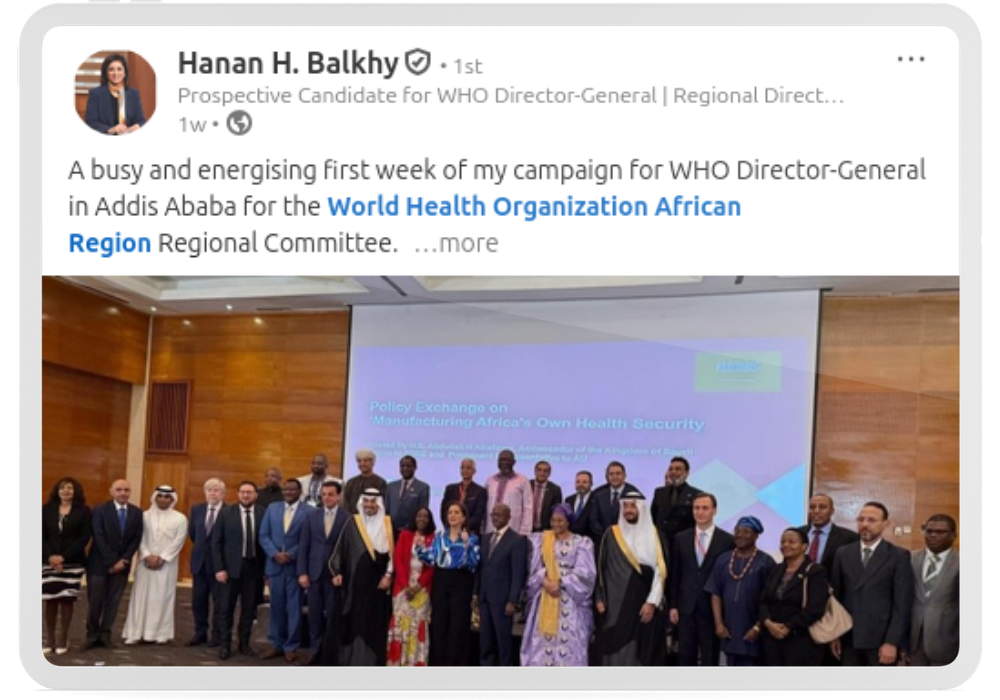
Balkhy’s international engagements, particularly during her visits to regional committee meetings in Africa and South-East Asia, expanded this clinical foundation into a broader platform centered on mutual capacity building, "One Health" collaboration, and the strengthening of local manufacturing and regulatory infrastructure.
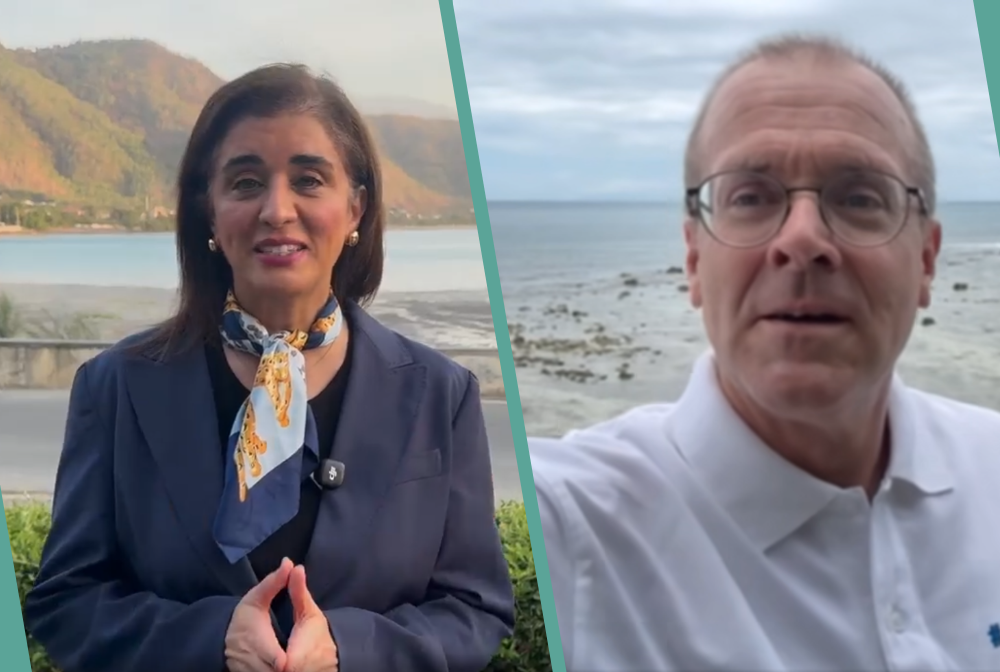
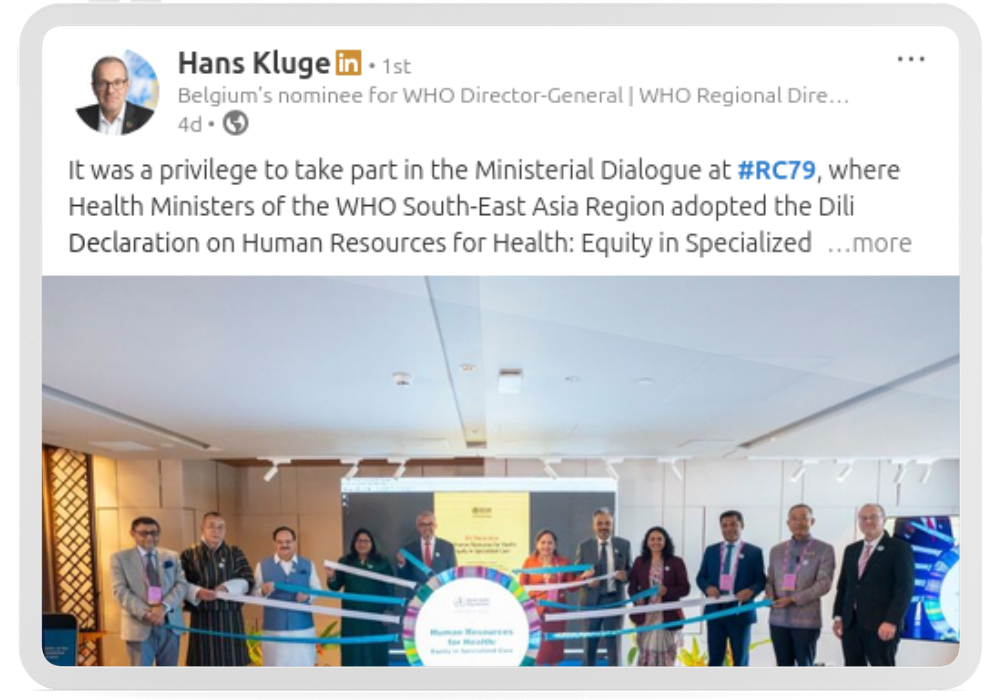
In contrast, Dr. Hans Kluge’s digital narrative employs a bottom-up approach focused on administrative transparency, crisis-tested field experience, and participative dialogue. His messaging highlights decades of operational crisis management in complex environments, spanning conflict zones and humanitarian emergencies in Somalia, Liberia, and Myanmar. Formalized under his manifesto, "Rebuilding WHO Together," Kluge’s platform emphasizes structural institutional reform, sustainable financing, and a networked "One WHO" model. His campaign tour across Africa, framed as a professional homecoming, and his endorsement of workforce equity initiatives are designed to project institutional consensus-building and alleviate concerns regarding a European-led candidacy.
Mapping Sovereign Bases and Regional Strongholds
Translating these narratives into electoral momentum requires securing sovereign-level alignment. Granular data tracking of the candidates’ digital interactions reveals distinct geographic and administrative strongholds that mirror their nominating regions.
Dr. Kluge’s digital support base features continuous engagement from European diplomatic corps, led by Belgian officials including ambassadors to Finland and India. Cabinet-level engagement is visible through interactions from Latvian Health Minister Hosam Abu Meri, Monegasque Minister Christophe Robino, Irish Minister of State Mary Butler, and Swedish Global Health Ambassador Karin Tegmark Wisell. Conversely, Dr. Balkhy’s digital interactions demonstrate a consolidated sovereign-technical base anchored by the Saudi Ministry of Health and the Saudi Food and Drug Authority, alongside high-ranking health officials from Egypt, Oman, and Sudan.
Both candidates have placed significant strategic emphasis on securing the African regional bloc, which represents 47 sovereign member states and serves as a decisive force in the Director-General election. Kluge’s collaborative platform drew sustained engagement from regional technical experts and representatives associated with the Africa Centers for Disease Control and Prevention (Africa CDC) and the West African Health Organization (WAHO). Meanwhile, Balkhy’s outreach in Addis Ababa generated immediate momentum among continental figures, including representatives from the Ethiopian Public Health Institute, the African Union Interafrican Bureau for Animal Resources (AU-IBAR), and institutional leaders from the Institut Pasteur de Dakar.
Geopolitical Reach: US Security and EU Executive Machinery
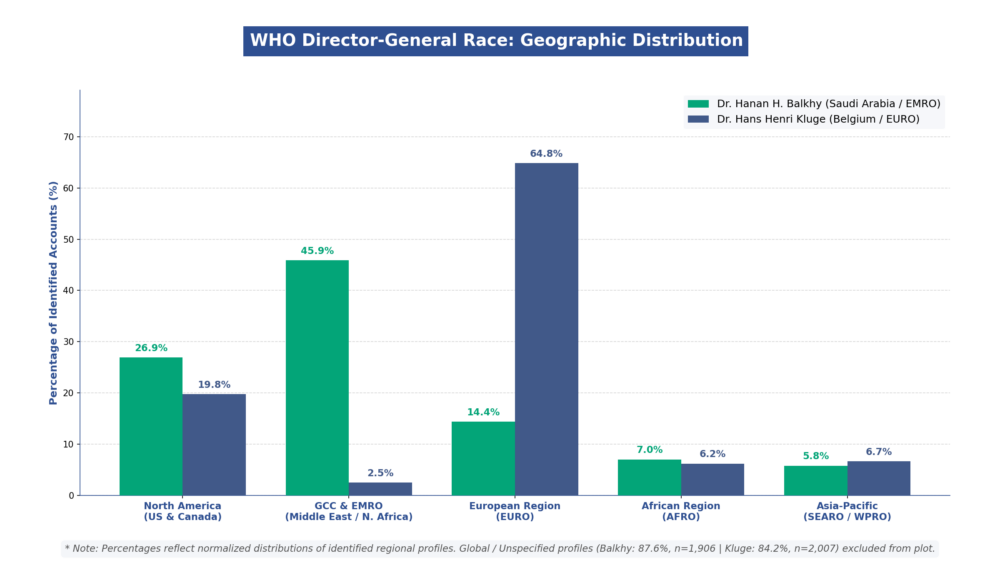
The candidates’ professional networks also extend into major geopolitical and administrative centers outside their immediate regions. Dr. Balkhy maintains visible digital connections to United States health security and biosecurity ecosystems. Her platform has attracted regular engagement from high-ranking US government advisors and public health officials, including former presidential advisor Larry Kerr, former US Ambassador Jimmy Kolker, and senior personnel from the Centers for Disease Control and Prevention (CDC) and the Department of Health and Human Services (HHS). Analysts note this network could position her as an effective diplomatic bridge for Washington following historical tensions surrounding US engagement with the WHO.
On the other hand, Dr. Kluge maintains deep institutional ties to the executive machinery of the European Union. His digital interactions feature senior officials from the European Commission Directorate-General for Health and Food Safety (DG SANTE), the European Health Emergency Preparedness and Response Authority (DG HERA), and the European Health and Digital Executive Agency (HaDEA). These connections underscore his integration with the regulatory and administrative frameworks of European health policy, even as the European Commission has maintained an officially neutral stance on individual candidacies.
Corporate, Academic, and Civil Society Ecosystems
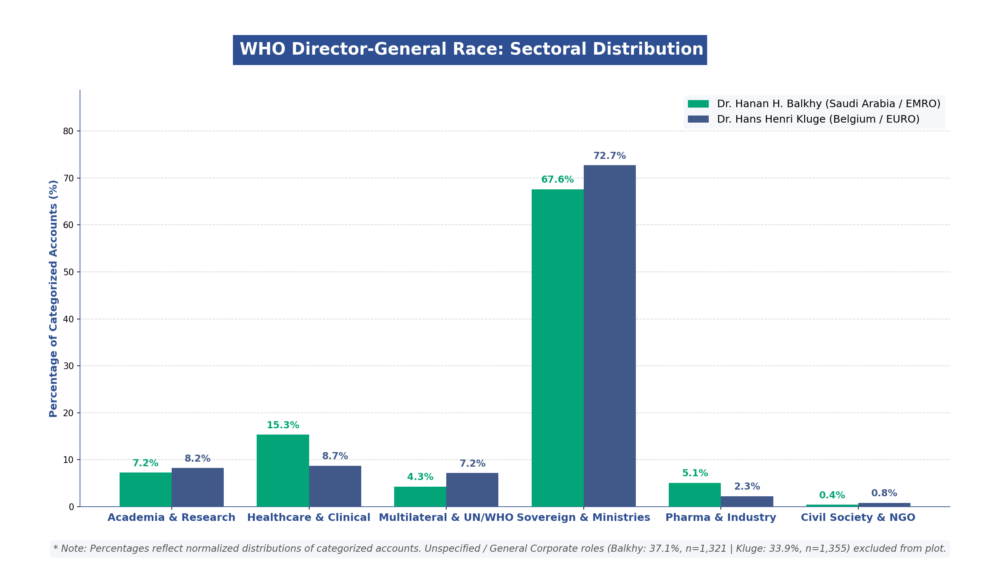
Economic and sectoral dividing lines further delineate the campaign ecosystems. Kluge’s digital footprint maintains high visibility within the European industrial healthcare sector, drawing engagement from top-level corporate executives, including representatives from Bayer AG, the European Federation of Pharmaceutical Industries and Associations (EFPIA), Vaccines Europe, Astellas Pharma, and Johnson & Johnson. His academic and civil society networks are heavily populated by health economists and policy architects from institutions such as the London School of Economics and Bocconi University, alongside representatives from international civil society organizations.
In contrast, Balkhy’s corporate and research connections concentrate on specialized biotechnology, clinical transformation, and antimicrobial resistance (AMR) networks. Her platform engages leaders from firms such as BioVersys AG, Roche Pharma, Sanofi, and AstraZeneca, alongside prominent epidemiologists, infectious disease researchers, and patient advocacy leaders focused on global health security.
Broader Impact and Implications
As the nomination window closes, the digital and professional networks mobilizing around each candidate reflect the complex coalition-building required to lead the WHO. The next Director-General will inherit an organization facing unprecedented fiscal pressures, ongoing post-pandemic reforms, and delicate geopolitical negotiations between member states.
While candidates like Indonesian Health Minister Budi Gunadi Sadikin leverage massive domestic reach and non-traditional financial backgrounds to drive global policy debates, and former Qatari Minister Hanan Mohammed Al-Kuwari relies on established diplomatic channels, the visible campaigns of Kluge and Balkhy demonstrate two distinct pathways for global health leadership. Ultimately, the success of the incoming Director-General will depend on their ability to translate these early digital networks and institutional associations into enduring sovereign trust across all WHO member states.