In a significant escalation of tensions between the executive branch and the press corps, President Donald Trump has officially revoked the press credentials of several prominent news organizations, including CNN, MS NOW, and Politico. The decision, announced via the President’s TruthSocial platform and later defended during an Oval Office press briefing, marks a volatile shift in the relationship between the White House and the media, raising profound questions regarding the First Amendment, the role of a free press in a democracy, and the boundaries of executive authority.
The President’s move, which effectively bars these outlets from accessing White House grounds and press briefings, is predicated on his long-standing contention that these organizations engage in the dissemination of "fake news." Trump, who has frequently clashed with major media institutions throughout his political career, argued that these outlets have systematically abandoned journalistic integrity in favor of promoting political agendas and misinformation.
Chronology of Escalating Tensions
The relationship between the current administration and the mainstream media has been characterized by friction since the transition of power. The recent banning of these outlets follows a series of public denunciations by the President.
The sequence of events leading to the current standoff began with heightened scrutiny over the administration’s legislative agenda and the subsequent coverage by major networks. In the weeks preceding the ban, President Trump repeatedly signaled his dissatisfaction with reporting regarding his cabinet appointments and economic policies.
On the day of the announcement, the President utilized TruthSocial to codify his grievances. He specifically targeted Politico, alleging that the publication had benefited from an "illegal and ridiculous $8 million subscription" arrangement under the previous Biden administration. Trump characterized this funding as a mechanism to sustain the publication’s operations, framing it as a conflict of interest that compromised their independence.
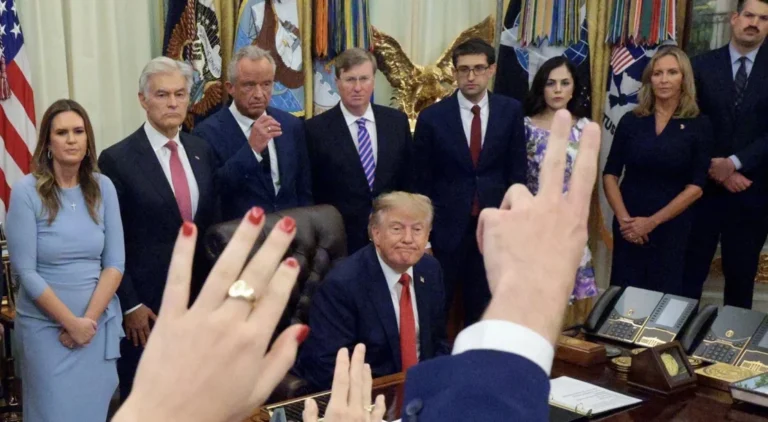
Following the digital announcement, the President held an impromptu briefing in the Oval Office. When pressed by members of the press pool regarding the constitutional implications of his actions, President Trump remained steadfast. He dismissed concerns about the First Amendment, asserting that the government possesses the right to restrict access to those who demonstrate a pattern of "dishonesty" and "fiction."
The Legal and Constitutional Landscape
The exclusion of news organizations from the White House is not an unprecedented event, yet it remains a highly contentious legal territory. Historically, the White House Press Corps operates under a system of credentialing managed by the White House Correspondents’ Association (WHCA) in coordination with the Secret Service.
Legal scholars note that while the White House is a non-public forum—meaning the government has broader discretion to regulate access—the courts have historically placed limits on the executive branch’s ability to use such power to suppress dissent. In the 1977 case Sherrill v. Knight, the U.S. Court of Appeals for the D.C. Circuit ruled that the White House could not deny press passes in an arbitrary or content-based manner without providing a compelling justification and a process for appeal.
By explicitly citing "fake news" and "dishonest reporting" as the justification for the bans, the administration has positioned itself for potential litigation. Civil liberties organizations, including the American Civil Liberties Union (ACLU) and the Reporters Committee for Freedom of the Press, have historically argued that barring journalists based on the viewpoint of their reporting constitutes a violation of the First Amendment’s guarantee of freedom of the press.
Broadening the Scope: A Multi-Front Conflict
The administration’s actions appear to be part of a broader strategy to reshape the media ecosystem. During his remarks, President Trump hinted that the current bans may only be the beginning. "There may be others to join them," the President warned, suggesting that the administration is actively monitoring the output of other major networks.

In addition to targeting specific outlets, the President directed sharp criticism toward the polling industry, specifically citing Fox News. Despite Fox News’s reputation for conservative-leaning commentary, the President expressed deep dissatisfaction with their polling data, describing it as the "worst in the business." By challenging the legitimacy of established polling institutions, the President is attempting to delegitimize the metrics often used by the media to gauge his public approval.
Furthermore, the Washington Post was singled out during the briefing, with the President labeling its coverage as "disgusting." Despite the harsh rhetoric, the President insisted that his administration does not engage in repression. "We don’t repress, but they write fake news," he stated, arguing that his actions are a defensive measure to ensure "honest news" for the American public.
Implications for the Media and Public Discourse
The banning of major news outlets has significant implications for both the media and the public. For the press, the loss of access to the White House briefing room, the press secretary, and senior administration officials creates a substantial hurdle in the pursuit of accountability. Without the ability to pose direct questions, journalists are forced to rely on secondary sources, potentially slowing the flow of accurate information and reducing the transparency of executive branch operations.
From the administration’s perspective, the move is a fulfillment of a promise to "drain the swamp" and bypass traditional media gatekeepers. By communicating directly to the public through social media platforms, the President aims to control the narrative without the filter of critical journalism. However, political analysts argue that this isolationist approach can lead to an echo chamber, where the administration is insulated from the very questions that might highlight systemic failures or policy shortcomings.
Official Responses and Industry Reaction
While formal statements from the affected outlets are still forthcoming, the initial reaction from the journalism community has been one of alarm. Many media critics argue that the administration’s focus on the perceived "dishonesty" of the press is a tactic designed to erode public trust in institutions that provide a check on power.
Conversely, supporters of the President argue that the media has become an arm of the political opposition. They contend that the "fake news" label is an accurate descriptor of a media landscape that they believe has prioritized activism over objectivity. For these supporters, the removal of certain outlets from the White House is a necessary correction to a system they view as inherently biased.
Looking Ahead: The Future of Press Freedom
The current situation is expected to escalate into a prolonged legal and political battle. If the banned outlets choose to file suit—as has been the precedent in previous instances of press credential revocation—the courts will once again be forced to define the boundaries of the President’s authority over the press.
The outcome of this confrontation will likely serve as a defining moment for the remainder of the current term. If the administration succeeds in maintaining the bans, it could signal a new era of executive-media relations, where access is contingent upon alignment with administration narratives. If the courts intervene, it will reaffirm the judiciary’s role as the final arbiter of constitutional protections regarding the freedom of the press.
As the situation unfolds, the American public remains caught in the middle of a deepening divide. The battle over "truth" and "fake news" is no longer confined to the digital sphere; it has now reached the halls of the White House, fundamentally altering the way the government interacts with the institutions tasked with reporting on its activities. The durability of these bans, and the response from the broader media ecosystem, will dictate the health of the democratic dialogue in the United States for the foreseeable future.
In the immediate term, the White House Press Office has not provided a specific timeline for when, or if, the banned organizations might be eligible for reinstatement. For now, the administration appears committed to a policy of restricted access, signaling that the tension between the President and the press is far from resolved. The impact of this policy on the administration’s ability to communicate its message, and on the media’s ability to report on it, remains the subject of intense national debate.