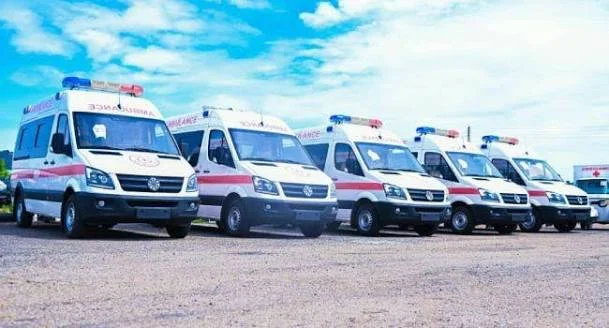
The Federal Government of Nigeria has officially inaugurated a significant expansion of emergency medical infrastructure in Bauchi State, marked by the deployment of specialized ambulances to key health facilities and the launch of sustainable energy solutions at major teaching hospitals. This initiative, executed under the National Emergency Medical Services and Ambulance System (NEMSAS), represents a concerted effort by the Federal Ministry of Health and Social Welfare to bridge the critical gap in emergency response times and referral efficiency in Nigeria’s North-East region.
The deployment of these life-saving vehicles, which took place during a high-profile visit by the Coordinating Minister of Health and Social Welfare, Prof. Muhammad Ali Pate, signals a shift toward a more integrated and technology-driven national health framework. The selected beneficiary institutions include Toro General Hospital, Gamawa Hospital, the Federal Medical Centre in Misau, the Abubakar Tafawa Balewa University Teaching Hospital (ATBUTH), and the North-East Vesicovaginal Fistula Centre in Ningi.
Contextualizing the NEMSAS Initiative
The National Emergency Medical Services and Ambulance System (NEMSAS) is a flagship policy designed to address the fragmented state of emergency medical services across the country. In many rural and semi-urban parts of Nigeria, the "golden hour"—the critical window of time immediately following an injury or sudden illness during which prompt medical treatment is most likely to prevent death or permanent disability—is frequently lost due to inadequate transport infrastructure and the absence of a coordinated emergency dispatch system.
By embedding these ambulances within both primary and secondary care facilities, the government aims to create a robust, responsive chain of survival. This system is intended to function as a seamless network where patients can be stabilized in the field or during transit and transported to the appropriate level of care without the typical bureaucratic or logistical delays that have historically plagued public health referrals.
Chronology of Recent Healthcare Interventions in Bauchi
The recent deployment of ambulances is not an isolated event but rather the latest development in a multi-phased strategy to overhaul the health sector in Bauchi State. The chronology of recent government interventions highlights a sustained commitment to infrastructure development:
- Early 2026: The Federal Government launched a massive medical resource injection, allocating approximately ₦10 billion toward the procurement of essential medical equipment, pharmaceuticals, specialized maternity kits, and an initial fleet of ambulances for Bauchi State.
- Mid-2026: Preparatory assessments were conducted across primary healthcare centers (PHCs) to identify facilities in dire need of structural revitalization.
- Late 2026: Integration of renewable and sustainable energy initiatives, specifically the introduction of Compressed Natural Gas (CNG) facilities at major teaching hospitals to reduce operational costs and ensure power reliability.
- Current Phase: The official commissioning of the NEMSAS deployment and the commencement of expansion projects at ATBUTH and the Federal Medical Centre, Misau.
The Role of Sustainable Energy in Healthcare
A notable component of this recent expansion is the introduction of a Compressed Natural Gas (CNG) facility at the Abubakar Tafawa Balewa University Teaching Hospital (ATBUTH). In the Nigerian context, hospitals often struggle with the exorbitant costs of maintaining diesel-powered generators to ensure constant electricity for operating theaters, laboratory equipment, and cold-chain storage for vaccines.
The shift toward CNG represents a forward-thinking approach to institutional sustainability. By lowering the energy overhead, the hospital can redirect critical funds toward clinical services, patient care, and staff welfare. This move is consistent with the federal government’s broader economic transition policy aimed at reducing dependence on volatile imported fuels in favor of domestic, cleaner energy alternatives.

Analyzing the Impact on Maternal and Child Health
One of the key beneficiaries of this initiative is the North-East Vesicovaginal Fistula (VVF) Centre in Ningi. Fistula, a condition often resulting from obstructed labor, has long been a public health crisis in Northern Nigeria. The inclusion of this facility in the NEMSAS rollout is strategic. Given that many patients travel from remote, hard-to-reach communities, the availability of dedicated emergency transport can significantly decrease the morbidity rates associated with long-term fistula complications.
Furthermore, the ongoing revitalization of over 100 primary healthcare centers across Bauchi serves as the foundation for this emergency system. A referral system is only as strong as its weakest link; by ensuring that local PHCs are well-equipped, the government is reducing the pressure on tertiary institutions like ATBUTH, ensuring they remain reserved for specialized and complex emergency cases.
Official Stance and Administrative Expectations
During the unveiling ceremony, Prof. Muhammad Ali Pate emphasized the human cost of health inequities. He remarked that geographic distance should not be a death sentence for any Nigerian citizen. The minister’s directive to the management of the beneficiary hospitals was clear: the equipment must be treated as a public trust.
"The investment in these ambulances is not merely about the procurement of vehicles; it is about the integration of these assets into a functional referral system," Prof. Pate stated. He underscored the need for rigorous maintenance schedules and the training of personnel to manage emergency dispatch, ensuring that the technology does not fall into disrepair through negligence.
Broader Implications for Nigeria’s Health Sector
The developments in Bauchi serve as a template for the government’s "Health Sector Renewal Investment Programme." By prioritizing high-burden areas, the federal government is attempting to demonstrate that data-driven resource allocation can produce tangible improvements in health indices.
- Reduction in Referral Gaps: By standardizing the quality of ambulance transport, the government is attempting to eliminate the practice of using inadequate public transport for emergency medical transfers, which often exacerbates patient conditions.
- Diagnostic Capability Enhancement: Beyond transport, the government’s focus on cancer care and diagnostic services in Bauchi is a move to decentralize specialized medical care. By bringing diagnostics closer to the patient, the federal government aims to reduce the "medical tourism" burden, where patients are forced to seek care in Abuja, Lagos, or abroad for routine specialized procedures.
- Strengthening Public-Private and State-Federal Synergy: The success of these initiatives relies heavily on the collaboration between the Federal Ministry of Health and the Bauchi State government. The revitalization of over 100 PHCs serves as evidence that joint funding and shared responsibility are necessary to sustain long-term improvements in a sector as vast as Nigeria’s.
Challenges and Future Considerations
While the deployment of ₦10 billion in equipment and the establishment of new infrastructure are significant milestones, health policy experts note that the ultimate test will be the sustainability of these programs. The availability of skilled human resources—drivers trained in basic life support (BLS), paramedics, and specialized medical technicians—will be critical to the efficacy of the NEMSAS rollout.
There is also the question of road infrastructure. Even the most advanced ambulance is limited by the quality of the roads it traverses. As the federal government continues to pour resources into the "hardware" of health (ambulances and buildings), observers suggest that the "software" (operational training, robust dispatch software, and emergency funding models) must receive equal attention to ensure that the NEMSAS framework functions as intended during peak demand periods.
Conclusion
The strategic deployment of ambulances and the modernization of energy infrastructure in Bauchi State mark a pivotal moment in the administration’s health sector reform agenda. By linking primary care centers to specialized hospitals through a formalized emergency network, the Federal Government is building a safety net for vulnerable populations. As these facilities begin to operate under the new parameters, the focus will inevitably shift to monitoring patient outcomes and ensuring that the initial capital investments translate into long-term systemic improvements. The people of Bauchi and the broader North-East region stand to benefit significantly from this intervention, provided that the culture of maintenance and operational excellence is upheld across all levels of the health hierarchy.