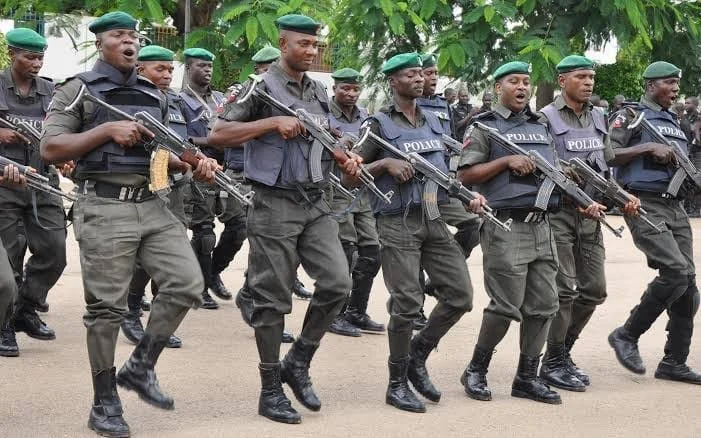
In a strategic push to overhaul the operational capabilities of Nigeria’s internal security architecture, a select cohort of Police Mobile Force (PMF) squadron commanders drawn from various formations nationwide has successfully completed an intensive, month-long tactical training program. The comprehensive curriculum, centered on advanced weapon handling, combat maneuvering, and leadership development, took place at the prestigious Force Training College located in Ila-Orangun, Osun State.
The graduation of these commanders marks a critical milestone in an ongoing, sweeping institutional reform championed by the nation’s police leadership. Designed to pivot the tactical response of the force toward modern asymmetric warfare, forest clearance operations, and counter-insurgency frameworks, the training underscores the government’s renewed commitment to safeguarding lives and property in the face of complex national security challenges.
Passing-Out Ceremony and Core Curriculum
During the passing-out ceremony held on Tuesday at the Ila-Orangun facility, the Commandant of the Police Mobile Force Training College, Anietie Eyoh, addressed the graduating officers. He charged them to immediately translate the advanced skills acquired during the rigorous program into professional, effective, and result-oriented policing within their respective jurisdictions.
"We have given them training on weapon handling, combat manoeuvres, and the tactics that will make them approach the enemy inside the forest," Eyoh stated during his address. He emphasized that the objective extended far beyond mere physical conditioning. The overarching goal, he noted, was to cultivate disciplined, analytical police officers capable of independent tactical thought, effective communication, seamless teamwork, and absolute adherence to human rights and the rule of law.
The month-long schedule was grueling, exposing the commanders to a multifaceted syllabus. Beyond combat drills and firearm mastery, the curriculum incorporated modules on drill and discipline, leadership and team command, operational communication and reporting, clearance and stability patrol concepts, and contemporary operational challenges. Furthermore, the officers received specialized instruction in law and human rights, conflict management, de-escalation strategies, emergency response, first aid, casualty management, physical endurance, jungle and forest survival principles, and realistic field exercises.
"We sought to develop disciplined police officers who can think professionally, communicate effectively, work as a team, respect lawful authority, exercise sound judgement, and understand the responsibility that accompanies police powers," Eyoh added.
Participant Perspectives and Professional Growth
Speaking on behalf of the eleven PMF commanders who completed the rigorous course, Kayode Ajayi reflected on the transformative nature of the program. He noted that the training successfully bridged gaps in operational experience, sharpening the participants’ mental and physical readiness for higher responsibilities in the field.
"It taught us discipline, perseverance, teamwork, obedience to lawful authority, leadership, responsibility, and commitment to duty," Ajayi said, highlighting the demanding nature of the physical, mental, and professional hurdles they overcame.
He further observed that the diverse backgrounds and experiences of the officers upon arrival at the college ultimately enriched their collaborative learning environment. "We came to this college as police officers drawn from different formations, with different experiences and backgrounds, but we leave here with a stronger understanding of the responsibilities, discipline, and professional expectations associated with service in the Police Mobile Force," he affirmed.
Traditional Leadership Endorsement
The graduation ceremony drew commendations from traditional institutions, underscoring the deep connection between community stability and institutional security reforms. The Oragun of Oke-Ila, Oba Adedokun Abolarin, attended the event and praised the training scheme as a vital catalyst for national progress.
"This initiative has encouraged more enthusiasm and development needed to elevate the security force in Nigeria. What they have come here to do will have a great impact on Nigeria’s security," Oba Abolarin remarked, describing the program as indispensable for the advancement of modern policing standards.
Broader Institutional Reforms and the Inspector-General’s Vision
The specialized training program in Osun State does not exist in a vacuum; it forms an integral component of comprehensive institutional reforms initiated by Inspector-General of Police Olatunji Disu. The overarching vision of the current police leadership focuses on enhancing service delivery, institutionalizing continuous professional development, and retooling tactical units to effectively confront pervasive security threats, including insurgency, banditry, kidnapping, and rural banditry.
In a parallel development that highlights the nationwide scope of these security enhancements, IGP Disu recently expressed profound confidence in the capacity of the Mobile Police Force to decisively neutralize insurgency and banditry across the country. Speaking while declaring open a specialized training course for trainers and instructors of the Mobile Police Force at the PMF Training College in Ende Hills, Nasarawa State, the Inspector-General emphasized that the ultimate success of the Federal Government’s anti-insurgency campaign relies heavily on the operational readiness and tactical superiority of the PMF.
Disu reiterated that Mobile Police officers possess unique, specialized training and high-level tactical capabilities that make them indispensable assets in combatting non-state armed groups operating in difficult terrain, such as dense forests and rugged border regions.
Chronology of Recent Security and Training Milestones
The intensification of capacity-building programs within the Nigeria Police Force follows a chronological escalation of asymmetric security challenges across several geopolitical zones over the past decade.
In the early stages of the nation’s counter-insurgency efforts, conventional military forces bore the brunt of forest and rural combat operations, while police units primarily handled internal security, civil order, and post-conflict stabilization. However, as criminal syndicates, insurgent cells, and bandit networks increasingly utilized remote forests as safe havens and logistical bases, the need for a specialized, highly mobile, and combat-ready police tactical wing became acutely apparent.
Recognizing this operational gap, successive police administrations introduced targeted tactical training initiatives. Under the current leadership of IGP Olatunji Disu, these efforts have been systematized, modernized, and expanded. The establishment and continuous utilization of specialized training facilities like the PMF Training College in Ila-Orangun, Osun State, and Ende Hills, Nasarawa State, reflect a strategic shift toward proactive, decentralized tactical education. Over the past year, the force has steadily increased the frequency of refresher courses, combat simulations, and human rights integration modules for its frontline commanders, ensuring that leadership at the tactical level remains sharp, adaptable, and accountable.
Analysis of Implications for National Security
The graduation of these squadron commanders carries profound implications for the operational dynamics of internal security in Nigeria. By equipping senior tactical leaders with advanced forest maneuvering skills, modern weapon handling proficiency, and robust conflict de-escalation techniques, the Nigeria Police Force is systematically decentralizing tactical competence.
Historically, tactical bottlenecks often occurred when field commanders lacked specialized training in asymmetric warfare, frequently leading to reactive rather than proactive engagements with hostile elements. The new crop of commanders, having undergone rigorous simulation and physical endurance drills tailored to contemporary realities, is expected to improve tactical coordination, reduce friendly casualties, and enhance intelligence-led operations in high-risk zones.
Furthermore, the integration of human rights, law, and casualty management into the core curriculum addresses long-standing concerns regarding civil-military and civil-police relations. In counter-insurgency environments, maintaining the trust and cooperation of local civilian populations is paramount for gathering actionable intelligence. By training commanders to balance robust combat readiness with strict adherence to professional ethics and fundamental human rights, the force aims to project a disciplined, reliable image that fosters community partnership against criminal elements.
Future Outlook and Sustainability
As the newly trained squadron commanders return to their respective formations across the country, the success of the Ila-Orangun program will be measured by its tangible impact on operational theatres. Security analysts note that the institutionalization of continuous training must be matched by sustained logistical support, advanced equipment procurement, and robust welfare packages for personnel operating in hazardous environments.
The Inspector-General of Police remains steadfast in his commitment to modernizing the force through structural training interventions. With similar capacity-building initiatives running concurrently across various training colleges nationwide, the Nigeria Police Force is positioning the Police Mobile Force as a formidable spearhead in the nation’s ongoing crusade to restore total peace, law, and order across every region of the country.