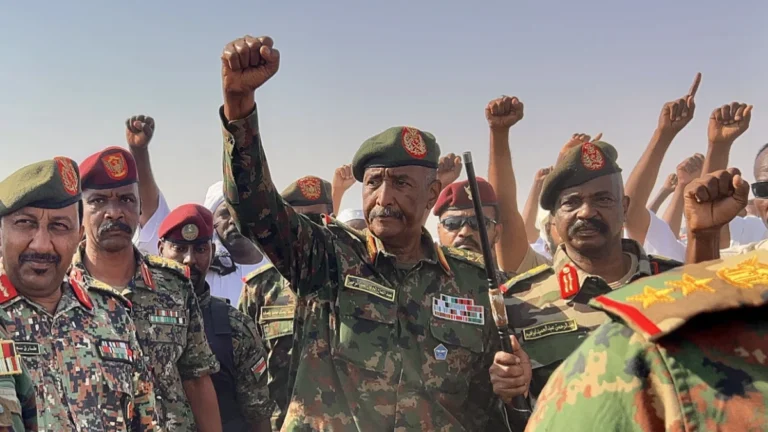
The United States has withheld a diplomatic entry visa for Sudanese army chief and Sovereignty Council Chairman General Abdel Fattah al-Burhan, directly obstructing his planned address at the United Nations General Assembly in New York. According to high-ranking Sudanese and international sources, the decision by Washington to stall and ultimately deny the visa stems from Khartoum’s staunch resistance to a newly proposed, US-backed ceasefire plan aimed at ending the catastrophic civil war that has ravaged the East African nation for over three years. General al-Burhan had been scheduled to take the podium at the global summit to present the Sudanese government’s perspective on the ongoing conflict, but the administrative roadblock has forced a last-minute delegation shakeup, with Foreign Minister Mohieldin Salem now expected to represent the country.
The diplomatic standoff highlights a tense convergence of international mediation efforts, host-country obligations under UN headquarters agreements, and deep-seated local resistance to foreign-imposed peace blueprints. Washington’s leverage over access to the United Nations headquarters in Manhattan has thrust the complex geopolitics of the Sudanese civil war directly into the spotlight, raising critical legal and diplomatic questions about the responsibilities of a host nation when utilizing visa approvals as a geopolitical tool.
The Washington Ceasefire Proposal and Khartoum’s Objections
At the heart of the current crisis is a 90-day humanitarian truce proposal spearheaded by Massad Boulos, Washington’s senior adviser for Arab and African affairs. Introduced to the warring parties as part of a renewed push to halt hostilities, the plan envisions an immediate three-month pause in fighting to facilitate the delivery of critical humanitarian aid, followed by structured negotiations toward a permanent ceasefire and the eventual establishment of a civilian-led transitional government.
However, the leadership of the Sudanese Armed Forces (SAF), headed by General al-Burhan, has balked at several core tenets of the American proposal. The primary point of contention revolves around the required posture and withdrawal timeline for the paramilitary Rapid Support Forces (RSF), commanded by Mohamed Hamdan Dagalo, widely known as Hemedti.
While the US-backed framework proposes limited and phased pullbacks, the Sudanese military demands a comprehensive and immediate withdrawal of all RSF units from major urban centers and cities they have occupied since the outbreak of the war in April 2023. Furthermore, General al-Burhan and his administration have openly criticized what they characterize as a rigid, take-it-or-leave-it approach from Western mediators. Sudanese officials argue that previous temporary truces and poorly monitored pauses in combat were systematically exploited by the RSF to regroup, rearm, and consolidate territorial gains, rendering short-term humanitarian truces strategically perilous for the national army.
Chronology of a Catastrophic Conflict and Failed Mediations
To fully understand the gravity of the current diplomatic clash, one must examine the devastating trajectory of the Sudanese civil war, which ignited on April 15, 2023. The conflict erupted out of a bitter power struggle between the SAF and the RSF—two rival factions that had previously formed an uneasy alliance following the October 2021 military coup led by al-Burhan and Hemedti, which derailed Sudan’s fragile democratic transition.
The fighting instantly transformed densely populated urban zones, particularly the capital Khartoum and the wider Greater Khartoum metropolitan area, as well as the Darfur and Kordofan regions, into active warzones. The humanitarian toll has been catastrophic, triggering one of the world’s worst displacement crises, widespread famine conditions, and severe violations of international humanitarian law.
International mediation efforts began almost immediately. In May 2023, the United States and Saudi Arabia co-sponsored peace talks in Jeddah, Saudi Arabia. Despite intense diplomatic pressure, successive rounds of negotiations produced only fragile, short-lived truces that were repeatedly violated by both sides on the battlefield.
Seeking to broaden international leverage, Washington convened a fresh round of diplomatic talks in Switzerland in August 2024. Notably, the Sudanese army chose not to attend, citing objections to the format and the inclusion of regional actors whose neutrality Khartoum questioned. Simultaneously, the United States expanded its diplomatic footprint by institutionalizing a four-country mediation group comprising the US, Saudi Arabia, Egypt, and the United Arab Emirates.
By June 2026, this multilateral pressure culminated in the presentation of the current 90-day ceasefire proposal. While the Sudanese military signaled willingness to engage on specific technical aspects of the framework, it drew a hard red line regarding the total evacuation of RSF fighters from occupied cities. As negotiations stalled, the geopolitical theater shifted to New York ahead of the high-level UN General Assembly debates.
Sudan Appeals to the United Nations Amid Visa Blockade
With General al-Burhan’s travel plans paralyzed by the withheld visa, the Sudanese government took formal diplomatic action, petitioning the United Nations leadership to intervene and compel Washington to honor its host-country agreements. On September 21, Sudan’s Permanent Representative to the UN, Al-Harith Idriss Al-Harith, dispatched an urgent letter to UN Secretary-General António Guterres.
In the strongly worded communication, Ambassador Al-Harith warned that the unilateral withholding of a visa by the host nation posed an existential threat to the principle of sovereign representation within the international body. "Should this situation persist, it would effectively prevent the Head of State of a Member State of the United Nations from participating in person in the work of the General Assembly," the letter emphasized.
The diplomatic intervention prompted an immediate response from the UN Secretariat. Stéphane Dujarric, spokesperson for the Secretary-General, acknowledged that António Guterres was "deeply concerned" by reports that General al-Burhan’s travel documents had not been processed. UN officials confirmed they were actively engaging with United States authorities to resolve the impasse, reminding Washington of the legal obligations stipulated in the 1947 UN Headquarters Agreement, which generally requires the host country to grant unimpeded entry to representatives of member states attending official UN functions.
Legal scholars and international relations experts note that while the US government historically retains certain discretionary powers over visa issuance for national security and foreign policy reasons, wielding these powers against a sitting head of state or government-designated leader scheduled to address the General Assembly sets a contentious precedent that tests the boundaries of international law and multilateral diplomacy.
Broader Implications for Peace and International Diplomacy
The decision by the United States to tie diplomatic access to ceasefire compliance represents a high-stakes, coercive gamble. On one hand, Washington and its Western allies argue that conventional diplomatic channels have failed to halt the slaughter in Sudan, necessitating aggressive, unconventional pressure tactics to force warring generals to the negotiating table and alleviate an unprecedented humanitarian catastrophe. Proponents of this approach believe that denying high-profile international platforms to leaders who reject peace frameworks deprives them of legitimacy and forces a tactical reassessment in Khartoum.
On the other hand, critics and regional observers warn that isolating the Sudanese military leadership and weaponizing UN access procedures may backfire profoundly. Rather than compelling compliance, such punitive measures risk entrenching Khartoum’s intransigence, fueling nationalist sentiment against perceived foreign interference, and driving the military leadership to seek alternative international partnerships outside the Western-led diplomatic architecture.
Furthermore, bypassing the head of state and forcing a reliance on foreign ministers or secondary delegations can weaken the authority of the negotiating team, as individuals lower in the command hierarchy may lack the absolute domestic political mandate required to make binding concessions on existential security matters.
As the UN General Assembly proceeds in New York without General al-Burhan, the broader implications of the standoff extend far beyond a missed speech. The episode exposes the severe limitations of traditional diplomacy in resolving protracted, intra-state military conflicts where domestic survival takes precedence over international opprobrium. With millions of Sudanese displaced, acute food insecurity threatening entire regions, and peace talks deadlocked over fundamental territorial disputes, the international community faces an escalating crisis with no immediate resolution in sight. The standoff underscores that until mediators can bridge the fundamental gap between Washington’s pursuit of rapid humanitarian truces and Khartoum’s demand for absolute military remediation, sustainable peace in Sudan will remain an elusive objective.