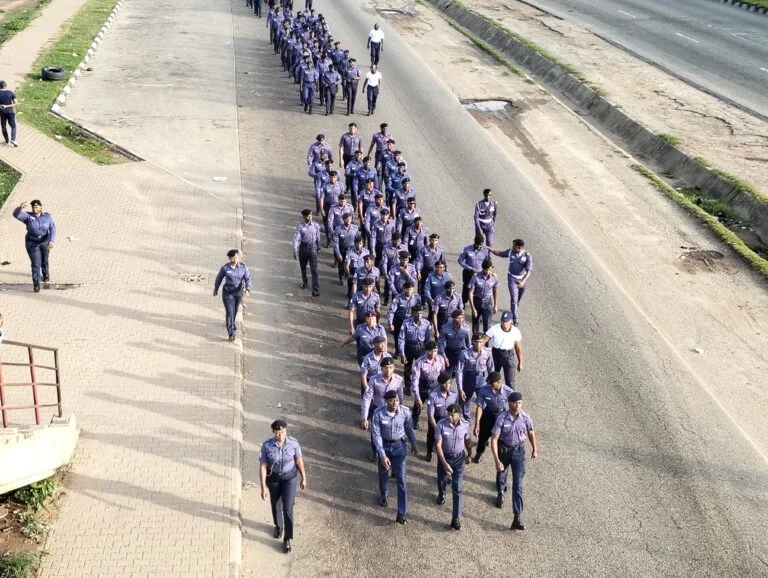
The Chief of the Naval Staff, Vice Admiral Idi Abbas, has issued a stern directive to all naval personnel, mandating strict adherence to political neutrality and professional conduct as the nation moves closer to the 2027 general elections. The directive, which underscores the military’s constitutional mandate, was delivered during the Third Quarter Route March 2026, a cornerstone event designed to test the physical endurance and operational readiness of the force. Speaking on behalf of the Naval Chief, the Director of Manning at the Naval Headquarters, Rear Admiral Kolawole Oguntuga, emphasized that the Armed Forces of Nigeria remain the bedrock of the nation’s democratic stability.
As the political landscape begins to shift ahead of the 2027 electoral cycle, the Nigerian military finds itself under increased scrutiny. Historically, the involvement of security agencies in election security has been a point of significant national interest. By proactively addressing the force, the Naval leadership aims to preemptively mitigate risks associated with partisan interference, ensuring that the Navy remains a neutral arbiter of security rather than a participant in the political fray.
The Significance of the Third Quarter Route March
The Route March is not merely a symbolic exercise; it is a critical component of the Nigerian Navy’s tactical readiness program. Conducted quarterly, these marches are designed to mirror the physical demands of modern warfare. In the current security climate, where naval personnel are increasingly deployed in joint operations alongside the Nigerian Army and Air Force, the ability to operate in diverse terrains—often far from the coastline—has become an essential skill.
During the event, Rear Admiral Oguntuga highlighted that modern naval service has evolved significantly. While the protection of maritime assets and the policing of territorial waters remain the core mandate, the contemporary Nigerian sailor is frequently engaged in land-based counter-terrorism and counter-insurgency operations. This dual-role requirement necessitates a level of physical fitness and mental resilience that goes beyond traditional seafaring duties. The march serves as a physical audit of the force, ensuring that each officer and rating is prepared for the rigors of multi-theatre deployments.
Constitutional Mandate and Political Neutrality
The core of Vice Admiral Abbas’s message centered on the constitutional requirement for military personnel to serve the state rather than political actors. The Nigerian Constitution, specifically the provisions governing the Armed Forces, delineates the military’s role in civil-military relations, emphasizing that the military is an institution of the state, subordinate to civilian authority, and duty-bound to remain impartial.
"The Armed Forces retain the solemn responsibility to support the democratic process," Oguntuga stated during the event. "However, this support must remain strictly within the limits of the law and duly authorized directives. Any activity that negates the service’s core values or brings the institution into disrepute will be met with firm disciplinary action."
This warning is particularly relevant as the nation prepares for the 2027 transition. Analysts have often noted that the conduct of security agencies during the lead-up to elections is a primary indicator of the health of a democracy. By mandating that personnel avoid associations that could be construed as partisan, the Naval leadership is reinforcing a code of conduct that prioritizes national security over individual political preferences.
Operational Readiness in a Changing Security Climate
The 2026 route march comes at a time when the Nigerian military is stretched across several fronts, including the North-East, North-West, and the Niger Delta. The integration of naval personnel into joint task forces has meant that they are often on the front lines of internal security operations. This reality requires a high degree of interoperability with other security agencies, including the Nigeria Police Force and the Department of State Services.
The Chief of the Naval Staff’s emphasis on "individual readiness" is rooted in the understanding that modern tactical conditions are fluid. Whether operating in the dense forests of the North-West or patrolling the complex waterways of the Niger Delta, the effectiveness of a unit is entirely dependent on the physical and psychological state of its members. The march serves as a reminder that operational success is not just about the quality of hardware, but about the resilience of the human element.
Fact-Based Analysis: The Implications of 2027
The political implications of the Naval Chief’s directive cannot be overstated. As the 2027 election cycle approaches, the political temperature is expected to rise, leading to increased pressure on security agencies to "pick sides" or influence electoral outcomes. By issuing this directive, Vice Admiral Abbas is effectively insulating his command from potential political fallout.
From an institutional standpoint, the maintenance of professional standards is essential for the legitimacy of the Nigerian Navy. International observers, including the United Nations and the African Union, have consistently highlighted the importance of security sector reform and the maintenance of political neutrality as a prerequisite for democratic consolidation in West Africa. The Nigerian Navy’s adherence to these principles serves as a benchmark for other regional forces.
Historical Context and Institutional Discipline
Historically, the Nigerian military has navigated various periods of political transition. The lessons of the past have taught the institution that political entanglement leads to internal division and loss of public trust. Since the return to democratic governance in 1999, the Nigerian Armed Forces have made significant strides in transitioning from a force that was once politically dominant to one that is focused on professional excellence and territorial defense.
The current leadership’s insistence on "renewing the commitment to the service of the nation" is a recurring theme that reinforces the military’s subordination to the constitution. The "sacred oath" mentioned by the Chief of the Naval Staff is a reminder that the primary loyalty of every officer and rating is to the sovereignty of the Federal Republic of Nigeria, not to any political party or individual politician.
Looking Ahead: Expectations for 2027
As the countdown to 2027 continues, the Navy has signaled that it will maintain a policy of zero tolerance for political bias. This policy will likely be reflected in future training curricula and operational briefings. Furthermore, the emphasis on physical fitness is expected to intensify as the service prepares for a high-tempo period of duty that will likely involve heightened surveillance, border patrol, and rapid response operations.
The event concluded with a clear call to action: personnel must make physical fitness a continuous habit and an integral part of their professional identity. By ensuring that the force remains physically robust and ethically grounded, the Naval leadership believes it can fulfill its mandate to defend the nation’s territorial integrity while upholding the standards that maintain public confidence.
Ultimately, the directive serves as a stabilization mechanism. In a country as diverse and politically dynamic as Nigeria, the military’s ability to stand as a neutral, professional, and competent institution is vital. The events of the Third Quarter Route March 2026 have set the tone for the coming months, signaling that while the political class may engage in the maneuvers of 2027, the Nigerian Navy remains focused on its duty to the state. The message is clear: the uniform is for service to the nation, and its prestige rests on the discipline and neutrality of those who wear it.