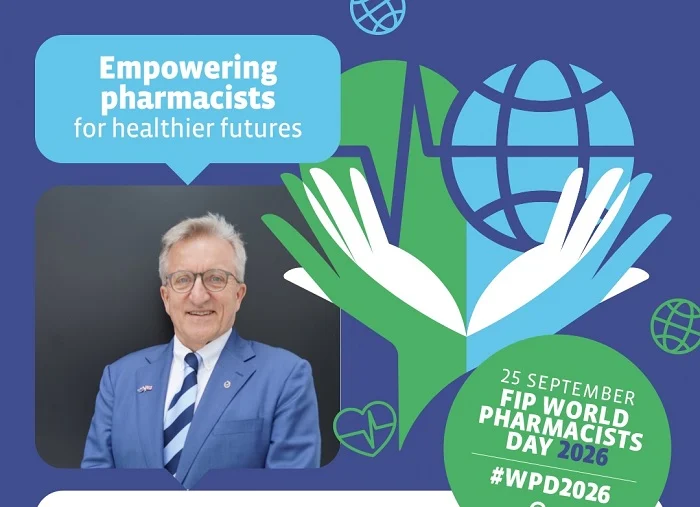
As pharmacists across the globe commemorate World Pharmacists Day, the International Pharmaceutical Federation (FIP) has emphasised the need for governments, policymakers, regulators, health insurers, and the public to strengthen supportive policies, invest in education, and ensure the full integration of pharmacists into health systems, noting their crucial role in building healthier societies. The call to action, centered on the theme "Empowering Pharmacists for Healthier Futures," arrives at a critical juncture in the evolution of global healthcare, where demographic shifts and the rise of non-communicable diseases (NCDs) are placing unprecedented pressure on existing medical infrastructures.
The Evolution of World Pharmacists Day
World Pharmacists Day, observed annually on September 25, is more than a ceremonial occasion; it is a strategic platform for advocacy. Established in 2009 by the FIP Council during its meeting in Istanbul, Turkey, the date commemorates the anniversary of the federation’s founding in 1912. Since its inception, the day has evolved from a professional celebration into a global movement designed to bridge the gap between pharmaceutical policy and public health delivery.
The FIP, which serves as the global body representing over four million pharmacists, pharmaceutical scientists, and pharmacy educators, utilizes this day to highlight that the profession is no longer limited to the traditional dispensing of medications. In the modern era, the pharmacist serves as a frontline clinician, a researcher, and a public health advocate.
A Chronology of the Profession’s Transformation
To understand the current mandate for "Empowering Pharmacists," one must look at the trajectory of the profession over the last century:
- 1912: The International Pharmaceutical Federation is established in The Hague, Netherlands, to facilitate international cooperation and standardize pharmaceutical practice.
- 1950s–1980s: The "Clinical Pharmacy" movement begins, shifting the focus from the product (the medication) to the patient.
- 2009: The FIP Council officially designates September 25 as World Pharmacists Day to enhance the visibility of the profession.
- 2020–2022: The COVID-19 pandemic serves as a stress test for global health systems. Pharmacists prove to be the most accessible healthcare providers, often serving as the primary point of contact for vaccination, testing, and triage when primary care clinics are shuttered or overwhelmed.
- 2024 and Beyond: The focus shifts to long-term integration. The current FIP objective is to ensure that pharmacists are formally recognized as key stakeholders in national and global pandemic preparedness and NCD management.
Addressing the Modern Health Crisis
The FIP’s appeal for empowerment is not merely institutional rhetoric; it is a response to concrete data regarding the global burden of disease. According to data from the World Health Organization (WHO), NCDs such as cardiovascular disease, cancer, chronic respiratory diseases, and diabetes are responsible for 74% of all deaths globally.
Pharmacists are uniquely positioned to intervene in these statistics. Because they are often the most accessible healthcare professionals—particularly in low- and middle-income countries where the ratio of doctors to patients is starkly imbalanced—they provide a critical safety net. By performing blood pressure screenings, diabetes monitoring, and medication therapy management (MTM), pharmacists alleviate the burden on hospital emergency departments and specialized clinics.
Paul Sinclair: The Vision for a Resilient Future
Mr. Paul Sinclair, President of the FIP, has been a vocal proponent of the "integrated care" model. In his official statement regarding the 2026 commemorations, he underscored that the "Empowering Pharmacists" theme is a direct mandate for governments to rethink their workforce strategies.
"Pharmacists are uniquely positioned at the intersection of medicines supply, scientific innovation, and patient care delivery," Sinclair noted. "When they are enabled to practise to the full extent of their expertise, health systems are more accessible, more responsive, and more sustainable."

Sinclair argues that the current health ecosystem often suffers from "siloed" practices, where the pharmacist is treated as a vendor of goods rather than a clinical partner. This misalignment, he suggests, leads to sub-optimal patient outcomes, higher rates of medication errors, and increased costs for health insurers. By granting pharmacists greater prescriptive authority and access to electronic health records, governments could significantly improve patient adherence and disease management.
Economic and Systemic Implications
The economic case for empowering the pharmacy workforce is compelling. Research in developed markets suggests that for every dollar invested in pharmacist-led clinical services, there is a significant return on investment through reduced hospital readmissions and improved management of chronic conditions.
However, systemic barriers persist. In many regions, outdated regulations prevent pharmacists from performing clinical tasks for which they are trained. The FIP is currently lobbying for:
- Uniformity in Education: Standardizing the curriculum globally to ensure that the title of "pharmacist" guarantees a consistent level of clinical competency.
- Digital Integration: Providing pharmacists with secure access to national health databases, allowing them to provide safer, more informed care.
- Remuneration Models: Transitioning from a profit-based model (dependent on the volume of medication sold) to a service-based model (compensated for clinical outcomes and patient consultation).
Global Reactions and Regional Perspectives
The FIP’s call has resonated with various regional pharmacy bodies. From the American Pharmacists Association (APhA) to the Pharmaceutical Society of Nigeria, there is a unified chorus calling for legislative reform.
Professional bodies emphasize that in an era of "digital transformation," the pharmacist’s role as a mediator between complex medical data and the patient is vital. As artificial intelligence and telehealth redefine the patient experience, the pharmacist serves as the "human bridge"—ensuring that technological convenience does not compromise the quality or safety of pharmaceutical care.
Future-Ready Health Systems: A Strategic Necessity
The urgency expressed by the FIP is driven by the reality of climate-related health risks and the emergence of new pathogens. As the world faces more frequent health emergencies, the resilience of the health system depends on the agility of its workforce.
Pharmacists represent a massive, highly trained, and under-utilized workforce. In the event of a public health crisis, they are the only providers capable of scaling up delivery of care within days, not months. The FIP insists that waiting until a crisis occurs to integrate these professionals is a strategic failure. Instead, pharmacists must be included in the design phase of national health strategies.
Conclusion: The Path Forward
The message from the FIP on this year’s World Pharmacists Day is clear: the empowerment of the pharmacist is not an end in itself, but a prerequisite for a sustainable global health future. By investing in the education, technology, and professional recognition of pharmacists, nations can build a more robust, patient-centered, and efficient healthcare system.
The challenge now lies with policymakers. As the world faces an aging population and an increasing prevalence of chronic illness, the traditional models of healthcare delivery are becoming unsustainable. Integrating the pharmacist—a professional who is already on the frontlines of community health—represents one of the most effective, scalable, and cost-efficient strategies available to governments today. Whether this call to action results in meaningful legislative change remains to be seen, but the evidence suggests that the future of global health is inextricably linked to the empowerment of those who stand at the counter.