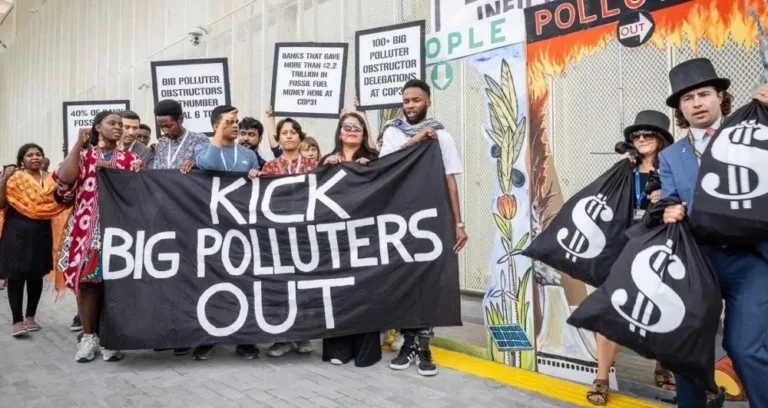
ANTALYA, Türkiye — As delegates gathered in Antalya for the United Nations COP31 climate summit, a newly released analysis has revealed that more than 100 corporations and industry groups with documented histories of obstructing climate legislation have secured official access to the negotiations. According to findings published by the Kick Big Polluters Out (KBPO) coalition, these 103 delegations—including 60 directly representing the fossil fuel industry—significantly outpace the official representation of some of the world’s most climate-vulnerable countries.
The disparity highlights ongoing friction within international climate governance. The analysis shows that polluter-linked delegates outnumbered representatives from Saint Vincent and the Grenadines by 100 to 1, Niger by 25 to 1, the Philippines by 8 to 1, and Nepal by 6 to 1. Critics argue that this heavy corporate presence undermines the integrity of the summit, giving influential carbon-intensive sectors unprecedented proximity to policymakers tasked with phasing out fossil fuels.

Background and Chronology of Corporate Influence at UN Climate Summits
The debate over corporate lobbying at Conference of the Parties (COP) events is not new, but the scale of access has escalated dramatically over recent cycles. KBPO’s historical tallies demonstrate a consistent trend of high-level industry integration:
- COP28 (Dubai): A record-breaking 2,456 fossil fuel lobbyists were counted, nearly four times the attendance from the previous year.
- COP29 (Baku): Approximately 1,773 industry representatives attended, exceeding the combined delegations of the 10 most climate-vulnerable nations.
- COP30 (Belém): The coalition recorded 1,602 fossil fuel affiliates, representing roughly one in every 25 participants—the highest proportional share documented up to that point.
- COP31 (Antalya): While raw counts shifted slightly, the strategic placement of lobbyists within national delegations and NGO slots continued to spark intense pushback from civil society and developing nations.
This pattern extends beyond climate summits into broader UN environmental forums. Investigations into the UN biodiversity summit held previously in Armenia identified attendees from firms such as Shell, TotalEnergies, Bayer, and Rio Tinto, despite organizers removing company names from the delegate lists. Similarly, at negotiations for a global plastics treaty in Geneva, the Centre for International Environmental Law (CIEL) counted at least 234 fossil fuel and chemical industry lobbyists—surpassing the combined delegations of the European Union and its 27 member states.
Entry Pathways and National Delegation Integration
Industry representatives gain access to COP summits through various mechanisms, predominantly via "Party overflow" badges provided by sympathetic host governments, nongovernmental organizations, or direct integration into official state delegations.
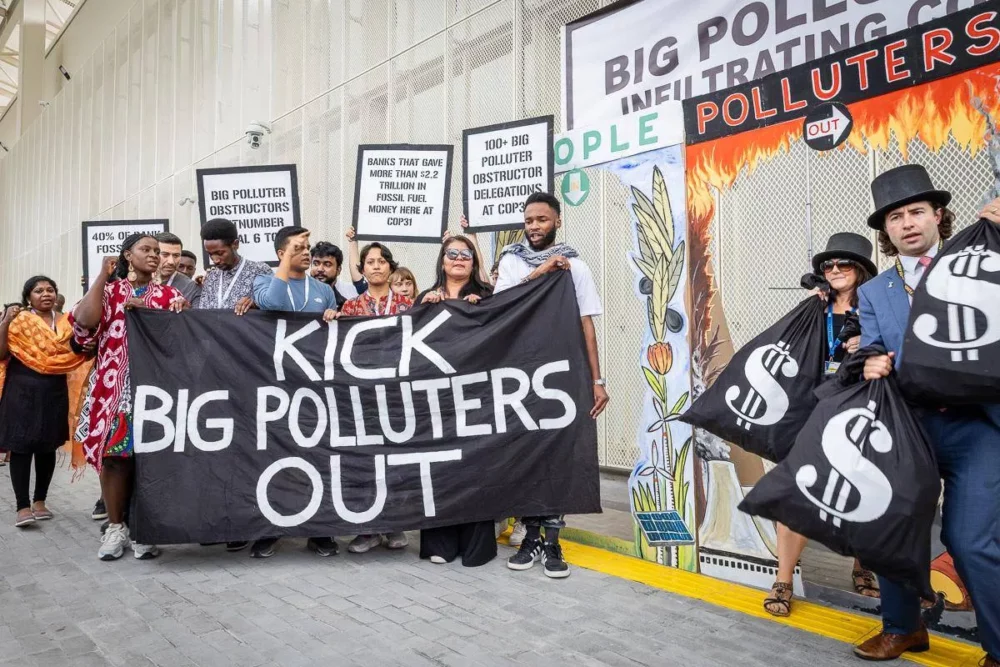
At the Antalya summit, specific delegations included substantial corporate backing. Prominent corporate contingents included the International Emissions Trading Association with 29 delegates, BNP Paribas with 22, HSBC with 19, Amazon with 12, and ExxonMobil with 13. Furthermore, asset manager BlackRock was reportedly embedded within France’s official delegation, while Italy brought 50 fossil fuel industry representatives, up sharply from 12 at COP30.
Organizations flagged by KBPO are identified based on scoring systems from the corporate climate lobbying think tank InfluenceMap, which tracks activities notably misaligned with global climate goals. Additionally, the list includes 30 of the world’s top fossil-fuel-financing banks. Between 2021 and 2025, these institutions funneled more than $2.2 trillion into the sector, accounting for nearly 40% of all global fossil fuel bank financing, according to the Banking on Climate Chaos database.
Reactions from Official Bodies and Civil Society
The overwhelming presence of fossil fuel advocates has drawn sharp rebukes from international leaders and activists alike.

In his address to the summit, UN Secretary-General António Guterres delivered a pointed critique of the industry’s economic windfall during ongoing geopolitical conflicts. Highlighting that major oil companies recorded massive profits following supply shocks in the Middle East, Guterres accused the sector of "making a killing while killing our planet." He noted that while the top nine oil companies generated $95 billion in profit during a single recent quarter, the UN
fund dedicated to addressing climate disaster losses received roughly $600 million—an equivalent to what those firms earn in less than a day.
"Fossil fuels must go the way of the dinosaurs," Guterres told world leaders. "But that won’t happen on its own. The dinosaurs did not have a lobby. But fossil fuels do." He advocated for targeted windfall profit taxes to fund recovery efforts in vulnerable nations.
Activist Greta Thunberg, attending her first UN climate summit since 2021, echoed these sentiments during press briefings in Antalya. "The planet is not dying, it is being killed, and we know by whom," Thunberg stated. "It’s more clear than ever in spaces like these that the situation could not be any less under control."
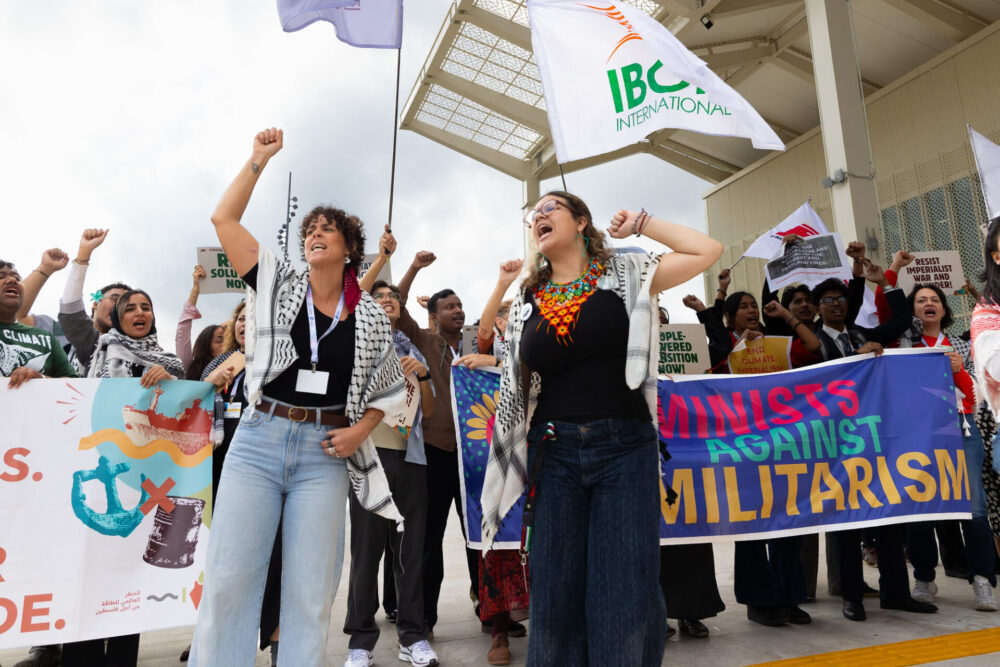
Civil society groups and representatives from the Global South have continually demanded structural reforms. Rachitaa Gupta, lead coordinator of the Global Campaign to Demand Climate Justice, noted that allowing polluters influence grants them legitimacy to continue business-as-usual practices, eroding trust in the multilateral process.
Constituencies representing women, youth, trade unions, and organizations like KBPO are actively pushing for a binding conflict-of-interest policy to exclude obstructive industries from shaping policy frameworks. Prakash Dalal of Pro Public/Friends of the Earth Nepal emphasized the imbalance, stating, "We come from Nepal demanding justice. We cannot tolerate the disproportionate space given to them compared to civil society and our country delegations."
Economic Context: War Windfalls and Global Emissions
The summit unfolds against a backdrop of volatile energy markets. Geopolitical tensions, including conflicts in the Middle East that restricted shipping through key maritime chokepoints like the Strait of Hormuz, have driven international oil prices up by nearly 60% since the onset of the crisis. Major energy firms—including ExxonMobil, Chevron, BP, Shell, and TotalEnergies—reported a combined $56.3 billion in adjusted net income for the third quarter, marking one of the highest figures on record.
Simultaneously, the Global Carbon Project released its annual assessment at COP31, projecting a minor 0.4% dip in global fossil fuel carbon dioxide emissions to 38.2 billion metric tons for the year. This slight reduction was primarily driven by a 1.9% drop in oil consumption resulting from war-related energy shocks. However, coal emissions continue to climb, with the International Energy Agency forecasting record coal demand as regions pivot away from expensive gas supplies. Factoring in land-use changes and deforestation, total global emissions are expected to reach a record 43.3 billion tons, threatening to exhaust the remaining carbon budget for limiting global warming to 1.5°C within four years.
Legal Challenges via Investor-State Dispute Settlement
Beyond lobbying floors, fossil fuel corporations increasingly utilize private international tribunals to challenge government climate policies. Research published by PowerShift, Global Justice Now, and the European Trade Justice Coalition indicates that fossil fuel and related companies have claimed at least $443 billion from states through Investor-State Dispute Settlement (ISDS) mechanisms.

Embedded within bilateral and multilateral trade agreements, ISDS provisions allow foreign investors to bypass national legal systems and sue governments over regulatory changes that impact projected profits. Landmark examples include German utility RWE’s legal action against the Netherlands over its coal phase-out timeline, and British firm Rockhopper’s arbitration claim against Italy following an offshore drilling ban. To date, fossil fuel investors have been awarded $86 billion—accounting for roughly 70% of all historical ISDS awards—raising profound concerns regarding the financial liability governments face when enacting vital environmental protections.