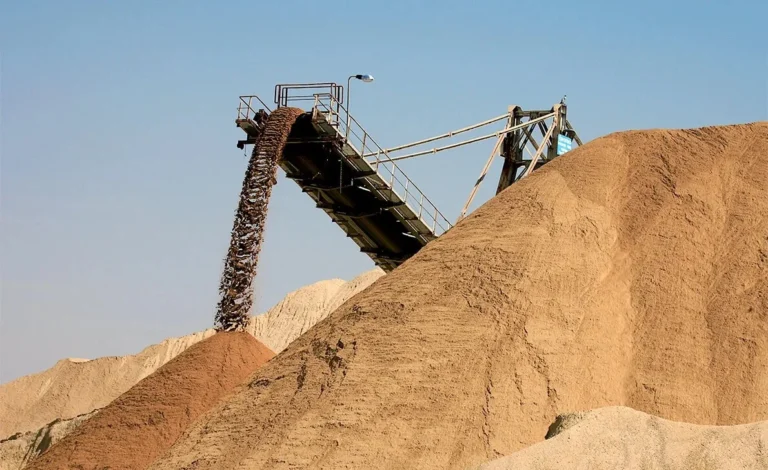
The global transition toward a low-carbon economy is fundamentally a story of minerals. As the world pivots away from fossil fuels, the demand for "transition minerals"—cobalt, lithium, copper, manganese, graphite, and rare earth elements—has surged to unprecedented levels. These materials serve as the bedrock for the electric vehicles (EVs), advanced batteries, wind turbines, and smart grids essential to meeting international climate goals. According to the International Energy Agency (IEA), the intensity of this shift is profound: a typical electric car requires six times the mineral inputs of a conventional internal combustion engine vehicle, while a wind power plant demands nine times more mineral resources than a natural gas-fired facility.
For Africa, a continent rich in these critical resources, this shift presents a historic opportunity. However, a comprehensive new study commissioned by the World Bank suggests that the path to shared prosperity is far from guaranteed. While Africa holds vast mineral wealth, it remains trapped in a cycle of primary commodity extraction, failing to capture the higher-value downstream processes that drive industrialization, job creation, and sustainable economic growth.
The Geography of Wealth and the Myth of Automatic Prosperity
The narrative that mineral abundance translates directly into wealth has historically proven elusive for developing nations. Despite holding significant deposits of 41 critical minerals—ranging from battery-grade cobalt to the platinum group metals (PGMs) used in green hydrogen production—most African states participate in the global green economy only as providers of raw ore.
Recent data underscores the scale of Africa’s potential. The continent possesses approximately 96% of global PGM reserves, 77% of phosphate reserves, and 55% of cobalt reserves. South Africa, Nigeria, and the Democratic Republic of Congo (DRC) stand out as major players, yet even these nations face structural barriers. While the DRC dominates the global supply of cobalt, the lack of domestic refining capacity means that much of the value added during the processing stage is captured in foreign markets, particularly in Asia.
The economic cost of this dependency is stark. As noted in recent findings, raw Congolese cobalt may fetch US$5.80 per kilogram at the point of extraction, but that price nearly triples to US$16.20 following the refining process. By exporting raw material rather than finished or semi-processed products, African nations are effectively exporting the potential for industrial wages and tax revenues, leaving them vulnerable to the volatility of global commodity markets.
A Chronology of Dependency and Emerging Agency
The reliance on raw material exports is not a new phenomenon; it is a vestige of historical economic models that have persisted into the 21st century.
- 2000–2010: A decade defined by the commodities super-cycle, where high demand for raw materials from emerging economies like China incentivized African nations to scale up extraction capacity.
- 2015–2020: The signing of the Paris Agreement signaled a shift in global industrial priorities, triggering a massive scramble for critical minerals essential to renewable energy technology.
- 2021–Present: African governments have begun to assert "resource nationalism," implementing stricter mining codes, export bans on raw ore, and requirements for local content to force value-addition within national borders.
Despite these policy shifts, the impact has been limited. Between 2017 and 2023, Africa’s global patent share for green technologies remained below 0.4%, and its export share of finished green technology components was negligible. The continent is essentially acting as a quarry for the world’s green revolution rather than a participant in its manufacturing supply chain.

Structural Hurdles: Why Processing Stalls
The inability to move up the value chain is largely attributed to systemic domestic deficiencies. Even as governments attempt to mandate local processing, they are frequently hamstrung by the "Four Pillars of Industrialization" that are currently lacking:
- Reliable Energy: High-intensity mineral processing, such as smelting and refining, requires a stable and affordable electricity grid—an infrastructure gap that remains the single largest bottleneck across much of the continent.
- Access to Finance: The capital expenditure required for refining facilities is substantial. Without competitive, low-interest financing, domestic firms struggle to compete with established international players.
- Logistics and Transport: The cost of moving raw and semi-processed goods from inland mines to ports remains prohibitively high, often negating the competitive advantage of lower labor costs.
- Technical Expertise: A lack of specialized human capital in chemical engineering and advanced manufacturing limits the ability of local firms to transition from basic extraction to high-tech component production.
Furthermore, the scale of production matters. Because many African countries act in isolation, their individual volumes of specific minerals are often too small to attract the massive private investments needed for integrated industrial hubs. When a single country attempts to impose higher prices or stringent local processing mandates, global buyers often shift their procurement to more established markets, rendering individual national policies ineffective.
The Case for Regional Integration
The findings of the research team, which includes scholars from the Delft University of Technology, the University of Johannesburg, Boston University, and American University, point toward a clear solution: collective action.
The concept of "Integrating Africa" suggests that the continent’s best path forward is the pooling of mineral supplies, markets, and infrastructure. By establishing regional processing centers—shared facilities serving multiple countries—African nations could achieve the economies of scale necessary to influence global prices and attract foreign direct investment that is committed to technology transfer.
Official responses from the African Union (AU) and regional blocs like the Southern African Development Community (SADC) indicate an increasing awareness of this need. There is a growing consensus that regional value chains, rather than fragmented national ones, are the only way to break the "old dependency" cycle. However, the political challenge remains: harmonizing mining laws, environmental standards, and tax regimes across borders requires a level of diplomatic and administrative cooperation that has historically been difficult to achieve.
Future Implications: Partnerships Beyond Extraction
For the global community, the implications are clear. The green energy transition cannot be sustainable if it relies on a model of exploitation that keeps the Global South underdeveloped. Future partnerships between African nations and international investors—from China, the US, and the EU—must evolve.
Moving forward, the focus must shift from simple "offtake agreements" (where a company secures the right to buy minerals) to "value-added partnerships." This would entail:
- Technology Transfer: Requiring foreign firms to build training institutes and provide technical know-how to local workers.
- Infrastructure Investment: Integrating mining projects with broader development goals, such as building power grids that benefit both the processing plant and surrounding communities.
- Shared Prosperity Models: Moving toward equity-based partnerships where local firms hold meaningful stakes in the entire value chain, from the mine to the final battery component.
The transition to a green economy provides a rare window of opportunity for Africa to leapfrog traditional industrial stages. However, as the researchers emphasize, this will not happen through mineral abundance alone. It requires a fundamental shift in strategy: from being the world’s mine to becoming the world’s manufacturing partner. Without such a shift, Africa risks missing the defining economic opportunity of the century, remaining a consumer of green technologies that are built on the back of its own untapped potential.