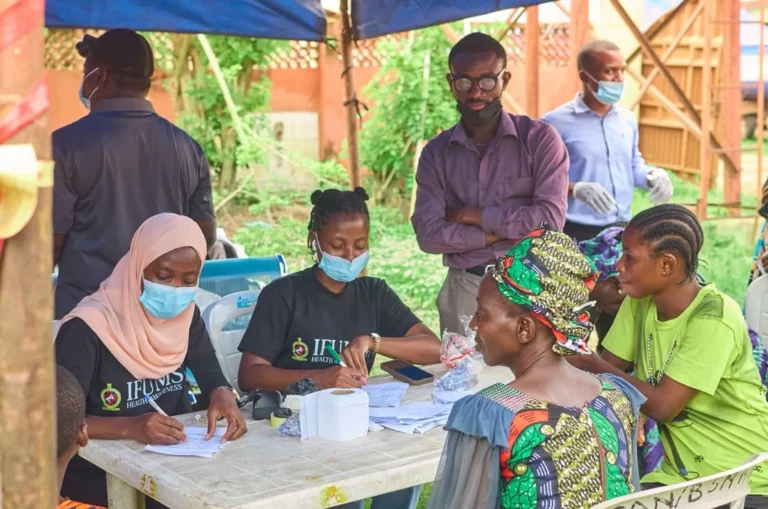
In a significant display of commitment to public health and social responsibility, over 90 medical, dental, and pharmacy students from Obafemi Awolowo University (OAU), Ile-Ife, recently descended upon the Moro community in Osun State. Under the auspices of the IFUMSA Health Awareness Club—a wing of the Obafemi Awolowo University Medical Students’ Association (IFUMSA)—the cohort provided critical medical and surgical interventions to more than 200 residents. This initiative, designed to address the stark inequalities in healthcare access within rural and underserved regions, marks a pivotal moment in the ongoing efforts of Nigerian medical trainees to provide immediate relief to those most affected by the rising costs of private and public healthcare.
The outreach, held in late September 2026, was not merely a one-off screening exercise. It represented a sophisticated, multi-disciplinary effort that integrated primary care diagnostics with specialized surgical procedures. The team, composed of students across various clinical levels, was bolstered by the expertise of two consultant surgeons and three perioperative nurses from the Obafemi Awolowo University Teaching Hospitals Complex (OAUTHC). This collaboration ensured that while students gained invaluable hands-on clinical exposure, the beneficiaries received care of a professional standard comparable to hospital settings.
The Landscape of Healthcare Disparity in Nigeria
To understand the magnitude of the IFUMSA intervention, one must consider the broader context of healthcare in Nigeria. According to the World Health Organization (WHO) and various national health surveys, a significant portion of the Nigerian population continues to suffer from limited access to essential medical services, particularly in peri-urban and rural communities. Economic barriers, characterized by high out-of-pocket expenditure—which accounts for over 70% of total health spending in the country—often force residents to forgo treatment for chronic conditions or manageable ailments until they escalate into medical emergencies.

By targeting communities like Moro, the IFUMSA Health Awareness Club is directly confronting the "last mile" problem of the Nigerian health system. In many such communities, the nearest primary health center may be understaffed, poorly stocked with essential medicines, or entirely non-functional. The presence of specialized medical students and senior practitioners provides not just immediate relief, but also serves as a vital bridge, connecting rural residents to the formal medical system.
A Chronology of Clinical Impact
The planning for the 2026 Moro outreach began months in advance, requiring logistical coordination, resource mobilization, and community sensitization. The Local Organising Committee, chaired by Aboderin Oluwatobiloba, spent weeks engaging with local community leaders to identify the most pressing health needs of the residents.
On the day of the event, the team established a temporary, multi-station clinic capable of processing dozens of patients simultaneously. The workflow was meticulously structured to ensure efficiency:
- Triage and Vitals: Patients were first processed through blood pressure checks, BMI assessments, and blood glucose testing to identify underlying non-communicable diseases (NCDs) like hypertension and diabetes.
- Screening Services: Specialized desks provided screening for HIV and Hepatitis B, alongside routine urinalysis.
- Dental and Pharmaceutical Consultation: A dedicated dental unit provided oral health consultations, while the pharmacy wing ensured that patients diagnosed with common ailments were provided with free, necessary medications.
- Surgical Suite: The most critical component of the day was the surgical theater, where the team performed day-case procedures. These included the excision of lipomas, hernia repairs, hydrocelectomies, and the removal of breast lumps—all performed at no cost to the patients.
Leadership Perspectives: Addressing the Economic Burden
Oladipupo Ayomipo, a final-year medical student and Chairperson of the Health Awareness Club, emphasized that the initiative is rooted in a fundamental understanding of the socioeconomic realities facing the average Nigerian. In a formal statement released following the conclusion of the outreach, Ayomipo articulated the rationale behind the program.

"Healthcare in Nigeria is inherently expensive," Ayomipo noted. "When families are forced to choose between feeding and paying for a consultation, they choose the former. By bringing these services directly to the doorstep of the Moro community, we are removing the barrier of transport costs and consultation fees. We aren’t just treating a disease; we are providing a safety net for those who have been left behind by the formal health insurance system."
Aboderin Oluwatobiloba echoed these sentiments, stressing the ethical imperative of the project. "Basic healthcare is a human right, not a privilege reserved for the affluent," she stated. "Our mission with this outreach is to demonstrate that with organized, youth-led initiatives, we can create pockets of equity in a system that is otherwise fragmented."
Institutional Continuity and Long-Term Implications
The 2026 Moro outreach is a continuation of a long-standing tradition within IFUMSA. In 2025, the association conducted a similar exercise in Ede, Osun State, which saw a wide array of services including eye care and comprehensive health education. These annual events serve a dual purpose: they provide relief to the public, and they train the next generation of Nigerian physicians to be empathetic and community-focused.
The involvement of the Obafemi Awolowo University Teaching Hospitals Complex (OAUTHC) personnel is particularly noteworthy. By involving experienced surgeons and nurses, the project ensures that students are supervised in real-world environments, fostering a culture of mentorship. This collaborative model is increasingly being touted as a potential solution to the "brain drain" and medical staff shortages in Nigeria. If students are conditioned to serve rural populations early in their careers, there is a higher probability that they will continue to advocate for or work within such environments upon graduation.

Analysis: Can Student-Led Outreach Sustainably Improve Health Outcomes?
While initiatives like the IFUMSA outreach are highly effective at providing immediate, episodic care, public health experts often debate their long-term sustainability. The challenge lies in the "follow-up gap." A patient who receives a diagnosis of hypertension or a chronic infection at an outreach event requires continuous care and medication, which a one-day program cannot provide.
However, the IFUMSA model attempts to mitigate this by integrating health education. Throughout the event, students provided counseling on nutrition, hygiene, and the importance of regular check-ups. Furthermore, the data collected during these outreaches—anonymized and analyzed—provides a snapshot of the health needs of the community, which can be presented to local government authorities to lobby for the permanent upgrading of existing health facilities.
The success of the Moro community outreach serves as a powerful case study for the role of medical student associations in national development. It demonstrates that when youth organizations are given the mandate and the support of senior medical professionals, they can effectively bypass the bureaucratic hurdles that often stall public health interventions.
As the team from OAU wrapped up their activities in Moro, the atmosphere was one of palpable relief among the beneficiaries. For many residents, the day was the first time they had engaged with a medical professional in years. The long-term success of this initiative will be measured not just by the number of patients seen, but by the extent to which these students continue to carry the spirit of "service to humanity" into their professional practice. As the Nigerian healthcare system continues to navigate the complexities of underfunding and infrastructural deficits, the work of these student leaders stands as a beacon of what is possible when professional expertise is married to community-centered altruism.