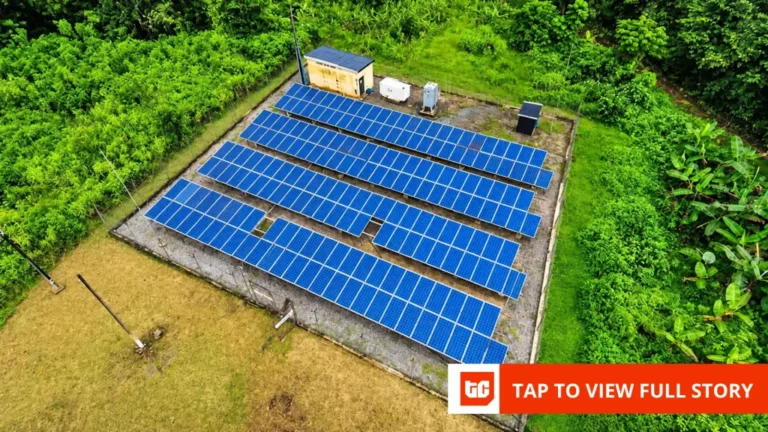
Nigeria has long grappled with a profound paradox: despite being an economic powerhouse on the African continent, millions of its citizens and businesses endure a persistent electricity deficit. While the country’s central grid struggles with generation shortfalls, transmission bottlenecks, and frequent system collapses, a quiet revolution has been taking place in rural and peri-urban communities. Distributed renewable energy (DRE)—specifically solar hybrid mini-grids—has demonstrated that it can successfully deliver clean, reliable electricity directly to communities operating far beyond the reach of the national infrastructure.
Yet, as the sector matures, developers, policymakers, and international financial institutions are confronting an immovable reality. The primary obstacle to universal electrification is no longer a matter of technical viability or engineering capability. Rather, the definitive bottleneck is securing sustainable, scalable, and resilient financing.
The launch of the $300 million Nigeria Distributed Renewable Energy (DRE) Fund marks a critical pivot in how the nation attempts to bridge this gap, shifting away from vulnerable, grant-dependent models toward sophisticated, market-driven financial architecture.
The State of Nigeria’s Energy Deficit
To understand the urgency driving initiatives like the DRE Fund, one must examine the staggering scale of Nigeria’s power crisis. As of 2024, approximately 62.5% of Nigeria’s population had access to electricity, according to global metrics. This leaves over 80 million people entirely unserved—representing one of the largest populations without electricity globally and underscoring the massive market that distributed energy systems must address.
However, the problem extends far beyond those who are completely disconnected from the national grid. Millions of connected households and businesses suffer from chronic unreliability, forcing them to rely on expensive, carbon-emitting fossil fuel generators.
Data from the National Bureau of Statistics’ (NBS) 2024 Residential Energy Demand-Side Survey exposes the heavy economic toll of this unreliability. Surveyed households spent a staggering ₦327.05 billion ($246.3 million) on petrol and diesel to power generators, compared to just ₦175.05 billion ($131.8 million) on grid-supplied electricity. This misallocation of capital highlights a massive, active stream of domestic expenditure that could theoretically be redirected toward financing clean, predictable, and decentralized renewable infrastructure.
For years, bridging this gap relied heavily on foundational public programmes designed to jumpstart the market.
From the Nigeria Electrification Project to Structural Vulnerabilities
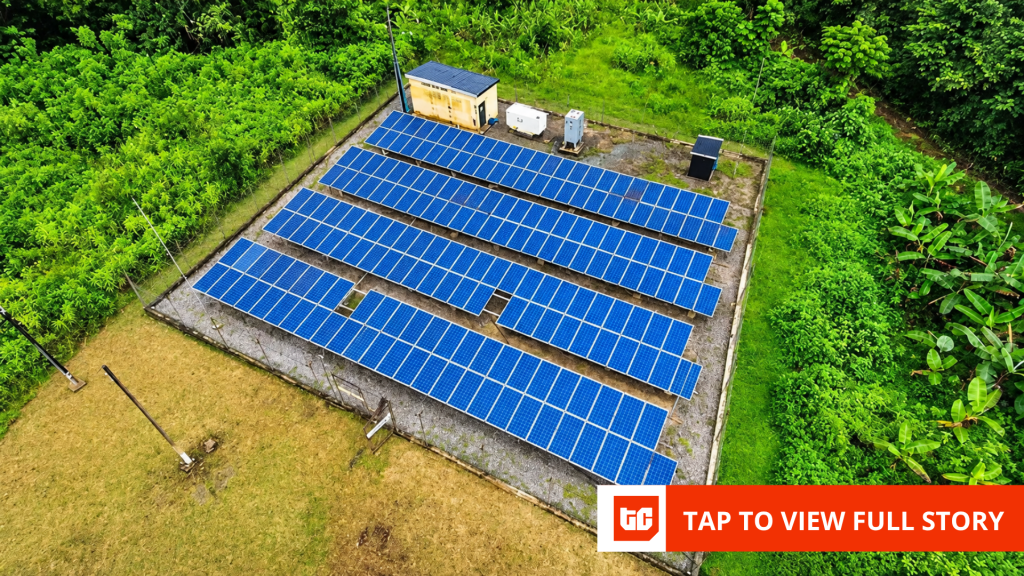
The blueprint for distributed renewable energy in Nigeria was largely established by the Nigeria Electrification Project (NEP). Implemented with backing from the World Bank, the NEP proved that private developers could successfully deploy infrastructure at scale. Through the initiative, private entities built 180 solar hybrid mini-grids across 23 states, connecting over 146,000 households and deploying 19.2 megawatts of renewable capacity.
Despite these clear successes, the NEP also exposed the severe structural and macroeconomic vulnerabilities of grant-dependent frameworks.
Chronology of Subsidy Adjustments and Foreign Exchange Pressures
The vulnerabilities of the early model became glaringly apparent as macroeconomic pressures mounted within Nigeria:
- Initial Phase: The World Bank-backed programme initially offered private developers a capital expenditure (capex) subsidy of $350 per connection to encourage early market entry.
- The Macroeconomic Shock: As the Nigerian naira depreciated significantly and global supply chain disruptions drove up the cost of imported solar panels, inverters, and lithium-ion batteries, developers faced crushing foreign-exchange (FX) losses.
- Subsidy Recalibration: To offset rising equipment costs, the World Bank temporarily raised the subsidy to $600 per connection. However, this adjustment came with a trade-off: overall available funding allocations fell from $150 million to $56.7 million. The higher per-unit subsidy ultimately resulted in fewer total connections being built.
- Final Adjustment: The subsidy was subsequently recalibrated to $450 per connection as programme administrators sought a middle ground between capital preservation and connection volume.
This turbulent period highlighted a fundamental mismatch that continues to plague infrastructure development across emerging markets: developers incurred capital expenditures and equipment import costs in hard foreign currencies (primarily US dollars), while generating their operational revenues exclusively in local naira.
The Systemic Financing Gap and Commercial Impediments
Grants, while essential for kickstarting deployment in marginalized rural communities, cannot permanently resolve Nigeria’s energy deficit. Public subsidies are finite and cannot absorb the underlying macroeconomic and banking hurdles that impede private developers from scaling operations.
Beyond donor-funded initiatives, commercial credit within Nigeria remains restrictive. Traditional commercial banks are largely ill-suited for the unique risk profile and long-term capital recovery cycles of mini-grids. Industry practitioners have pointed out that commercial lending in the country is characterized by short loan tenors, elevated interest rates, and stringent collateral requirements. These conditions make it virtually impossible for developers to align debt service obligations with the extended, multi-year payback periods typical of decentralized renewable energy infrastructure.
This systemic disconnect created an urgent need to transition policy interventions away from direct, one-off connection subsidies and toward blended finance mechanisms designed to derisk and mobilize private investment at scale.
The Evolution Toward Blended Finance: DARES and the DRE Fund
Recognizing the limitations of direct grants, international development partners and Nigerian institutions have restructured their approach. The $750 million World Bank-backed Distributed Access through Renewable Energy Scale-up (DARES) programme marked a philosophical shift, aiming to co-leverage over $1 billion in private capital by focusing on systemic risk reduction rather than pure grant delivery.
The newly launched $300 million Nigeria Distributed Renewable Energy (DRE) Fund takes this concept a step further, representing a major operational evolution toward sustainable, market-based financing structures.
Jointly managed by the Nigeria Sovereign Investment Authority (NSIA) and Africa50, the fund is designed to support mini-grids, commercial and industrial (C&I) solar systems, and other decentralized energy assets. It features an initial $25 million International Development Association (IDA) seed anchor from the World Bank, with a broader target of reaching $300 million in total capitalization.
Originally conceptualized as a larger $500 million vehicle, the recalibrated DRE Fund explicitly targets structural credit constraints, foreign exchange hedging issues, and capital scarcity rather than simply subsidizing single-project capital expenditures.
The Strategic Importance of Public Capital Placement
The critical innovation of the DRE Fund lies in the strategic positioning of public money. Instead of acting as a direct handout to offset equipment costs, public anchor capital is deployed to absorb early-stage risks and crowd in institutional investors.
By blending public anchor capital with private institutional investment, the platform aims to provide catalytic capital that gives commercial lenders the confidence to co-invest alongside concessional resources.
Financial analysts note that this structural evolution is vital for market maturity. While direct grants finance isolated projects, pooled investment vehicles create recognized asset classes that continually attract institutional capital. If the mechanism performs as intended, developers will be able to leverage the fund to build diversified asset portfolios, establish verifiable revenue histories, and render distributed-energy projects increasingly attractive to mainstream capital markets.
Analysis of Implications and Market Realities
Despite the optimism surrounding its commercial launch, industry observers emphasize that the establishment of the DRE Fund is merely the starting line, not the finish line.
As of its initial launch, the fund has yet to publicly disclose metrics regarding the precise volume of private capital raised, the number of developers approved for financing, or the timeline for project execution. While the launch successfully marks the transition from fund structuring to active capital deployment, it does not yet demonstrate that Nigeria’s systemic financing problem has been solved.
The ultimate test for the DRE Fund will be the movement of capital. To achieve true commercial repeatability across changing market conditions, developers require financial instruments that can accommodate long payback periods, mitigate foreign exchange volatility, and offer flexible debt terms that mirror local revenue streams.
Broader Impact and the Path Forward
The ultimate benchmark for the DRE Fund will not be the achievement of its $300 million fundraising target on paper, but whether it successfully mobilizes sustained, long-term institutional investment into decentralised energy infrastructure on the ground.
For Nigerian households and commercial enterprises, a successful transition from subsidy-led growth to full capital-market integration holds the promise of reliable, clean power. By reducing the heavy economic and environmental burden of petrol and diesel generators, scaled distributed renewable energy can transform regional economies, lower operational overheads for small businesses, and pave the way for a more resilient national energy landscape.