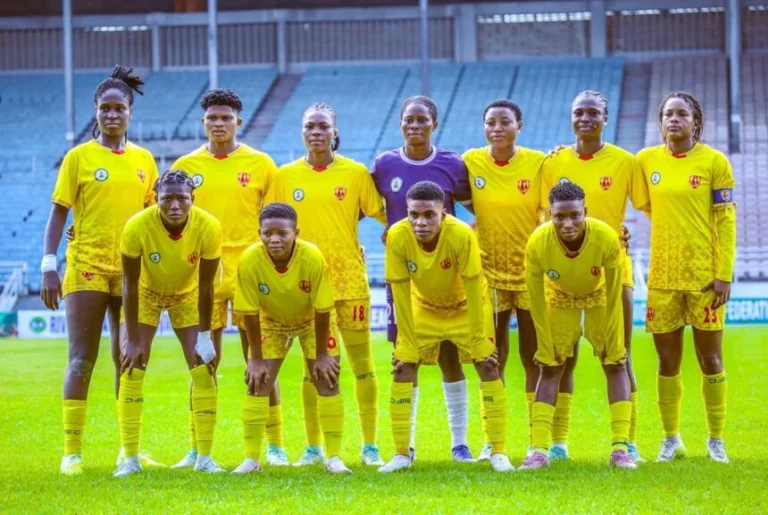
The Nigeria Football Federation (NFF) has officially lodged a formal appeal against the Confederation of African Football (CAF) following the controversial decision to invalidate the victory of Edo Queens in the 2026 WAFU-B Women’s Champions League qualifying final. The appeal, submitted on Tuesday, September 30, and signed by Deputy General Secretary Emmanuel Edem Ikpeme, seeks to overturn a ruling issued by the CAF Organising Committee for Women’s Football on September 26. This administrative impasse has thrown the qualification process for the 2026 CAF Women’s Champions League into disarray, leaving the status of the West African representatives in limbo.
The core of the dispute stems from the final match held on September 5 in Ouagadougou, Burkina Faso, where Edo Queens faced off against Ghanaian side Ampem Darkoa Ladies. After a hard-fought contest that ended in a 2-2 draw at the conclusion of regulation time, the match proceeded directly to a penalty shootout. Edo Queens triumphed 4-1 in the spot-kicks, securing what they believed to be their place in the continental championship. However, a protest lodged by the Ghana Football Association (GFA) on behalf of Ampem Darkoa triggered an investigation into the match proceedings, culminating in the CAF decision to nullify the result based on an alleged violation of competition regulations.
Chronology of the Dispute
The events leading to the current legal standoff began well before the final whistle in Ouagadougou. According to tournament protocols, the final of the WAFU-B Women’s Champions League is subject to specific regulatory frameworks governing extra time and tie-breaking procedures.
- September 5, 2026: The final match between Edo Queens and Ampem Darkoa Ladies takes place. Following the 2-2 draw at the end of 90 minutes, the match officials—who had reportedly been instructed during the second half of the game to bypass extra time—proceeded immediately to a penalty shootout.
- September 6, 2026: Edo Queens are officially declared winners of the tournament, subsequently receiving the championship trophy and individual medals.
- Mid-September 2026: The Ghana Football Association files a formal protest with CAF, arguing that the failure to play the mandated two 15-minute halves of extra time violated Article 72.4 of the competition regulations.
- September 26, 2026: The CAF Organising Committee for Women’s Football rules in favor of the protest, ordering that the final be resumed from the moment regulation time ended at 2-2. Furthermore, CAF mandates that Edo Queens return the trophy and medals.
- September 30, 2026: The NFF officially files an appeal, paying the requisite fees and requesting that the original result be upheld.
Regulatory Conflict and the Question of Accountability
The crux of the NFF’s legal argument lies in the distinction between administrative error and on-field sporting conduct. Article 72.4 of the CAF competition regulations explicitly requires two 15-minute periods of extra time before a match can proceed to a penalty shootout in the final stages of the competition. However, the NFF contends that the blame for the omission rests solely with the match officials appointed by the organizers, rather than the participating clubs.
In its written appeal, the NFF stated, “Edo Queens neither elected nor requested that extra time be dispensed with. The fact that Edo Queens ultimately won the shoot-out cannot retrospectively convert its compliance with the referee’s instruction into responsibility for the regulatory breach.”
The NFF’s stance is bolstered by findings from the internal investigation, which reportedly suggested that match officials were initially briefed that extra time would be played, only to receive conflicting instructions during the second half of the match. The NFF argues that the players, who acted in good faith and followed the directions of the match officials, should not be penalized for an oversight by those tasked with upholding the rules of the game.
“There is an important distinction between benefiting from an official’s error and causing or procuring the error,” the NFF added. “It is therefore difficult to justify a remedy which effectively removes the sporting consequence of the penalty shoot-out from Edo Queens where the club was not responsible.”
Broader Impact on Women’s Football in West Africa
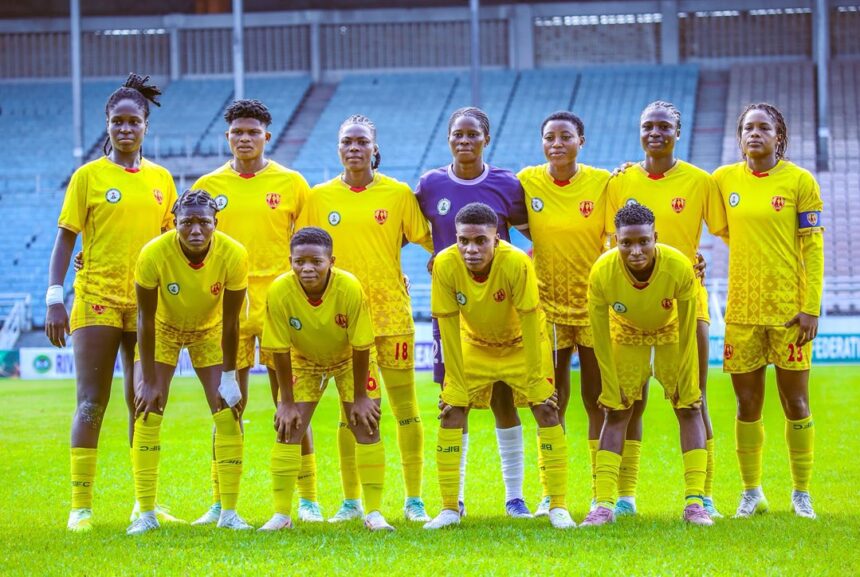
The implications of this dispute extend far beyond the immediate disappointment of the players and staff. For Edo Queens, the victory had been a landmark achievement, leading to significant local support, including a reported N50 million reward from the Edo State government to celebrate their success. The demand for the return of the trophy and medals has caused considerable frustration within the club and the Nigerian football community.
From a broader perspective, this incident highlights ongoing challenges in officiating and administrative oversight within regional qualifying tournaments. The WAFU-B qualifiers serve as the critical gateway to the CAF Women’s Champions League, a tournament that is rapidly becoming the pinnacle of female club football on the continent. Any inconsistency in the application of rules threatens the integrity of the qualification pathway.
If the CAF appeals committee maintains its original ruling, it could set a precedent where match results are frequently challenged based on officiating errors, potentially leading to a flood of litigation that could disrupt the scheduling and management of continental tournaments. Conversely, should the NFF succeed in their appeal, it would reinforce the principle that sporting results should remain final once the whistle blows, provided that the participating teams have not engaged in fraudulent or non-compliant activities.
Expert Analysis and Potential Outcomes
Sports law analysts observing the case note that CAF is in a difficult position. Upholding the appeal would require the governing body to acknowledge that a match can be valid even when it violates its own stated regulations. However, enforcing the replay—or the continuation of the match—creates logistical hurdles and raises questions about the psychological and physical state of the players weeks after the original event.
The Edo Football Association, led by Chairman Fred Erhunse, has expressed its full cooperation with the NFF while maintaining the position that the club acted as a compliant participant. “They have asked us to return the trophy and the medals,” Erhunse confirmed. “We have appealed through the Nigeria Football Federation to CAF, and we believe that the merits of our case will be recognized.”
As the NFF awaits a decision from the CAF Appeals Committee, the football community remains divided. Some argue that the rules must be applied strictly to maintain the integrity of the competition, while others believe that the burden of officiating errors should never fall on the athletes who perform on the pitch.
Looking Ahead
The outcome of this appeal will be a bellwether for how CAF handles administrative disputes involving match officials. For now, the qualification ticket for the 2026 CAF Women’s Champions League remains held in suspense. Both Edo Queens and Ampem Darkoa Ladies find themselves in a period of uncertainty, with their training schedules and tactical preparations disrupted by the looming possibility of a replay.
The NFF has signaled its commitment to pursuing all available channels to protect the interests of Edo Queens, asserting that the club’s sporting success was earned on the field of play. As the legal process unfolds, the focus remains on whether CAF will prioritize the strict letter of its regulations or uphold the sporting spirit that defined the final in Ouagadougou. The resolution of this matter will be critical, not only for the clubs involved but for the standard of governance in African women’s football moving forward.