BERLIN — Global health officials, national security experts, and pharmaceutical executives gathered at a flagship panel during the World Health Summit to issue a stark warning: pandemic preparedness must be elevated from a discretionary health expenditure to a core national security asset reframed as biodefence. This strategic pivot has grown increasingly urgent as international aid budgets face steep contractions and multilateral diplomacy regarding pandemic prevention, preparedness, and response remains locked in gridlock.

The high-level discussions in Berlin underscored a fracturing global consensus just as health security threats multiply. From active zoonotic spillover events, such as the ongoing Ebola epidemic in the Democratic Republic of the Congo (DRC) and a maritime hantavirus outbreak off the coast of Cape Verde, to dual-use threats stemming from military research and the exploitation of artificial intelligence by hostile actors, the landscape of global vulnerability has evolved dramatically. Yet, despite these compounding risks, systemic international funding for global health continues to recede, leaving critical institutions underfunded and vulnerable populations exposed.
The Legislative Gridlock: The WHO Pandemic Agreement and PABS Impasse
At the heart of the current multilateral stalemate is the World Health Organization (WHO) Pandemic Agreement, which remains paralyzed by deep divisions among member states over the Pathogen Access and Benefit-Sharing (PABS) system. Conceived as a critical annex to govern the rapid sharing of biological samples and genetic sequence data, the PABS framework must be finalized and ratified before the overarching treaty can take full legal effect.
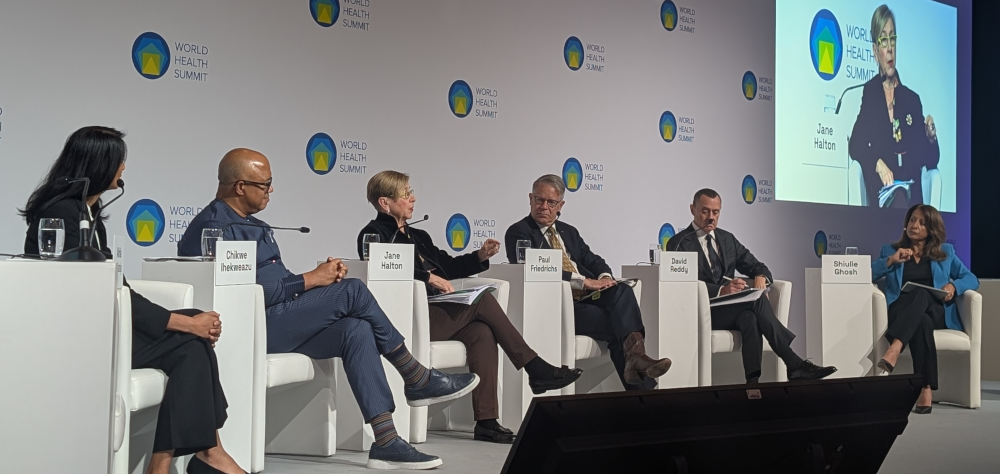
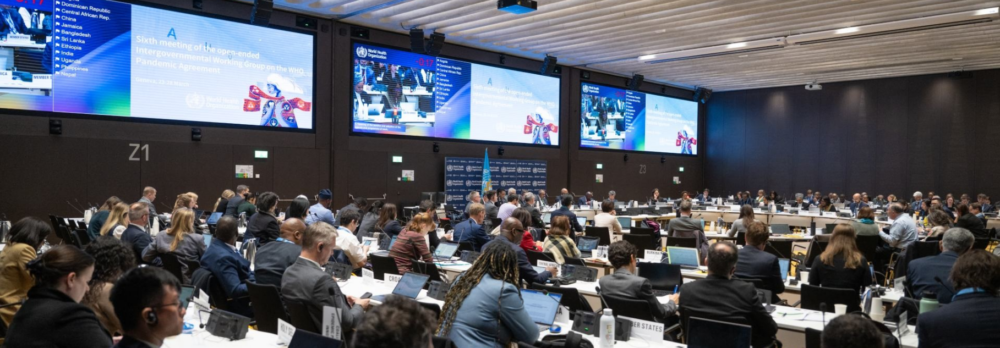
During the panel session, co-hosted by the International Federation of Pharmaceutical Manufacturers and Associations (IFPMA), Chikwe Ihekweazu, executive director of the WHO Health Emergencies Programme, stressed the ticking clock facing international negotiators. “By May 2027, we need countries to come together and agree the PABS to the pandemic agreement,” Ihekweazu urged attendees. “Otherwise, our generation will live in regret.”
The impasse exposes a fundamental philosophical divide between the Global North and the Global South. Developing nations, led by the Africa Group and various equity coalitions, argue that voluntary data-sharing mechanisms proved entirely inadequate during the COVID-19 pandemic. Under the framework of the WHO Pandemic Agreement approved by member states in 2025, countries have committed to providing 20% of resulting vaccines and therapeutics to the WHO for equitable distribution—splitting this into 10% as donations and 10% at affordable prices during a global emergency.

However, developing nations continue to demand a legally binding PABS mechanism with mandatory technology transfers and enforceable production allocations for manufacturers as a strict prerequisite for sharing valuable pathogen sequences. Conversely, high-income countries and major pharmaceutical stakeholders maintain that any mandatory restrictions, transactional delays, or upfront compliance hurdles regarding data access could severely compromise the speed of critical countermeasure development.
Escalating Biosecurity Threats and Compounding Vulnerabilities
The debate over legal frameworks unfolds against a backdrop of accelerating biological risks. Zoonotic spillover remains the primary driver of novel disease outbreaks, catalyzed by ongoing environmental degradation, climate change, and habitat destruction that force closer contact between wildlife reservoirs and human populations. In active conflict zones, such as the eastern provinces of the DRC, the breakdown of civil infrastructure and population displacement can instantly turn localized zoonotic events into widespread regional crises.
David Reddy, director general of the IFPMA, cautioned policymakers against allowing immediate geopolitical distractions to obscure long-term biological threats. Drawing an evocative analogy, Reddy remarked, “The next pandemic may not be the closest snake, but it might be the biggest, meanest snake we’ve ever seen, and it is worth considering where that might be hiding and doing something about it.”
Compounding these acute biological threats is the silent, pervasive crisis of antimicrobial resistance (AMR). Health economists and industry experts warn that AMR could ultimately eclipse the mortality rates associated with sudden viral pandemics. According to current epidemiological models cited during the summit, cumulative deaths attributable to antimicrobial-resistant infections between 2025 and 2050 could reach an estimated 39 million people, presenting an unprecedented strain on global healthcare systems.
Simultaneously, the proliferation of high-containment laboratories presents its own systemic challenges. Analyses conducted by the RAND Corporation reveal that three-quarters of the world’s high-containment Biosafety Level 4 (BSL-4) laboratories are situated within densely populated urban centers, raising the statistical risk of accidental pathogen escape.
Artificial Intelligence: A Double-Edged Sword for Biosecurity
Technological innovation has introduced powerful new tools to combat traditional pharmaceutical roadblocks, yet it simultaneously creates unprecedented biosecurity hazards. On the positive side, generative artificial intelligence is radically transforming research and development by screening chemical libraries at speeds thousands of times faster than traditional laboratories, opening new pathways to discover novel antibiotic compounds.

Akila Kosaraju, CEO and co-founder of Phare Bio, highlighted the astonishing speed of AI-driven drug discovery during the summit panel. “Within three days, AI was able to come up with a solution that our medicinal chemists were equal parts amazed and troubled by,” Kosaraju noted, illustrating both the immense potential and the disruptive nature of modern computational biology.
However, experts warned that these same advancements lower technical barriers that previously restricted the creation of dangerous biological agents. Open-source genome models and advanced generative algorithms allow non-traditional actors and hostile entities to computationally design novel viral sequences, potentially optimizing pathogens for enhanced transmissibility, lethality, or immune evasion without requiring decades of tacit laboratory experience.

Macroeconomic Pressures: Declining Health Aid Versus Surging Military Budgets
The urgent call to reframe pandemic preparedness as biodefence collides directly with a major macroeconomic shift: the contraction of global development assistance coupled with a massive expansion of national defense budgets worldwide.
According to projections from the Organisation for Economic Co-operation and Development (OECD), net official development assistance is anticipated to drop by 6.9% in 2026, following a historic 23.3% collapse in 2025. Sectoral health aid is absorbing the heaviest cuts, with allocations projected to plummet between 29% and 46% compared to 2024 baselines, driving international health funding far below pre-pandemic levels.

In stark contrast, global military expenditure reached an unprecedented high of $2.89 trillion in 2025, marking eleven consecutive years of uninterrupted growth, as tracked by the Stockholm International Peace Research Institute (SIPRI). Panelists noted that the estimated $31 billion annual cost required to fully fund global health security represents a mere 1% of total global military spending.
Paul Friedrichs, senior biopreparedness fellow at the RAND Corporation and former White House pandemic advisor, emphasized the strategic irrationality of underfunding biosecurity in an era of heightened global tension. Friedrichs urged governments to treat investments in biodefence with the same seriousness and financial commitment afforded to traditional kinetic defense capabilities, noting that the economic devastation of COVID-19 alone amounted to an estimated $13.8 trillion globally.
Operationalizing the 100-Day Mission and Eliminating Regulatory Friction
Addressing the structural delays that plagued the international response to previous health emergencies, Jane Halton, chair of the Coalition for Epidemic Preparedness Innovations (CEPI), underscored the critical need for governance reform. Halton emphasized that effective health security requires eliminating administrative "white space" through the pre-positioning of clinical trial networks and the establishment of "R&D safe harbours." These frameworks would grant scientists immediate, unhindered access to pathogen genetic data on day zero of an outbreak.
CEPI has advocated for a pragmatic compromise within the PABS negotiations: allowing developers to defer full benefit-sharing obligations until reaching downstream commercialization milestones, thereby preventing upfront contractual negotiations from choking early-stage research. “When it comes to these risks, you need three words: Speed, speed, speed,” Halton stressed during the debate.
Nevertheless, pharmaceutical industry representatives maintain strict red lines regarding data access. Reddy argued that any transactional preconditions or administrative compliance hurdles imposed on day-one data sharing could prove fatal to outbreak containment efforts. Industry stakeholders point out that drug development is inherently high-risk, noting a 91% clinical failure rate for novel drug candidates and up to 33-year development cycles for specialized antimicrobials, making predictable intellectual property frameworks indispensable for sustained private-sector investment.
Regional Self-Reliance and the Push for Health Sovereignty
As multilateral negotiations face recurring stalemates, nations in the Global South are increasingly pursuing regional self-reliance and asserting health sovereignty. Raji Tajudeen, head of public health institutes at Africa CDC, highlighted significant strides made across the African continent, including the operationalization of the African Medicines Agency and coordinated regional pooled procurement. Demonstrating this commitment, 28 African nations recently mobilized over $130 million in domestic resources to mount an independent response to continental Ebola outbreaks.

These regionally led initiatives reflect broader reform agendas, such as the Accra Reset and the Lusaka Agenda, which seek to transition global health architecture away from donor-dependent models toward country-led, sustainable systems.
Concluding the summit discussions, Ihekweazu reiterated that national self-reliance must not come at the expense of international cooperation. “Infectious diseases cannot be dealt with one country at a time,” he said. “Sovereignty is not opposed to universality.” As the international community looks toward the May 2027 deadline for the PABS agreement, the success of global biosecurity will depend entirely on whether governments can bridge the divide between equity demands and operational speed before the next major health crisis strikes.