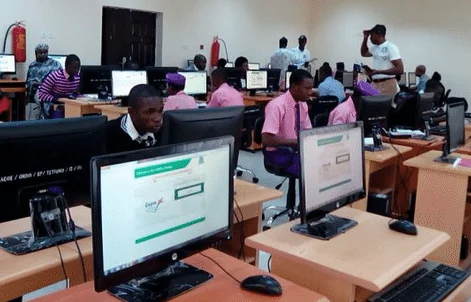
The Joint Admissions and Matriculation Board has officially scheduled its highly anticipated Unified Tertiary Matriculation Examination mock test for Thursday, March 7, 2024, serving as a critical preparatory milestone for prospective university, polytechnic, and college of education students across Nigeria. Designed specifically for candidates who expressed a formal desire to participate during their initial registration phase, the optional preliminary assessment aims to simulate real testing conditions within accredited Computer-Based Test centers nationwide. By offering this trial run, the examination body seeks to mitigate anxiety, troubleshoot technical hurdles, and acclimate students to the rigorous digital environment they will encounter during the primary matriculation evaluations.
Background Context and Evolution of the UTME Mock Examination
The introduction of computer-based testing by the Joint Admissions and Matriculation Board marked a monumental shift in Nigeria’s educational landscape, moving away from traditional paper-and-pencil formats to streamline grading, curb examination malpractice, and enhance overall efficiency. However, this technological transition also introduced unique challenges, particularly for candidates from rural backgrounds or those with limited computer literacy. Many students historically struggled not necessarily with the academic content of the tests, but rather with the mechanics of navigating digital interfaces, managing on-screen timers, and interacting with hardware components under high-stress conditions.
Recognizing these systemic hurdles, the board instituted the mock examination system years ago as an experimental diagnostic tool. Over successive academic cycles, the initiative evolved from a peripheral offering into an institutional pillar of the registration and preparation process. It provides a dual benefit: it allows educational administrators to stress-test their network infrastructure, biometric verification units, and server stability across thousands of remote nodes, while simultaneously granting students a low-stakes rehearsal. Although performance on the mock exam does not contribute to a candidate’s final UTME score or university admission aggregate, its psychological and practical value remains immeasurable for millions of secondary school leavers seeking tertiary placement.
Registration Protocol, Financial Structure, and Policy Adjustments
Participation in the assessment is entirely voluntary, tailored for applicants who opted in during the registration window by paying a designated fee of N1,500. Educational administrators introduced this nominal charge following years of logistical complications where substantial numbers of candidates registered for the trial but failed to appear on examination day. Such absenteeism historically resulted in financial losses for independent center operators who reserved infrastructure, deployed technical support staff, and powered facilities based on projected headcounts.
To safeguard the operational integrity of the CBT centers, the policy mandates financial commitment, thereby filtering out casual applicants and ensuring that only genuinely interested individuals occupy available testing slots. This adjustment has drastically improved resource allocation and attendance predictability. Center proprietors receive adequate compensation for their readiness, and the board maintains a streamlined administrative framework that minimizes waste. Candidates who completed this financial requirement are now cleared to access their specific documentation through official digital channels.
Step-by-Step Guide to Printing the Mock Examination Slip
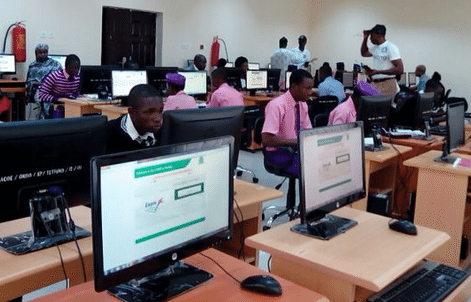
With the date fast approaching, qualified applicants must secure their physical or digital examination slips to verify crucial logistical details such as specific testing venues, assigned reporting times, and individual seat numbers. The board has streamlined this procedure through its centralized web portal. Candidates should adhere to the following sequence to complete the retrieval process successfully:
- Navigate to the designated portal page by visiting the official link at https://www.jamb.org.ng/ExamSlipPrinting1/PrintMockExaminationSlip.
- Input the unique JAMB Registration Number or the verified email address associated with the candidate’s profile into the designated input field.
- Click or tap the command button labeled Print Examination Slip to initiate the retrieval sequence.
- Review the generated document, which instantly populates with the candidate’s comprehensive deployment data, including the precise geographical location of the accredited CBT center, the exact minute reporting is required, and the designated workstation identifier.
Education officials strongly advise all participating students to print multiple hard copies of this document and verify the details well in advance. Possessing the slip not only expedites the physical clearance process at the center gate but also prevents last-minute logistical confusion regarding venue locations, which can sometimes share similar names within densely populated urban centers.
Chronology of the 2024 Matriculation Season
The announcement of the mock date forms a vital segment of a meticulously planned calendar governing the academic testing season. The chronology of events leading up to this point highlights the systematic approach adopted by the examination body to manage millions of applicants efficiently:
- Early January 2024: Commencement of the official registration window for the primary Unified Tertiary Matriculation Examination, alongside the collection of optional mock examination requests and fees.
- Late February 2024: Conclusion of the registration portal, followed by data collation, deduplication processes, and the assignment of candidates to verified CBT facilities.
- Early March 2024: Activation of the online slip-printing portal, allowing candidates to access their venue details and preparation schedules.
- March 7, 2024: Nationwide execution of the official mock examination across all accredited computer-based test centers.
- Mid-March to April 2024: Subsequent deployment of the main UTME examinations following the evaluation of lessons learned from the mock exercise.
This tightly synchronized timeline ensures that both candidates and administrative staff operate under predictable parameters, reducing friction and enhancing the transparency of the entire admission ecosystem.
Implications for Candidates and Technological Readiness
The implementation of the trial assessment carries profound implications for stakeholders across the educational spectrum. For the individual student, successfully navigating the mock environment demystifies the examination process. It tests their ability to handle time constraints, understand navigation tools, and adapt to unexpected technical glitches, such as temporary power interruptions or network fluctuations, which are promptly addressed by on-site technicians. Psychologically, students who walk into a CBT hall once before the actual grading event report significantly lower anxiety levels and higher confidence on the main examination day.
From an institutional perspective, the exercise functions as a rigorous stress test for Nigeria’s educational technology infrastructure. The board utilizes real-time telemetry and feedback loops gathered during the mock test to identify weak links in network security, server capacity, and hardware reliability among private and public partner centers. Facilities that fail to meet stringent operational standards during the trial can be dropped or penalized before the high-stakes main examination commences. Ultimately, this proactive quality-control mechanism safeguards the integrity of the selection process, ensuring that every candidate is evaluated under standardized, equitable, and dependable conditions as they pursue their academic aspirations in tertiary institutions.