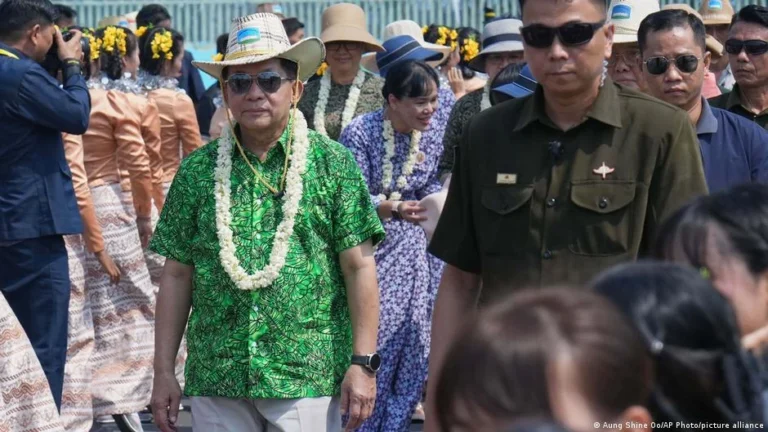
The United States has initiated a discreet diplomatic rapprochement with Myanmar’s military-backed government, marking a potential pivot in international efforts to engage with the regime that seized power in a 2021 coup. State Department representative Michael Vance has led two rounds of high-level talks since September, with meetings held in the administrative capital of Naypyidaw and subsequently in Tokyo earlier this month. This shift signals a calculated move by Washington to address urgent regional security and economic concerns, even as the European Union remains staunchly committed to a policy of non-recognition and diplomatic isolation.
The Strategic Motivation Behind U.S. Engagement
The rationale for the Biden administration’s renewed dialogue with the junta is multifaceted, driven by a combination of humanitarian, geopolitical, and economic imperatives. Washington has prioritized three primary objectives: the dismantling of expansive online scam networks that have proliferated under junta oversight, the securing of the release of imprisoned American businessman Adam Castillo, and the exploration of potential access to Myanmar’s vast rare-earth mineral deposits.
The latter objective is particularly significant in the context of the ongoing global competition for critical materials. China currently dominates the rare-earth supply chain, exerting a near-monopoly that Western powers are desperate to mitigate. By engaging with Naypyidaw, the U.S. hopes to secure a foothold in a sector that is vital for modern technology and defense manufacturing. However, this strategy faces a complex reality on the ground. Recent data from regional analysts suggests that the most productive rare-earth mining sites are not under the direct control of the military junta, but are instead managed by ethnic armed organizations, such as the Kachin Independence Organization. This complicates any potential bilateral agreement, as the junta may lack the effective sovereign authority to guarantee mining concessions in contested territories.
A Timeline of the Post-Coup Crisis
The current diplomatic thaw occurs against the backdrop of a brutal civil conflict that has ravaged the country for over four years.
- February 2021: The Myanmar military, led by Senior General Min Aung Hlaing, executes a coup, overthrowing the democratically elected government of Aung San Suu Kyi and triggering mass protests.
- 2021–2023: The military response evolves into a widespread civil war. ASEAN introduces the "Five-Point Consensus" to restore peace, but the junta fails to implement it, leading to the exclusion of Myanmar military officials from regional summits.
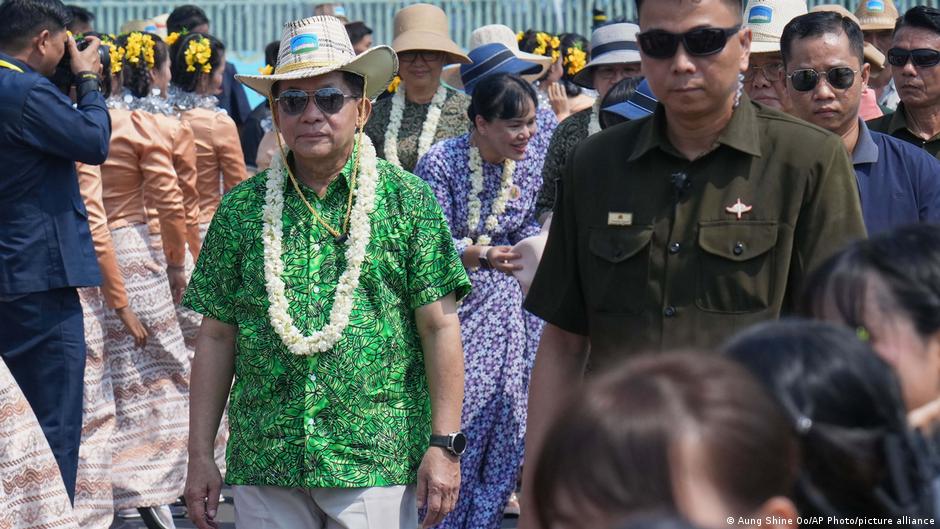
- 2025–2026: The junta orchestrates a controversial election process, resulting in Min Aung Hlaing being named president, a move widely dismissed as a sham by Western democracies.
- September 2026: The U.S. initiates quiet diplomatic channels with the junta through Michael Vance.
- October 2026: Reports emerge of Myanmar’s charge d’affaires in London and Brussels actively seeking to rebuild diplomatic ties with European officials.
The European Union’s Firm Stance
While Washington explores transactional diplomacy, the European Union has maintained a rigid posture of non-recognition. Brussels views the 2026 election as a facade designed to legitimize military rule rather than restore democratic order. The EU’s response remains rooted in a sanctions-heavy framework, with 105 individuals and 22 entities currently under restrictive measures.
"The EU continues to uphold its policy of non-recognition of the current military regime," an EU spokesperson stated, citing the regime’s ongoing violence against its own population. Despite this, the bloc faces a difficult balancing act. It has opted against withdrawing preferential trade access—a move that would disproportionately affect the country’s garment industry, which employs hundreds of thousands of mostly young women. In 2025, bilateral trade between the EU and Myanmar reached approximately €4 billion, underscoring the economic interdependence that complicates a total severance of ties.
Regional Frustrations and the ASEAN Dilemma
The Association of Southeast Asian Nations (ASEAN) is also showing signs of internal fracture regarding its Myanmar policy. Historically, the bloc operated under a principle of non-interference, but the protracted nature of the war—which has resulted in an estimated 100,000 deaths and over 4 million internally displaced persons—has exhausted the patience of neighboring states.
Thailand, in particular, has signaled a growing desire for a more pragmatic approach. Thai Foreign Minister Sihasak Phuangketkeow has publicly welcomed Washington’s recent engagement, suggesting that regional powers may use an upcoming summit in Manila to move toward a more substantive dialogue with the military leadership. The rationale is clear: the current state of isolation has failed to stop the flow of refugees, curb the narcotics trade, or mitigate the instability that threatens to spill across borders.
Analysis: The Risks of a Transactional Pivot
The shift in U.S. strategy risks creating a "diplomatic divergence" between Washington and Brussels. Kristina Kironska, an expert on EU-Myanmar relations at Palacky University, argues that the EU’s credibility as a defender of human rights rests on its consistency. "Abandoning this now because the U.S. is exploring a new, perhaps more transactional approach would undermine the EU’s legitimacy," Kironska notes.
Furthermore, there is the risk of alienating the National Unity Government (NUG) and the various ethnic resistance groups that now control significant portions of Myanmar’s territory. If the international community pivots entirely toward the junta in hopes of achieving stability or mineral access, it may inadvertently empower a regime that has lost the mandate of its own people.
However, the reality of the situation is that the junta remains the de facto authority in Naypyidaw. Proponents of the new, more flexible approach argue that "isolation has achieved relatively little." The debate is shifting from whether to engage, to how and with whom to engage.
Future Policy Implications
For the European Union, the challenge is to maintain a "meaningful voice" in the future of Myanmar without capitulating to the junta’s demands for legitimacy. Potential pathways forward include:
- Dual-Track Diplomacy: Maintaining sanctions on military leadership while providing increased humanitarian aid and technical support to civil society organizations and democratic stakeholders.
- Engagement with Resistance Governance: As suggested by policy analysts at the Burma Centre Prague, the EU could provide economic and administrative assistance to areas controlled by ethnic and revolutionary groups. This would allow for a constructive, albeit non-state, partnership that bypasses the junta.
- Conditionality: Tying any future easing of restrictions to verified improvements in humanitarian access, the release of political prisoners, and measurable progress toward a ceasefire.
As more global powers reopen doors to the generals, the window for a unified international front is closing. The junta is clearly aware of these shifting tides, as evidenced by Min Aung Hlaing’s recent interview with Western media and the active lobbying by Burmese diplomats in London and Brussels. The military is betting that the world’s desire for regional stability and resources will eventually outweigh the moral imperatives that defined the post-coup era. Whether the international community can navigate this transition without abandoning its democratic commitments remains the defining question for the region’s future. The coming months will be critical as the EU and its partners weigh whether to join this new era of engagement or remain the final holdouts of a policy that, while principled, has yet to change the trajectory of a country in crisis.