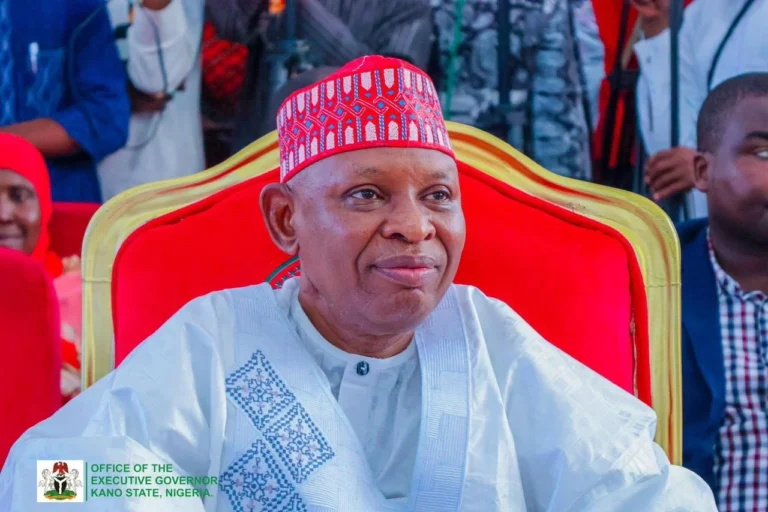
In a strategic move aimed at revitalizing the administrative machinery of the state, Kano State Governor Abba Kabir Yusuf has officially inaugurated 19 newly appointed permanent secretaries. The swearing-in ceremony, which took place at the historic Coronation Hall within the Government House, Kano, marks a pivotal shift in the administration’s approach to governance, placing a renewed emphasis on meritocracy, institutional competence, and the seamless execution of public policy. This development comes as the current administration seeks to optimize the functionality of the state’s civil service, which serves as the primary engine for service delivery to millions of citizens.
The ceremony, attended by top government functionaries, traditional leaders, and family members of the appointees, was punctuated by a clear mandate from the Governor. By appointing these high-ranking officials, Governor Yusuf aims to bridge the gap between policy formulation at the executive level and the practical implementation of projects across the state’s various ministries, departments, and agencies (MDAs).
The Context of Administrative Reform
The appointment of these 19 permanent secretaries is not an isolated event but rather a calculated phase in Governor Yusuf’s broader "Kano Development Agenda." Since assuming office, the administration has faced the dual challenge of addressing a backlog of infrastructural requirements and modernizing a civil service that has, at times, been criticized for being bloated and inefficient.
Permanent secretaries occupy a unique position in the Nigerian administrative structure; they are the chief accounting officers of their respective ministries. As such, they are tasked with the daily management of public funds, the supervision of personnel, and the provision of institutional memory that often outlasts political tenures. The Governor’s decision to appoint these specific individuals reflects a desire to inject fresh technical expertise into the civil service. Many of the appointees bring with them years of dedicated service, having climbed the ranks through various cadres of the state’s bureaucracy.
Chronology of the Selection Process
While the formal swearing-in occurred on Friday, the road to this appointment was characterized by a rigorous vetting process. According to the office of the Secretary to the State Government, the selection process began several weeks ago with a comprehensive audit of the civil service personnel records.
- Phase 1: Performance Review: The administration conducted a broad review of senior director-level civil servants to assess their track records, disciplinary history, and contributions to past government initiatives.
- Phase 2: Merit-Based Shortlisting: Candidates were evaluated based on their professional certifications, years of experience, and their ability to align with the current administration’s focus on transparency.
- Phase 3: Formal Confirmation: Following the vetting, the executive council approved the list of candidates, paving the way for the formal induction.
- Phase 4: Swearing-in: The final act at the Coronation Hall finalized their transition into their new roles, granting them the legal authority to act as permanent secretaries.
The Full List of Appointees
The diversity of the cohort reflects a mix of seasoned veterans and subject-matter experts. The newly sworn-in officials are: Yusuf Aliyu Abubakar, Hajiya Aishatu Abdulkadir, Alhaji Muhammad Musbahu Yahuza, Hajiya Hauwa Nuhu Wali, Dr. Sani Lawan Gwarzo, Engr. Garba Dauda, Dr. Halima Ibrahim Mukhtar, Hannatu Ado Gwaram, Hajiya Rabi Ibrahim Waya, Hajiya Umma Dallatu, Alhaji Muhammad Sani Suleiman, Bashir Yusuf Al-Awwal, Umma Abbas Sanusi, Alhaji Abdulkadir Shehu, Uwani Ahmad Balarabe, Tsoho Aliyu Rogo, Nura Abba Dandago, Rabi Inuwa Hussain, and Alhaji Lawan Idris Shanono.
Key Pillars of the Governor’s Charge
During his keynote address at the ceremony, Governor Yusuf laid out a stern set of expectations. He emphasized that the role of a permanent secretary is not merely an elevation in status but a profound duty to the populace.
"The permanent secretaries are critical to the effective functioning of the civil service," the Governor stated. "They are responsible for providing administrative leadership, ensuring continuity in governance, and translating government policies into practical results."
Governor Yusuf further underscored the importance of integrity in the face of economic challenges. In a state as populous and economically significant as Kano, the prudent management of resources is essential. He warned that any form of laxity, financial impropriety, or failure to uphold the standards of public service would not be tolerated. The administration is pushing for a digital transformation of the civil service, and these new leaders are expected to spearhead the integration of technology into the workflows of their respective ministries to eliminate bureaucratic bottlenecks.

Analysis of Implications for Kano’s Civil Service
The induction of these 19 officials is expected to have several immediate and long-term implications for the state’s governance landscape:
1. Enhanced Policy Implementation:
Historically, policy execution in state governments can be hindered by a lack of coordination between the political appointees (Commissioners) and the career civil servants (Permanent Secretaries). By appointing individuals who have been vetted for their professional competence, the Governor is attempting to ensure that policy directives from the executive branch are executed with precision and technical expertise.
2. Institutional Stability:
The civil service acts as a stabilizer in any democracy. By filling these permanent secretary positions, the government is ensuring that there is no power vacuum in the ministries. This allows for the continuity of essential services—such as healthcare, education, and infrastructure maintenance—regardless of shifts in the political climate.
3. Accountability and Resource Management:
With the current focus on the economic climate in Nigeria, the Governor’s emphasis on "accountability and transparency" is significant. As chief accounting officers, these 19 individuals will be under increased scrutiny to ensure that state funds are deployed in accordance with budgetary provisions. The expectation is that this will lead to a reduction in waste and a more efficient allocation of capital projects.
4. Morale and Motivation:
For the broader civil service, these appointments serve as a signal that hard work and long-term commitment to the state are recognized and rewarded. This can act as a catalyst for improved performance among middle-management staff who aspire to reach the pinnacle of their careers.
Future Challenges and Expectations
While the appointments have been welcomed, the task ahead for these new permanent secretaries is formidable. They must navigate a complex landscape of public expectations, dwindling fiscal space, and the need to modernize outdated systems.
Public sector analysts suggest that the true measure of this administrative change will be found in the coming months. Observers will be looking for improvements in the speed of service delivery, the successful completion of ongoing infrastructure projects, and a tangible reduction in the cost of governance.
The inclusion of individuals with engineering backgrounds, such as Engr. Garba Dauda, and medical professionals, like Dr. Sani Lawan Gwarzo and Dr. Halima Ibrahim Mukhtar, suggests that the Governor is looking to bring specialized knowledge to key sectors like works and health. This multi-disciplinary approach is viewed as a positive step toward solving the nuanced problems that Kano faces as a rapidly urbanizing economic hub.
In conclusion, the swearing-in of these 19 permanent secretaries represents a strategic reset for the Kano State Government. By demanding professionalism, discipline, and a commitment to the public good, Governor Abba Kabir Yusuf has set a high bar for his administration’s leadership team. Whether these appointments will translate into the desired administrative efficiency remains to be seen, but the intent to professionalize and modernize the state’s bureaucracy is clear. As the new permanent secretaries assume their offices, they do so with the heavy weight of public expectation, tasked with ensuring that Kano State remains a center of development and progress in Northern Nigeria.