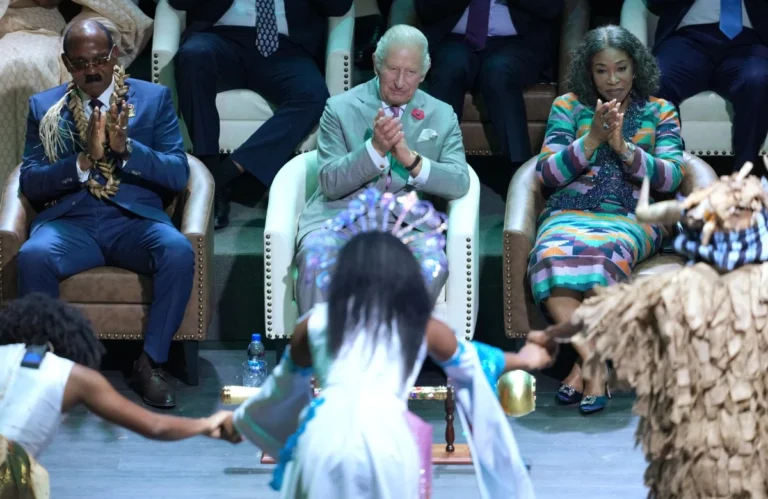
The 28th Commonwealth Heads of Government Meeting (CHOGM) opened in St. John’s, Antigua and Barbuda, under the heavy historical weight of the transatlantic slave trade, as King Charles III delivered a landmark speech addressing Britain’s colonial past. Speaking before leaders and delegates from the 56-nation bloc, the British monarch characterized the historic practice of human trafficking as a "monstrous injustice" that continues to cast a long and lingering shadow over contemporary geopolitics, island economies, and diplomatic relations between the United Kingdom and its former colonies.
The high-stakes summit has brought the contentious issues of historical accountability, state apologies, and reparatory justice to the forefront of international diplomacy. While King Charles expressed profound personal sorrow over the chapter of history that saw millions of African men, women, and children forcibly transported to the Americas, political leaders attending the summit grappled with the modern policy implications of historical restitution. Prime Minister Andy Burnham, who assumed office in July, used the gathering to engage in high-level bilateral discussions regarding a potential formal apology from the British state, while simultaneously drawing a firm line against direct financial reparations.
The Historical Context of the Transatlantic Slave Trade
To understand the friction dominating the contemporary Commonwealth summit, one must examine the profound historical mechanics of the transatlantic slave trade. Over a four-century period spanning from the 16th to the 19th centuries, European powers—with the British Empire playing a central and highly lucrative role—transported an estimated 10 to 15 million Africans across the Atlantic Ocean. Packed tightly into slave ships under horrific conditions, these individuals were subjected to chattel slavery in the Americas, powering sugar, tobacco, and cotton plantations that generated immense wealth for the British crown, merchants, and institutional investors.
The British economy benefited extensively from the commodification of human beings, establishing financial, insurance, and manufacturing networks that laid the groundwork for the Industrial Revolution. However, the system also faced fierce resistance from enslaved populations who launched continuous rebellions, alongside the tireless advocacy of abolitionists within Britain. Public pressure and economic shifts eventually led the UK Parliament to pass the Slavery Abolition Act in 1833, which outlawed slavery across most of the British Empire. Yet, the abolition was accompanied by a controversial government bailout: the British state borrowed £20 million—representing nearly 40 percent of the national treasury’s annual expenditure at the time—to compensate slave owners for the "loss of property," while formerly enslaved individuals received no financial compensation or land redistribution.
Chronology of Modern Diplomatic Friction
The modern debate surrounding reparations and apologies has evolved through a series of tense diplomatic milestones:
- October 2022: During a royal tour of the Caribbean, public protests highlight deep-seated grievances regarding the British monarchy’s historical ties to slavery, with demonstrators calling for official acknowledgments and restorative justice.
- November 2024: The Commonwealth Heads of Government Meeting in Samoa becomes politically fractious. Despite attempts by the UK administration under then-Prime Minister Keir Starmer to sidestep the slavery debate, all 56 member nations sign a historic communique supporting formal discussions on reparatory justice.
- July 2026: Andy Burnham takes office as Prime Minister, signaling a potential shift in Downing Street’s diplomatic posture toward the Commonwealth, moving away from outright avoidance toward structured dialogues with impacted regions.
- November 2026: Opening ceremonies of CHOGM in Antigua and Barbuda feature King Charles III’s address labeling slavery a "monstrous injustice," followed immediately by intensive bilateral meetings between Burnham and Caribbean leaders, including Barbados Prime Minister Mia Mottley.
Official Responses and Divergent Political Perspectives
The question of how the British government should address centuries of colonial exploitation has exposed deep ideological divisions within domestic UK politics and across international borders. Prime Minister Burnham has adopted a nuanced diplomatic strategy, acknowledging the validity of requests for a formal state apology while vehemently rejecting demands for monetary compensation. Speaking to reporters on the sidelines of the summit, Burnham emphasized that contemporary British taxpayers should not be held financially liable for historical atrocities committed centuries ago.
"I’ve been very clear that we do not support reparations," Burnham stated during press briefings in St. John’s. "But it’s not the case that we don’t support countries in the Commonwealth around development, helping them with debt issues that they’ve got."

This sentiment is echoed by opposition figures within Westminster. Conservative leader Kemi Badenoch has strongly argued against any form of state apology, warning that expressing formal remorse would legally and politically empower foreign governments to pursue astronomical financial compensation claims against the United Kingdom.
Conversely, Caribbean leaders and regional institutions have maintained a unified front regarding the necessity of reparatory justice. Barbados Prime Minister Mia Mottley, a leading global voice for financial reform and climate reparations, has argued that the structural economic disadvantages faced by small island developing states are directly traceable to the wealth extraction of the colonial era. During their bilateral talks, Mottley and Burnham discussed structured frameworks for communities impacted by the transatlantic trade, focusing on developmental assistance rather than direct cash payouts.
The "Debt Reset" and Alternative Economic Frameworks
In lieu of direct financial reparations, London has advanced an alternative economic strategy aimed at alleviating financial distress among the most vulnerable Commonwealth nations. Led by former Labour Prime Minister Gordon Brown, the UK administration is championing a "debt reset" plan designed to restructure sovereign debt and modify interest rates for developing economies struggling under crushing international loan repayments.
As part of this developmental push, the UK government announced a targeted funding package of £40 million ($54 million) spanning three years. These funds are earmarked for critical infrastructure enhancements across the Caribbean, with a specific focus on climate resilience and renewable energy transition projects. Downing Street officials framed the initiative as a proactive measure to address the modern economic vulnerabilities of former colonies, many of which face existential threats from climate change and high debt-to-GDP ratios.
The Monopolizing Influence of Colonial Legacy on Royal Diplomacy
For King Charles III, the issue of slavery has cast an unavoidable shadow over his ongoing nine-day diplomatic tour of three Caribbean nations. The monarch, who serves as the ceremonial head of the Commonwealth and head of state in 14 member countries—including several Caribbean realms—must navigate a delicate constitutional tightrope. Operating under strict political neutrality, the king is constitutionally barred from formulating government policy or independently announcing state apologies without the explicit advice of his ministers.
A Buckingham Palace spokesperson reiterated prior to the summit that it would be inappropriate for the sovereign to unilaterally alter government policy or issue a binding state apology on behalf of the British executive branch. Nevertheless, the king’s personal reflections, including his statement that the historical chapter fills his soul with "profound personal sorrow," represent a carefully calibrated effort to acknowledge historical grievances while remaining within the bounds of constitutional monarchy.
Implications for the Future of the Commonwealth
The ongoing deliberations at the Antigua and Barbuda summit carry profound implications for the future cohesion and relevance of the Commonwealth. As a voluntary association of nations, the modern Commonwealth faces growing internal pressures. Several member states have signaled intentions to transition away from constitutional ties with the British crown, following the path of Barbados, which officially removed the British monarch as head of state to become a republic in November 2021.
Analysts suggest that the long-term survival and moral authority of the Commonwealth depend heavily on how London manages the legacy of colonialism. By opening channels for structured dialogue, engaging in debt-relief initiatives, and listening directly to demands for restorative justice, the UK aims to modernize its diplomatic partnerships for the 21st century. However, whether developmental aid and symbolic acknowledgments will suffice to satisfy nations demanding comprehensive reparatory justice remains one of the defining diplomatic questions of the decade.