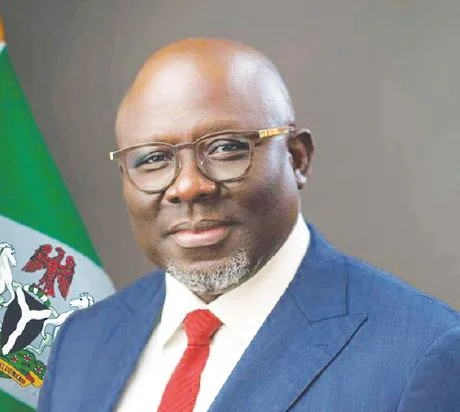
Delta State Governor, Sheriff Oborevwori, has emphasized that a motivated, well-equipped, and continuously trained workforce remains the indispensable engine of effective governance and sustainable socio-economic development. The governor made this assertion in Asaba, the Delta State capital, while hosting a high-powered delegation from the Federal Civil Service Commission (FCSC), led by its Chairman, Professor Tunji Olaopa, who were on a courtesy visit to the state government house.
Governor Oborevwori, who was ably represented during the engagement by his Deputy, Sir Monday Onyeme, articulated his administration’s unwavering philosophy regarding human capital development within the public sector. He noted that keeping pace with dynamic global administrative standards requires both state and national civil service institutions to invest aggressively in comprehensive manpower development, modern technological tools, and robust welfare packages that protect workers against economic headwinds.
The high-level strategic meeting also served as a formal platform to discuss preparations for the upcoming 2026 edition of the National Council on Civil Service, an important national gathering that Delta State has been selected to host. Governor Oborevwori expressed immense pride in his administration being afforded the privilege of welcoming delegates from across the federation for the prestigious event, asserting that Delta State consistently strives for pioneering excellence across all sectors of public administration and infrastructural delivery.
The Imperative of Continuous Training in a Changing Global Landscape
Expatiating on the administration’s core policy objectives, Governor Oborevwori highlighted that the public service cannot afford to remain static in an era defined by rapid technological disruptions, digital transformation, and shifting socio-economic paradigms. He stated unequivocally that continuous training, retraining, and structural reorientation remain the only viable pathways to keeping administrative institutions responsive, efficient, and adequately equipped to meet the evolving demands of contemporary governance.
"We are very happy to host the 2026 edition of your National Council," Governor Oborevwori stated through his deputy. "Delta State likes to be first in everything, and our civil service stands among the best in the country because our personnel are properly trained, and their welfare is systematically prioritized. Things are changing rapidly across the globe, and continuous training and retraining remain the only path to keeping our institutions abreast of modern demands. I urge the leadership of the National Council to encourage civil service commissions across the federation to adopt this continuous learning approach."
The governor pointed out that over the past few years, the Delta State Government has implemented systematic reforms geared toward streamlining administrative processes, eliminating bureaucratic bottlenecks, and integrating digital solutions into day-to-day government operations. By prioritizing regular promotions, timely payment of salaries and pensions, and targeted capacity-building workshops both locally and internationally, the state has cultivated a resilient corps of civil servants capable of driving its ambitious infrastructural and social welfare agendas.
Federal Civil Service Commission Commends Delta’s Preparations
In his response, the Chairman of the Federal Civil Service Commission, Professor Tunji Olaopa, lauded Governor Oborevwori and the government and people of Delta State for their proactive disposition and enthusiastic readiness to host the 2026 National Council on Civil Service. Professor Olaopa noted that the annual gathering serves as a critical crucible for policy formulation, peer review, and strategic alignment among the various tiers of the bureaucracy in Nigeria.
The FCSC chairman explained that the annual meeting is far more than a routine administrative convergence; it prominently features a highly targeted, intellectually rigorous conference designed specifically to address topical reforms, resolve systemic bottlenecks, and intentionally shape the future trajectory of public administration in Nigeria. He commended Delta State for consistently demonstrating exemplary leadership in infrastructural development, economic management, and civil service administration, making it an ideal backdrop for such a consequential national dialogue.
"We are deeply impressed by the hospitality and the level of preparedness we have witnessed here in Asaba," Professor Olaopa remarked. "The National Council on Civil Service relies heavily on visionary sub-national leadership to drive reforms from the grassroots up to the federal level. Delta State has consistently shown that sub-national entities can pioneer administrative excellence that serves as a benchmark for the entire federation."
Background Context and Evolution of the National Council on Civil Service
The National Council on Civil Service stands as one of the premier institutional mechanisms designed to foster synergy, harmonization, and peer learning among the Head of the Civil Service of the Federation, the Federal Civil Service Commission, and the various State Civil Service Commissions across Nigeria’s 36 states. Established to address systemic challenges plaguing public administration—ranging from bureaucratic red tape and infrastructural decay to capacity deficits and issues of transparency—the Council meets annually to review policy frameworks and recommend actionable reforms to the National Council of State and the Federal Executive Council.
In recent years, the Council has shifted its strategic focus toward comprehensive digital transformation, performance management systems, and professionalization initiatives aimed at weaning the civil service off outdated, paper-based operational models. With global economies shifting toward knowledge-based paradigms, federal and state agencies have increasingly recognized that a poorly trained bureaucracy represents an institutional liability capable of derailing even the most well-intentioned developmental policies of elected administrations.
Delta State’s emergence as the host for the 2026 edition underscores its rising profile as an administrative and economic hub in the South-South geopolitical zone. Over the past decade, the state has actively pursued public sector reforms, introducing biometric verification systems to eliminate ghost workers, automating payroll processes, and institutionalizing continuous professional development programs through specialized training institutes.
Broader Implications for Public Administration in Nigeria
The convergence of federal and state civil service leaders in Asaba carries profound implications for the broader reform agenda currently sweeping through Nigeria’s public sector. Analysts note that while federal policies set the overarching tone for national governance, the actual implementation of critical socio-economic services—such as healthcare delivery, primary education, rural infrastructure, and agricultural extension services—largely depends on the efficiency, motivation, and competence of state and local government civil servants.
By publicly committing to aggressive manpower development and robust worker welfare, Governor Oborevwori’s administration has underscored a vital principle of modern public administration: that institutional output is a direct function of personnel input. When workers are insulated from economic precarity through prompt salary disbursements, structured pension schemes, and upward mobility pathways, instances of institutional corruption, administrative apathy, and systemic inefficiency are significantly curtailed.
Furthermore, the emphasis on continuous training addresses the glaring digital divide that has historically hampered public sector efficiency in developing economies. As federal and state governments move toward e-governance, digital tax administration, and automated procurement processes, civil servants must be systematically upskilled to operate complex software platforms, manage data securely, and deliver citizen-centric services with speed and transparency.
Chronology of Key Events Leading to the 2026 Summit
The journey toward the hosting of the 2026 National Council on Civil Service in Delta State follows a structured timeline of inter-governmental consultations and strategic evaluations:
- Mid-2024: Preliminary discussions commence between the Federal Civil Service Commission and regional state civil service heads regarding the rotation of the national council hosting rights, with Delta State expressing early interest.
- Late 2025: A joint technical committee comprising officials from the FCSC and the Delta State Civil Service Commission is constituted to inspect conference facilities, accommodation infrastructure, and logistical frameworks in Asaba.
- Early 2026: Formal ratification of Delta State as the host for the 2026 edition, accompanied by high-level preparatory meetings between state executive leadership and federal bureaucratic chiefs.
- Current Visit (June 2026): FCSC Chairman Professor Tunji Olaopa leads a high-powered delegation to Asaba on a courtesy visit to Governor Oborevwori, cementing the partnership and reviewing final logistical arrangements for the upcoming national conference.
- Upcoming (Later in 2026): The official convening of the National Council on Civil Service in Asaba, expected to draw delegates, technocrats, policy analysts, and administrators from all 36 states and the Federal Capital Territory.
Outlook and Future Prospects
As preparations gather momentum for the 2026 summit, stakeholders in the public sector are optimistic that the deliberations in Asaba will yield pragmatic, enforceable resolutions capable of addressing the structural vulnerabilities of the Nigerian civil service. The partnership between the Delta State Government and the Federal Civil Service Commission signals a renewed commitment to collaborative federalism, where sub-national success stories are leveraged to inspire national reform.
Governor Oborevwori’s administration has reiterated its resolve to continue investing in the human capital of the Delta State public service, ensuring that workers are not only beneficiaries of current economic policies but active co-creators of the state’s future prosperity. As the nation looks toward Asaba for the 2026 National Council on Civil Service, the spotlight remains firmly on Delta State’s administrative model as a shining example of what visionary leadership and sustained institutional investment can achieve.