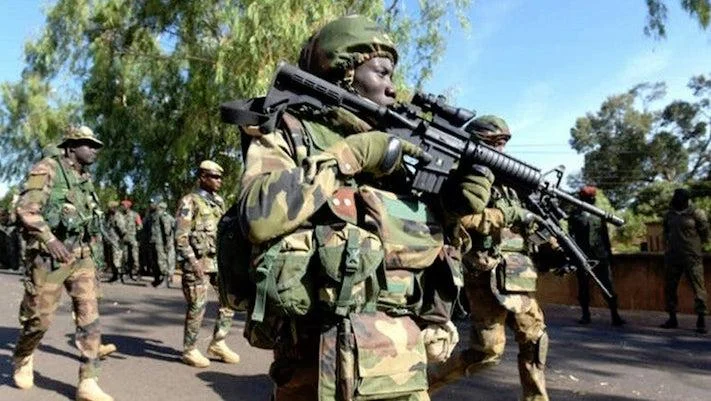
The 12 Composite Brigade of the Nigerian Army has recorded a significant tactical victory in the ongoing campaign against organized crime in North-Central Nigeria, successfully neutralising two suspected kidnappers and recovering a substantial cache of military-grade weaponry in the Edimogbo Forest, located in the Igalamela/Odolu Local Government Area of Kogi State. The operation, which took place on November 3, 2026, serves as a critical follow-up to a successful initial raid conducted the previous day, marking a decisive escalation in the military’s efforts to flush out criminal syndicates operating within the state’s rugged terrain.
Chronology of the Security Operation
The tactical engagement, which has been hailed by security analysts as a major blow to regional kidnapping syndicates, unfolded over a 48-hour window. On November 2, 2026, troops from the 12 Composite Brigade executed a precision raid on a suspected kidnapper’s hideout deep within the Edimogbo Forest. Intelligence reports had indicated that the forest served as a logistical hub and staging ground for criminal gangs responsible for a spate of abductions targeting travelers and local residents along the Kogi corridors.
During the initial November 2 raid, soldiers encountered fierce resistance from the criminal elements, leading to a direct fire exchange. Following this encounter, the brigade leadership ordered a follow-up "exploitation" operation to track fleeing suspects and secure the expansive forest territory. It was during this secondary phase on November 3 that the troops engaged the remaining members of the cell, successfully neutralising two kidnappers and seizing the weapons they left behind in their retreat.
Inventory of Recovered Assets
The recovery made by the Nigerian Army is particularly alarming to security observers due to the sheer volume and nature of the ammunition seized. According to the official statement issued by the Acting Assistant Director of Army Public Relations for the 12 Composite Brigade, Lieutenant Hassan Abdullahi, the inventory recovered from the hideout included:
- Two AK-47 assault rifles, representing the primary armament of the criminal cell.
- Seven fully loaded magazines, suggesting the suspects were prepared for sustained combat.
- 438 rounds of 7.62mm x 54 ammunition, a caliber often associated with more advanced tactical weaponry.
- A significant stockpile of 4,725 rounds of 7.62mm special ammunition, a quantity that points to the cell’s capacity for long-term operations and potential linkages to larger, well-funded criminal networks.
- Tactical equipment, including two bandoliers, two mobile phones, and a power bank, which intelligence officers are currently analyzing for forensic leads on the gang’s leadership and communication nodes.
Contextualizing Security Challenges in Kogi State
Kogi State has historically served as a strategic transit point due to its geographical position, which connects the Federal Capital Territory with the southern and eastern parts of Nigeria. This strategic importance has unfortunately made it a target for criminal elements, including bandits, kidnappers, and cattle rustlers who leverage the state’s dense forests and complex topography to evade law enforcement.
The Igalamela/Odolu axis, in particular, has seen an uptick in security concerns over the past eighteen months. The 12 Composite Brigade has been at the forefront of a multi-agency strategy, collaborating closely with the Kogi State Police Command and the Department of State Services (DSS) to create a "cordon and search" environment. This joint task force approach is designed to deny criminals the ability to operate with impunity, forcing them into defensive postures that make them vulnerable to the type of tactical exploitation carried out in the Edimogbo Forest.
Strategic Implications and Military Posture
The success of the Edimogbo Forest operation carries several implications for the internal security landscape of North-Central Nigeria. First, the recovery of over 5,000 rounds of live ammunition indicates that the criminal elements in the region are not merely opportunistic petty thieves but are part of a sophisticated, well-resourced supply chain. The military’s ability to intercept these supplies is a vital component of the federal government’s broader strategy to "starve" criminal cells of the logistical capacity required to conduct large-scale abductions.
Furthermore, the Army’s ability to conduct a follow-up operation within 24 hours of an initial contact demonstrates an improvement in the brigade’s intelligence-gathering capabilities and operational tempo. Lieutenant Abdullahi’s statement highlighted that the troops have continued to dominate the general area, with morale remaining high. This dominance is essential to restoring public confidence; when local populations observe the military maintaining a sustained presence rather than executing one-off raids, the propensity for residents to share actionable intelligence increases significantly.
Official Response and Future Outlook
The military high command has indicated that this operation is part of a broader mandate to restore lasting peace and security across Kogi State. By neutralizing the threat in the Edimogbo Forest, the 12 Composite Brigade has effectively closed a known gap that previously allowed criminals to move freely between neighboring local government areas.
"The successful exploitation operation further consolidates the gains recorded during the previous day’s raid and underscores the Brigade’s determination to sustain pressure on criminal elements operating within its area of responsibility," the statement read.
For the civilian population, the outcome of this engagement represents a reprieve from the constant threat of kidnapping that has plagued the area. Security experts suggest that the next phase of this operation will likely involve a deep forensic analysis of the mobile phones and digital devices recovered. This data is expected to reveal the gang’s hierarchy, their financiers, and their recruitment pipelines—information that could lead to subsequent arrests and the dismantling of the syndicate’s broader structure.
The Role of Inter-Agency Collaboration
The effectiveness of this operation also highlights the importance of inter-agency cooperation. The synergy between the 12 Composite Brigade and the Kogi State Police Command is a model that the Nigerian security apparatus has been attempting to replicate across various states. By combining the kinetic power of the military with the investigative and intelligence-led approach of the police, the security forces are better positioned to address the root causes of insecurity rather than merely responding to individual crimes.
As the 12 Composite Brigade continues to "dominate the general area," the focus will shift to preventing the regrouping of these criminal elements. The success of the November 2 and 3 operations serves as a clear warning to those utilizing the forests of Kogi as a base for criminal activities: the military is not only aware of their locations but is actively adapting its tactics to neutralize them.
Analysis: The Path Ahead
The challenges facing Kogi State remain substantial, particularly regarding the vast, unmonitored forest reserves that provide cover for criminal syndicates. While the recovery of 4,725 rounds of special ammunition is a major tactical success, it raises difficult questions regarding how these weapons and munitions are entering the country and reaching these specific cells. Future military operations will likely need to integrate more robust border monitoring and inter-state surveillance to address the influx of arms at the source.
As of November 2026, the situation in the Igalamela/Odolu region remains under close observation. The Nigerian Army has reaffirmed its commitment to protecting lives and property, urging the public to continue providing timely information to security agencies. With the morale of the troops reported to be at an all-time high, the military appears poised to continue its aggressive posture, aiming to secure not just the forest corridors, but the peace and prosperity of the communities that rely on the safety of these transit routes.
The incident in Edimogbo Forest stands as a testament to the resilience of the Nigerian military in the face of asymmetric warfare. By maintaining operational tempo and refining their tactics, the forces on the ground are slowly but surely reclaiming the interior from criminal control, signaling a potential turning point in the security landscape of the region.