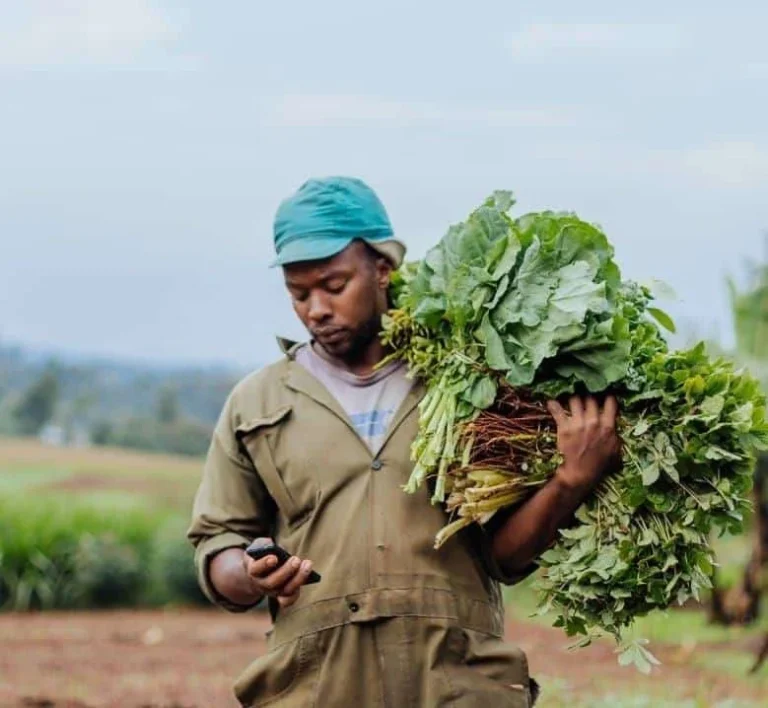
Acumen, the United States-based impact investment pioneer founded in 2001 by Jacqueline Novogratz, has successfully secured an additional USD 90 million in funding commitments for its flagship Acumen Resilient Agriculture Fund (ARAF). This significant capital injection is earmarked for the expansion of climate-resilient agricultural initiatives across the African continent, signaling a robust vote of confidence from the global development finance community in the efficacy of impact-driven equity models. Managed by Acumen Capital Partners, ARAF made history upon its initial launch in 2020 as the world’s first equity fund specifically dedicated to building the climate resilience of smallholder farmers. The latest round of funding involves a strategic mix of returning institutional giants and new international partners, including the Green Climate Fund (GCF), the Dutch entrepreneurial development bank (FMO), and Proparco, alongside fresh commitments from Swedfund, BIO, the Fund for Agricultural Resilient Saharan Africa (FASA), and a private family office.
The capital raise comes at a critical juncture for the African continent, where the agricultural sector remains the backbone of the economy but faces existential threats from escalating climate volatility. By targeting agribusinesses that provide innovative solutions to these challenges, ARAF seeks to bridge the massive financing gap that currently hinders small-scale producers. To date, the fund has already deployed capital into 12 high-impact agribusinesses, collectively reaching more than 3 million farmers. With the new USD 90 million commitment, Acumen plans to scale these operations significantly, moving into the underserved markets of North Africa and aiming to impact an additional 4 million smallholder farmers over the coming years.
The Genesis and Evolution of ARAF
The Acumen Resilient Agriculture Fund was conceived as a response to the disproportionate impact of climate change on the world’s most vulnerable populations. While Africa contributes less than 4% of global greenhouse gas emissions, its agricultural systems are among the most susceptible to the erratic weather patterns, prolonged droughts, and catastrophic flooding associated with global warming. Traditional aid and debt-based financing have often failed to provide the long-term, "patient capital" required to build sustainable resilience.
Since its inception in 2001, Acumen has championed a philosophy of using philanthropic capital to make disciplined investments in early-stage companies. ARAF represents the institutionalization of this approach within the climate sector. When the fund was launched in 2020, it aimed to prove that equity investments in agribusinesses could yield both social impact and financial returns. The initial pilot phase focused on East and West Africa, identifying startups and growth-stage companies that offered drought-resistant seeds, digital weather forecasting, solar-powered irrigation, and innovative crop insurance.
The successful mobilization of this additional USD 90 million marks a transition from a proof-of-concept phase to a scaling phase. It reflects a growing recognition among Development Finance Institutions (DFIs) that climate adaptation—not just mitigation—is an urgent priority for emerging markets.
A Strategic Coalition of Global Investors
The composition of the investor group for this funding round highlights the collaborative nature of modern climate finance. The Green Climate Fund (GCF), which served as an anchor investor during ARAF’s initial launch, continues to play a pivotal role. The GCF’s involvement is often seen as a "de-risking" mechanism that encourages private and public sector entities to commit capital to high-risk environments.
Returning investors like FMO and Proparco (the private sector financing arm of the French Development Agency) bring deep expertise in African markets and a commitment to the United Nations Sustainable Development Goals (SDGs). Their continued support suggests that ARAF’s portfolio companies have met rigorous environmental, social, and governance (ESG) benchmarks over the last four years.
The entry of new backers—Swedfund (Sweden’s development finance institution), BIO (the Belgian Investment Company for Developing Countries), and FASA—indicates an broadening of the geographic and institutional base for climate-resilient agriculture. FASA’s involvement is particularly noteworthy as ARAF looks to expand its footprint into North Africa, a region grappling with severe water scarcity and desertification. The inclusion of a private family office further underscores the increasing interest of high-net-worth individuals in "blended finance" structures that combine social mission with investment rigor.
Supporting the Backbone of the African Economy
To understand the impact of ARAF, one must look at the data surrounding smallholder farmers in Africa. Agriculture employs approximately 65% of the continent’s labor force and accounts for nearly 23% of its GDP. However, the vast majority of this production comes from smallholder farmers—those working on less than two hectares of land. These farmers produce 80% of the food consumed in sub-Saharan Africa, yet they remain largely excluded from formal financial systems.
ARAF’s investment strategy focuses on three primary "resilience pillars":
- Productivity and Income: Investing in companies that provide high-quality inputs (seeds, fertilizers) and training to help farmers increase yields despite harsh conditions.
- Climate-Smart Technology: Supporting the deployment of solar-powered cold storage to reduce post-harvest losses and digital platforms that provide real-time market data and weather alerts.
- Financial Inclusion: Backing agribusinesses that offer flexible credit lines or insurance products tailored to the seasonal nature of farming.
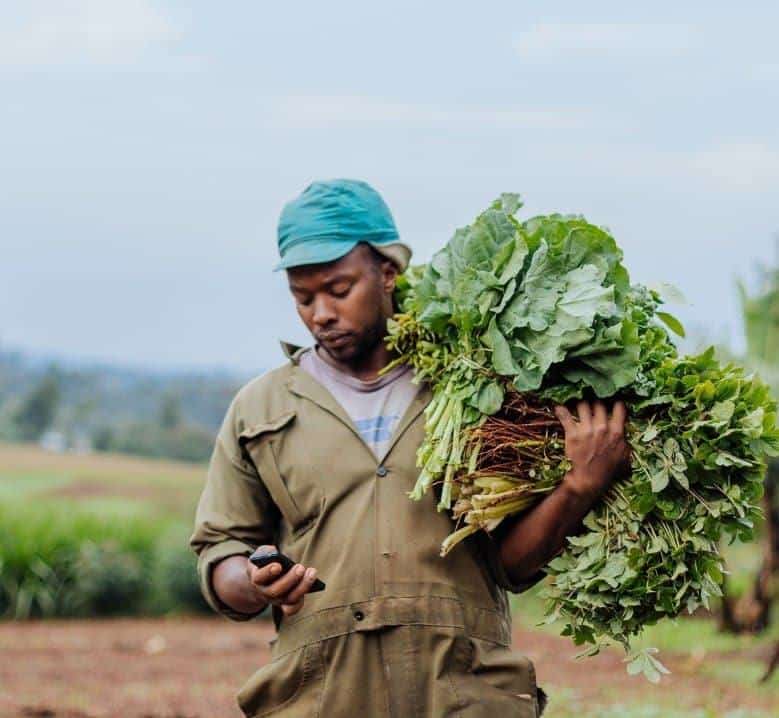
By reaching 3 million farmers through its first 12 investments, ARAF has demonstrated that localized agribusinesses are the most effective delivery vehicles for climate adaptation tools. These companies understand the nuances of local soil, culture, and market dynamics better than centralized government programs or international NGOs.
Expansion into North Africa and Future Projections
The decision to utilize a portion of the USD 90 million for expansion into North Africa represents a strategic pivot for Acumen. Historically, impact investment in Africa has been heavily concentrated in sub-Saharan hubs like Kenya, Nigeria, and South Africa. However, countries such as Egypt, Morocco, and Tunisia are currently on the front lines of the climate crisis, facing unprecedented heatwaves and dwindling water resources.
The agricultural challenges in North Africa are distinct; they often require capital-intensive solutions such as desalination for irrigation and advanced hydroponics. By extending ARAF’s reach into this region, Acumen aims to foster cross-continental knowledge sharing. Lessons learned from drought-management techniques in the Maghreb could potentially be applied to the increasingly arid regions of Southern Africa, and vice versa.
The fund’s goal of reaching an additional 4 million farmers—bringing the total projected impact to 7 million—is an ambitious target that requires more than just capital. It requires an ecosystem approach. Acumen has indicated that it will continue to provide technical assistance to its portfolio companies, helping them refine their business models and measure their impact more accurately.
Analysis of Implications for the Global Climate Agenda
The success of ARAF’s capital raise carries significant implications for the broader global climate finance architecture. For years, international climate summits (such as COP) have been dominated by discussions regarding the "Loss and Damage" fund and the failure of developed nations to meet the USD 100 billion annual climate finance pledge. ARAF serves as a practical, working model of how climate finance can be deployed effectively through the private sector.
Firstly, it proves that "Adaptation Finance" is a viable investment class. Traditionally, climate finance has flowed toward "Mitigation" (renewable energy, carbon capture) because the returns are easier to quantify. Adaptation—preparing for the effects of climate change—has often been relegated to the realm of grants. ARAF challenges this by showing that agribusinesses serving smallholders can be profitable and scalable.
Secondly, it highlights the importance of the "missing middle." Many African startups are too large for microfinance but too small for traditional venture capital. ARAF fills this gap by providing equity and quasi-equity investments ranging from USD 1 million to USD 10 million. This support allows companies to transition from local pilots to regional players.
Finally, the focus on smallholder farmers addresses the intersection of climate change and food security. As global supply chains remain fragile due to geopolitical tensions, building localized, resilient food systems in Africa is not just a humanitarian goal—it is a global strategic necessity.
Official Responses and Industry Outlook
While official statements from all individual backers are typically released in formal institutional reports, the consensus among development experts is one of cautious optimism. Spokespersons for organizations like the Green Climate Fund have previously emphasized that "transformational change" in agriculture requires shifting the mindset from "farming for survival" to "farming as a business."
Jacqueline Novogratz, the founder of Acumen, has long advocated for the idea that "poverty is not just a lack of money, but a lack of choice and opportunity." This latest funding round for ARAF is viewed as a mechanism to provide those choices—giving farmers the choice to use better seeds, the choice to irrigate their land, and the choice to protect their families against the next failed harvest.
Looking ahead, the success of ARAF will likely inspire the creation of similar funds in other climate-vulnerable regions, such as Southeast Asia and Central America. As the USD 90 million begins to be deployed, the global community will be watching closely to see if this model can truly decouple agricultural growth from environmental degradation.
The trajectory of ARAF suggests that the future of African agriculture lies at the intersection of technology, finance, and traditional knowledge. With a strengthened balance sheet and a clear mandate for expansion, the fund is well-positioned to lead the charge in ensuring that Africa’s smallholder farmers are not the victims of climate change, but rather the architects of a more resilient and food-secure future.