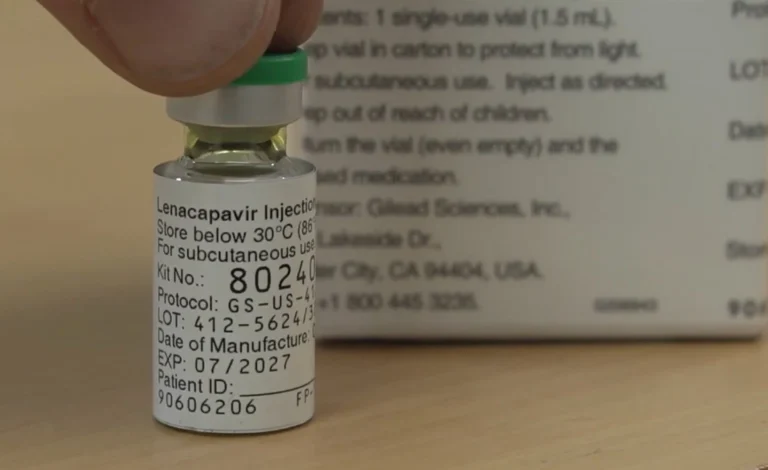
The landscape of HIV prevention and treatment has reached a historic turning point following the release of updated data from several landmark Phase III clinical trials. Results presented at the AIDS 2026 conference demonstrate that lenacapavir, a first-in-class capsid inhibitor, continues to provide near-complete protection against HIV infection when administered as a twice-yearly injection. Furthermore, new data regarding a once-weekly oral treatment regimen suggests a shift away from the burden of daily medication for those already living with the virus. These findings have sparked a wave of optimism among global health experts, who believe that these long-acting options could fundamentally dismantle the barriers to ending the HIV epidemic, provided they are made accessible to the world’s most vulnerable populations.
The PURPOSE Trials: A New Standard in HIV Prevention
The updated results from the PURPOSE-1 and PURPOSE-2 clinical trials have solidified lenacapavir’s status as one of the most effective biomedical interventions in the history of HIV research. Lenacapavir, developed by Gilead Sciences, is a long-acting subcutaneous injection administered once every six months. Unlike traditional pre-exposure prophylaxis (PrEP), which typically requires a daily oral pill, lenacapavir targets the HIV capsid—the protein shell that protects the virus’s genetic material—interfering with multiple stages of the viral lifecycle.
In the PURPOSE-1 trial, which focused on cisgender women in South Africa and Uganda, the drug demonstrated a level of efficacy rarely seen in clinical settings. During the initial randomized, blinded phase of the study, lenacapavir showed superior protection compared to daily oral PrEP (tenofovir disoproxil fumarate/emtricitabine). Upon the conclusion of the blinded phase, the trial transitioned into an open-label extension (OLE), where more than 95% of participants chose to receive the injectable drug.
Dr. Noah Kiwanuka of the Makerere University School of Public Health reported that during the first 52 weeks of this open-label extension, there were zero new HIV infections among participants. This included both the women who had been on lenacapavir since the start and those who switched from the daily oral pill. The maintenance of zero infections over an extended follow-up period highlights the drug’s durability and its ability to overcome the "adherence fatigue" often associated with daily medication.
Diverse Populations and Global Efficacy: PURPOSE-2
While PURPOSE-1 focused on women in Africa, the PURPOSE-2 trial expanded the scope to include cisgender men, transgender women, transgender men, and gender-diverse individuals. This trial was conducted across a diverse geographical footprint, including sites in Argentina, Brazil, Mexico, Peru, South Africa, Thailand, and the United States.
Dr. Marcelo Losso, a lead researcher from the Hospital General de Agudos José María Ramos Mejía in Buenos Aires, noted that the high efficacy observed in the initial phase was sustained during the follow-up. In the open-label extension of PURPOSE-2, 95% of participants opted for the twice-yearly injection. Data revealed that during the first 12 months of the extension, only one new HIV infection occurred among the thousands of participants receiving lenacapavir. This single case is currently undergoing plasma level assessment to determine the circumstances of the acquisition.
The trial also highlighted a significant preference for the long-acting injectable over daily pills. Adherence to the injection schedule was remarkably high, reaching 92% to 96% across different cohorts. This high level of compliance is attributed to the convenience of the six-month dosing interval, which eliminates the need for daily reminders and reduces the social stigma sometimes associated with carrying and taking HIV medication.
Shifting the Treatment Paradigm: Once-Weekly Oral Options
Parallel to the breakthroughs in prevention, researchers also unveiled encouraging data for individuals already living with HIV. The ISLEND-1 and ISLEND-2 Phase III trials evaluated a novel once-weekly oral regimen combining islatravir and lenacapavir. This combination represents the first complete weekly oral treatment for adults who are already virologically suppressed on daily antiretroviral therapy (ART).
The necessity for such an option stems from the challenges of lifelong daily pill adherence. Professor Kenneth Ngure, a prominent HIV researcher, emphasized that while daily ART has turned HIV into a manageable chronic condition, the "pill-a-day" requirement remains a psychological and logistical burden for many. "Treatment needs to fit into people’s lives, not the other way around," Ngure stated.
In the ISLEND-1 trial, participants who were virologically suppressed on a daily regimen of bictegravir/emtricitabine/tenofovir alafenamide (B/F/TAF) were randomized to either stay on their daily pill or switch to the once-weekly islatravir-lenacapavir tablet. At the 48-week mark, the weekly regimen was found to be non-inferior to the daily regimen, with zero cases of virological failure.

Dr. Amy Colson of the Community Resource Initiative highlighted that the safety profile of the weekly pill was comparable to standard daily therapies. There were no clinically significant changes in CD4 cell counts or body weight, and treatment discontinuation due to adverse events was rare. Most notably, 78% of participants in the open-label ISLEND-2 trial reported higher satisfaction with the weekly regimen compared to their previous daily therapy.
The Science of Long-Acting Inhibition
The success of lenacapavir lies in its unique mechanism of action. As a capsid inhibitor, it works differently than the more common nucleoside reverse transcriptase inhibitors (NRTIs) or integrase inhibitors. By binding to the viral capsid, lenacapavir disrupts the nuclear transport of viral DNA, the assembly and release of new virus particles, and the formation of the capsid core.
Because it is highly potent and has a very slow clearance rate from the body, it can maintain therapeutic levels for six months following a single subcutaneous injection. Islatravir, its partner in the weekly oral trials, is a nucleoside reverse transcriptase translocation inhibitor (NRTTI) that also boasts a long half-life, making the duo a formidable combination for long-term viral suppression.
Addressing Global Equity and Access
Despite the scientific triumph, the central theme of the AIDS 2026 conference has been the urgent need for equitable distribution. Beatriz Grinsztejn, Director of the HIV/AIDS Clinical Research Unit at Fiocruz in Brazil and a key figure in the PURPOSE studies, warned that the "breakthrough advance" would only reach its full potential if it is delivered rapidly to the regions that need it most.
The history of HIV medicine is marred by delays in access for low- and middle-income countries. While daily PrEP has been available for over a decade, its impact in many parts of sub-Saharan Africa and Southeast Asia has been limited by costs, logistics, and adherence challenges. Lenacapavir’s six-month dosing could bypass many of these hurdles, but only if the pricing and manufacturing structures allow for mass rollout.
Grinsztejn and other advocates are calling on Gilead Sciences, international donors, and national governments to establish licensing agreements and generic manufacturing partnerships early. The goal is to ensure that a woman in rural Uganda or a gender-diverse individual in Peru has the same access to this life-saving technology as someone in a high-income country.
Chronology and Future Milestones
The journey of lenacapavir has been a rapid progression from laboratory discovery to late-stage clinical success:
- Early 2020s: Phase I and II trials establish the safety and pharmacokinetic profile of lenacapavir.
- 2023-2024: Initial results from PURPOSE-1 and PURPOSE-2 shock the medical community with near-100% efficacy rates.
- 2025: Regulatory submissions begin in major markets, including the US FDA and the European Medicines Agency (EMA).
- 2026: Updated 52-week open-label data confirms durability and safety, while ISLEND trials prove the viability of weekly oral treatment.
- Future Outlook: Gilead and Merck (MSD) have indicated they will continue follow-up for the ISLEND trials through 96 weeks. Meanwhile, global health organizations are drafting new guidelines to integrate twice-yearly injections into national HIV prevention strategies.
Implications for the Global Response
The implications of these trials extend beyond individual health. On a public health scale, a highly effective, long-acting PrEP tool could drastically lower the "R-naught" (basic reproduction number) of HIV in high-prevalence areas. If a significant percentage of at-risk populations are protected by an intervention that does not rely on daily memory, the rate of new infections could drop to levels that make the UNAIDS goal of ending AIDS as a public health threat by 2030 a realistic possibility.
Furthermore, the introduction of weekly oral treatment options provides a middle ground for patients who may not want injections but struggle with daily pills. This diversification of the "prevention and treatment toolkit" allows for a more personalized approach to healthcare, which has been proven to improve long-term outcomes in chronic disease management.
As the AIDS 2026 conference concludes, the consensus among the scientific community is clear: the tools to end the HIV epidemic are now within reach. The challenge that remains is not one of biology, but of political will and economic justice. Ensuring that lenacapavir and its associated regimens are available, affordable, and accessible will be the defining mission of the next decade in global health.