The medical triumph of surviving cancer is increasingly being overshadowed by a secondary crisis of economic displacement and systemic discrimination in India. For thousands of patients, the end of intensive treatment does not mark a return to normalcy but rather the beginning of a grueling struggle against financial toxicity and professional ostracization. As India’s cancer burden continues to grow, the gap between clinical recovery and social reintegration is widening, revealing a labor market and a healthcare system ill-equipped to support those who have beaten the odds.
The Personal Cost of a Rare Diagnosis
For Deeba Fariyal, a 27-year-old lawyer based in Delhi, the transition from a promising legal career to a state of chronic uncertainty began six years ago. Diagnosed with synovial sarcoma—a rare and aggressive soft-tissue cancer that predominantly strikes young adults—Fariyal’s journey has been defined by resilience in the face of physiological and systemic failure. Since her initial diagnosis, she has endured six relapses, a trajectory that has exhausted most conventional medical interventions.
The physical toll has been profound. Two years ago, the disease left her temporarily paralyzed, and while she has since regained the ability to walk, the presence of tumors in her lungs and spine remains a constant threat. In Delhi, where seasonal air pollution reaches hazardous levels, Fariyal’s compromised respiratory health makes daily life a struggle. However, she maintains that the most debilitating aspect of her condition is not the physical pain, but the staggering financial burden.
"Everything is so expensive," Fariyal noted, highlighting a reality that faces many in the Indian middle class. Treatment at a top-tier private hospital in India can easily range between $20,000 and $30,000—a fortune in a country where the average annual income is a fraction of that amount. Even maintenance treatments, such as targeted therapy, can cost upwards of $120 per dose.
The alternative—government-funded healthcare—is often a race against time. While public hospitals offer subsidized or free care, the waiting lists are notoriously long. For a patient diagnosed with Stage I cancer, the delay in securing an appointment or a surgical slot can allow the disease to progress to Stage IV. This "time-poverty" forces patients into the private sector, where the costs are ruinous. "If you want timely treatment in India, you need a job, and that’s nearly impossible for many people with cancer to keep," Fariyal said.

The Employment Gap: A Global and Local Crisis
The struggle to maintain employment is not unique to India, but it is exacerbated by the country’s specific economic conditions. A landmark 2009 study published in the Journal of the American Medical Association (JAMA) revealed that cancer survivors are significantly more likely to be unemployed than their peers. The study found an unemployment rate of 33.8% among survivors, compared to just 15.2% among those with no history of the disease.
In the fifteen years since that study, the financial stakes have risen. In India, the cancer burden is expanding rapidly. National estimates indicate that the country records more than one million new cancer cases annually. While improved diagnostic tools and advanced therapies have increased the number of survivors—estimated at 2.1 million in India as of 2018—the infrastructure to support their return to the workforce has not kept pace. Globally, there are approximately 32 million cancer survivors, many of whom face what oncologists call "the second sickness": the loss of livelihood.
Case Study in Discrimination: The Corporate Rejection
The experience of 36-year-old Richa Rana from Saharanpur, Uttar Pradesh, illustrates the systemic bias embedded in the private sector. In 2022, Rana was diagnosed with breast cancer while employed in a corporate role. Her initial experience with her employer was one of passive neglect rather than active support; she was placed on six months of unpaid leave.
Upon completing her treatment and being declared fit for work, Rana returned to her role, eager to prove her productivity. However, when the cancer relapsed, the company’s attitude shifted from indifference to hostility. After a second round of treatment, Rana informed her HR department that she was ready to resume her duties. The response was a notification of "separation."
"They admitted they had no issue with my work," Rana recalled. "I lost my job because I had taken those two medical leaves, even though they were both unpaid."
The subsequent job hunt proved even more demoralizing. Despite clearing multiple interviews and demonstrating her qualifications, the moment Rana disclosed her status as a cancer survivor, the offers were rescinded. Employers frequently cited concerns over potential future leaves or a perceived drop in productivity—assumptions made without testing her actual capabilities. Ultimately, Rana was forced to secure a new position by concealing her medical history, only disclosing it after six months of proven performance. "We have to do this much just to make a living," she said.
Economic Fragility and the Informal Sector
The vulnerability of Indian cancer survivors is deeply tied to the structure of the national labor market. Professor Arun Kumar, a prominent labor economist, points out that India’s high unemployment rate creates a "disposable" workforce. In an environment where there is a surplus of labor, companies find it more cost-effective to replace a sick worker than to accommodate their recovery.
"From a macroeconomic perspective, spending on hospitals and medicines contributes to GDP and appears as economic growth," Kumar explained. "But this is a negative form of growth because it reflects illness rather than improvements in well-being."
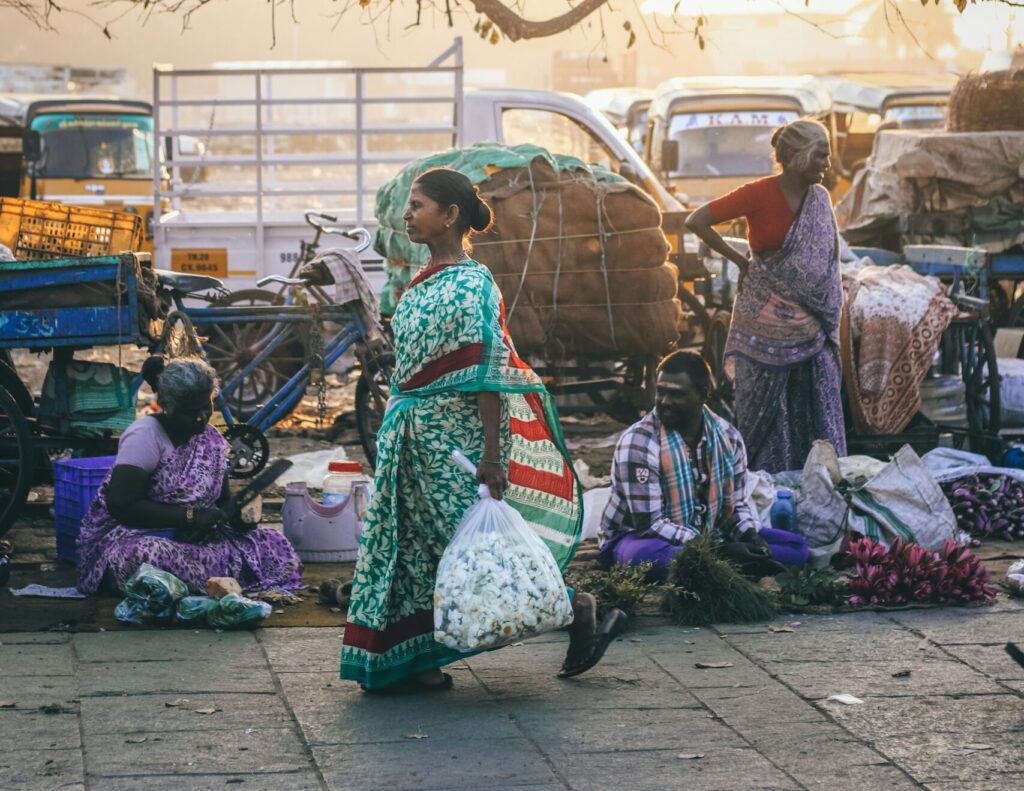
The situation is even more dire for the 94% of the Indian workforce employed in the informal sector. These workers—ranging from construction laborers to street vendors—lack any semblance of social protection. They have no access to paid medical leave, no employer-provided health insurance, and no legal recourse if they are terminated due to illness. Even for the 6% in the formal sector, benefits are often capped at levels that cannot sustain the multi-year costs of advanced oncology.
The Need for Legislative Reform and Policy Shifts
Public policy specialists argue that India requires a robust legal framework to protect survivors, similar to the Equality Act in the United Kingdom, which classifies cancer as a disability from the day of diagnosis to protect against workplace discrimination.
Urvashi Prasad, a public policy specialist and herself a Stage IV cancer survivor, emphasizes that while laws are necessary, they are not a panacea. "Even where legal protections exist, implementation remains weak," Prasad noted. She pointed to India’s maternity benefit laws, which, despite being on the books for decades, are frequently circumvented by employers through discriminatory hiring practices.
The cost of legal action in India is another barrier. A survivor facing financial ruin from medical bills is unlikely to have the resources or the time to pursue a multi-year litigation process against a former employer. "The government cannot do everything on its own," Prasad said. "Employers also need workplace policies that support people through serious illnesses and help them return to work."
A Chronology of the Survivor’s Burden
To understand the systemic failure, one must look at the typical timeline of a cancer survivor in India:
- Diagnosis and Immediate Financial Shock: The patient is often forced to choose between slow public care or expensive private care.
- The Treatment Phase: If employed, the patient often exhausts all sick leave and is moved to unpaid leave, losing their primary source of income.
- The Recovery Phase: Upon being declared "fit," the survivor attempts to return to the workforce.
- The Employment Wall: Survivors face termination (the "separation" policy) or are unable to find new work due to the "CV gap" created by their treatment.
- Long-term Economic Displacement: The survivor, though medically cured or stable, enters a cycle of debt and underemployment.
Broader Implications and the Path Forward
The failure to reintegrate cancer survivors is not just a humanitarian issue; it is an economic one. When skilled professionals like Deeba Fariyal and Richa Rana are pushed out of the workforce, the economy loses valuable human capital. The "negative growth" described by Professor Kumar suggests that while the healthcare industry may be booming, the underlying productivity of the population is being eroded by the very diseases they are surviving.
Experts suggest several avenues for reform:
- Mandatory Insurance Portability: Ensuring that health insurance is not tied strictly to active employment, allowing survivors to maintain coverage during gaps in work.
- Tax Incentives for Inclusive Hiring: Providing corporations with incentives to hire and retain employees with chronic or past serious illnesses.
- Strengthened Labor Protections: Amending the Rights of Persons with Disabilities Act (RPWD) to explicitly include cancer survivors and mandating "reasonable accommodation" in the workplace.
- Public Awareness Campaigns: Reducing the social stigma associated with cancer, which often leads employers to believe that a survivor is perpetually "fragile."
As India continues to advance its medical capabilities, the definition of "survival" must be expanded. A patient who is cured of tumors but left in a state of professional and financial ruin has only partially recovered. The next frontier in Indian oncology is not a new drug or a surgical technique, but a social and legal framework that guarantees survivors the right to work and the dignity of a self-sustained life.