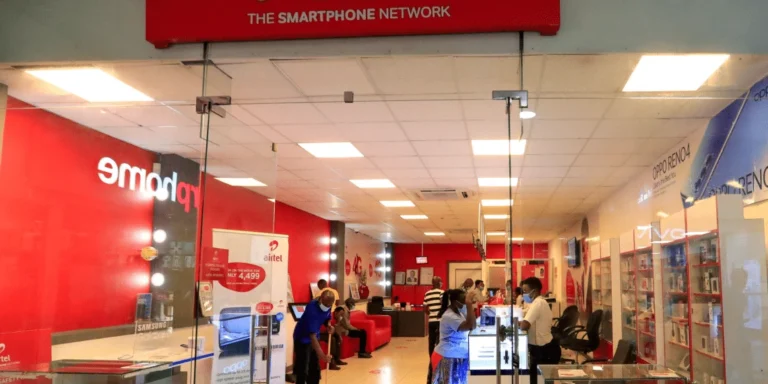
Airtel Africa, one of the continent’s leading telecommunications and mobile money service providers, has formally confirmed its intention to list its mobile money subsidiary, Airtel Money, on the London Stock Exchange in 2026. The announcement, which coincides with the release of the group’s robust financial results for the quarter ended June 30, 2026, marks a pivotal moment in the company’s transition from a traditional mobile network operator into a diversified digital technology and financial services powerhouse. As the group’s customer base swells to 189 million, the planned Initial Public Offering (IPO) is poised to unlock significant shareholder value, with analysts projecting a potential valuation for the fintech arm at approximately $10 billion, potentially raising up to $1.5 billion in fresh capital.
The decision to pursue a standalone listing for Airtel Money reflects the extraordinary trajectory of Africa’s digital economy. In a region where traditional banking infrastructure remains out of reach for hundreds of millions, mobile money has emerged as the primary vehicle for financial inclusion. For Airtel Africa, this shift is no longer a peripheral growth story; it is becoming a central pillar of its balance sheet. The latest quarterly data underscores this reality, showing that the mobile money business is expanding at a rate that significantly outpaces the company’s core voice services, driven by an increasingly digital-native population and the rapid adoption of smartphones across the continent.
The Meteoric Rise of Airtel Money and the Fintech Ecosystem
The centerpiece of Airtel Africa’s latest financial report is the explosive growth of its mobile money division. For the quarter ending June 30, 2026, Airtel Money reported an annualized Total Processed Value (TPV) exceeding $245 billion in reported currency, representing a staggering 51.5% increase. This surge in transaction volume is matched by a rapidly expanding user base, which grew by 23.3% year-on-year to reach 56.5 million customers. The platform is no longer merely a tool for person-to-person transfers; it has evolved into a comprehensive financial ecosystem offering merchant payments, international remittances, loans, and insurance products.
The strategic importance of the 2026 London listing cannot be overstated. By choosing London as its preferred venue, Airtel Africa aims to attract a sophisticated pool of international institutional investors who are increasingly looking for exposure to African fintech. While the company had initially considered an earlier window for the IPO, the move to the second half of 2026 suggests a calculated effort to ensure the business reaches maximum scale and maturity before going public. This timeline also allows the company to navigate current global macroeconomic volatility and present a track record of sustained profitability to the markets.
The move mirrors similar strategies employed by global peers. In the African context, it places Airtel Money in direct competition with other heavyweights such as MTN’s MoMo and Safaricom’s M-Pesa. However, with a footprint spanning 14 countries, Airtel Africa believes its cross-border capabilities and integrated ecosystem give it a unique competitive edge. The anticipated $10 billion valuation would place Airtel Money among the most valuable tech entities on the continent, signaling a coming-of-age for African digital financial services.
A Chronology of Strategic Evolution
To understand the significance of the 2026 IPO, it is essential to trace the journey of Airtel Africa’s fintech ambitions. The process began in earnest several years ago when the group started ring-fencing its mobile money operations from its core telecoms business.
- 2021-2022: The Foundation Phase. Airtel Africa secured significant minority investments from global players including TPG’s The Rise Fund, Mastercard, and Qatar Holding LLC. These investments valued the mobile money business at approximately $2.65 billion at the time and provided the capital necessary to scale operations across key markets like Nigeria, Kenya, and Uganda.
- 2023-2024: Operational Decoupling. The company focused on securing independent payment service bank (PSB) licenses, most notably in Nigeria, the continent’s largest economy. This allowed Airtel Money to operate with greater autonomy from the telecoms arm.
- 2025: Scale and Stabilization. The business focused on deepening smartphone penetration and migrating customers from basic USSD-based transactions to more feature-rich mobile applications.
- 2026: The IPO Confirmation. With the business now processing nearly a quarter of a trillion dollars annually, the group confirmed London as the listing destination, setting the stage for one of the largest tech IPOs in recent history.
Data Usage and the Decline of the Voice-Centric Model
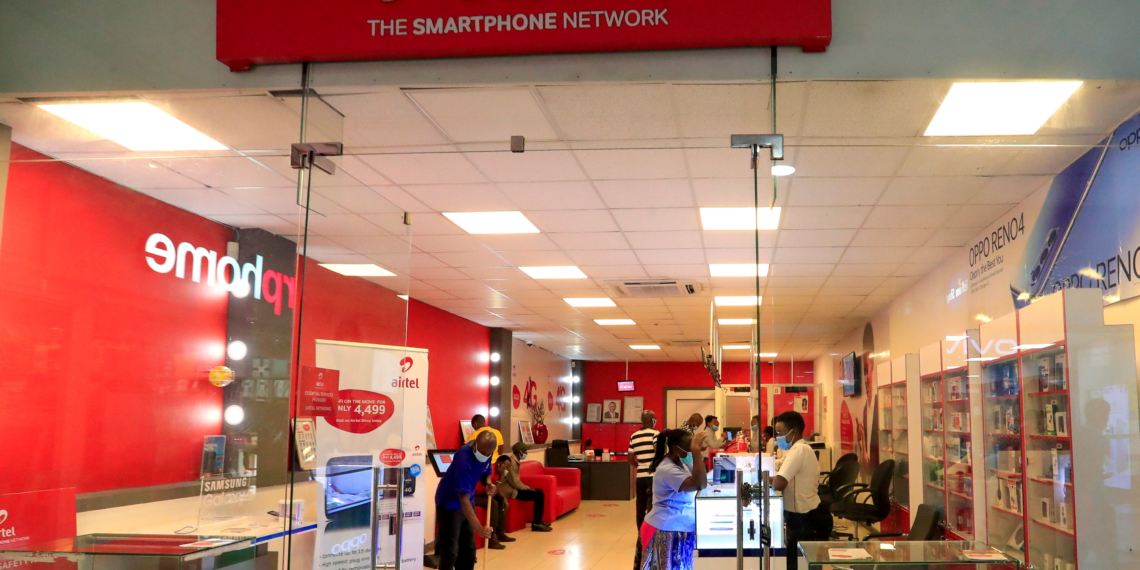
While fintech is the headline-grabber, Airtel Africa’s core telecommunications business is undergoing its own radical transformation. The latest results reveal that data consumption is becoming the primary driver of telecoms revenue, effectively replacing traditional voice calls. The company’s total customer base grew by 11.6% to 189 million, but the growth in data-specific customers was even more pronounced, rising 15.5% to 87.3 million.
A critical factor in this growth is the rise in smartphone penetration, which now stands at 51%, up from 45.8% just a year ago. As more affordable devices enter the market, the behavior of the African consumer is changing. The average monthly data usage per customer has jumped from 7.8 GB to 10.6 GB, leading to a 56.3% increase in total data traffic across Airtel’s network.
Financially, this shift is reflected in the revenue mix. While voice revenue grew by a respectable 11.2% in constant currency, data revenue surged by 27.2%. In markets like Nigeria, where the company implemented tariff adjustments to offset inflationary pressures, revenue grew by 29.8% in constant currency. This transition is essential for long-term sustainability, as the margins on data and digital services tend to be more resilient than the commoditized voice market.
Financial Resilience Amidst Macroeconomic Headwinds
Airtel Africa’s financial performance for the quarter reflects a business that is successfully navigating a complex macroeconomic environment. The group reported total revenue of $1.853 billion, a 31% increase in reported currency. When adjusted for constant currency to account for the significant devaluations of local currencies—particularly the Nigerian Naira—revenue growth remained strong at 21.1%.
Profitability metrics also showed marked improvement. EBITDA (Earnings Before Interest, Taxes, Depreciation, and Amortization) rose 36.6% in reported currency to $928 million. The EBITDA margin improved by 206 basis points to reach 50.1%, a testament to the company’s aggressive cost-optimization programs. Profit after tax rose to $198 million, up from $156 million in the previous year.
However, the path has not been without obstacles. The company recorded a $37 million exceptional finance cost related to a commercial dispute settlement and faced a $6 million loss from derivative and foreign exchange fluctuations. Furthermore, management cautioned that rising energy costs, fueled by global geopolitical tensions, continue to pose a threat to margins. In many African markets, telecommunications infrastructure relies heavily on diesel generators, making the cost of operations highly sensitive to global oil price volatility.
Aggressive Infrastructure Investment and Future-Proofing
To support this digital surge, Airtel Africa is significantly ramping up its capital expenditure. During the most recent quarter, the company spent $389 million on infrastructure, a massive increase from the $121 million spent in the same period the previous year. This investment funded the rollout of 920 new sites—the highest first-quarter rollout in the company’s history—and expanded the fiber network to over 82,100 kilometers.
CEO Sunil Taldar emphasized that this "investing ahead of demand" strategy is vital. By building capacity before the network reaches a breaking point, Airtel aims to provide a superior user experience that encourages higher data consumption and loyalty. This infrastructure also serves as the backbone for the Airtel Money ecosystem, ensuring that financial transactions remain fast and reliable even in remote areas.
"We have started this year with another pleasing performance," Taldar stated in the earnings release. "Our continued focus on the customer experience translated into accelerating customer base growth across all business segments. As we continue to digitize our business, we are streamlining customer journeys, increasing digital adoption, and harnessing data and AI to improve service delivery and support a strong, sustainable growth profile."
Broader Impact and Market Implications
The planned listing of Airtel Money in London is expected to have ripple effects across the African tech and financial sectors. First, it provides a "valuation benchmark" for other fintech entities on the continent. If Airtel Money successfully achieves a $10 billion valuation, it will validate the thesis that African digital platforms can achieve global scale.
Second, the $1.5 billion expected to be raised will likely be reinvested into further expanding the network and potentially acquiring smaller fintech players to consolidate market share. This comes at a time when the group is also rewarding its current shareholders; the board has approved a share buyback program of up to 1% of the company’s issued capital, having already spent $46.6 million to repurchase 10.2 million shares by the end of June.
For the London Stock Exchange, the listing is a much-needed win. In recent years, London has faced stiff competition from New York and other exchanges for high-growth tech IPOs. A successful multibillion-dollar listing of an African-focused fintech giant would reinforce London’s position as a premier venue for international emerging market companies.
As 2026 approaches, the industry will be watching closely to see if Airtel Africa can maintain its momentum. The company faces the dual challenge of managing high-growth digital services while maintaining the physical infrastructure required to power them across 14 diverse nations. If the current trends in data usage and mobile money adoption continue, the 2026 IPO could mark the moment Airtel Africa officially transitions from a telco to a global fintech leader.