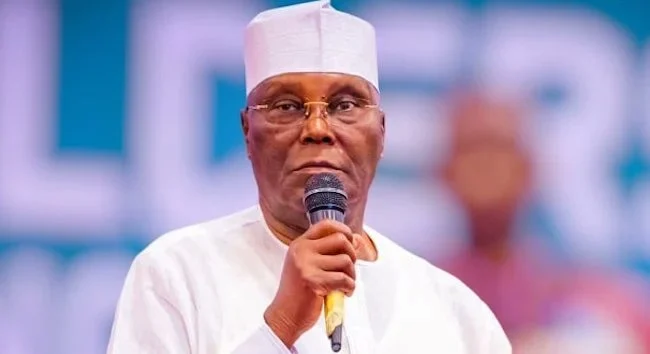
The ongoing debate surrounding Nigeria’s energy sector reached a new inflection point this week as former Vice President Atiku Abubakar asserted that the recent warnings issued by the Dangote Refinery regarding government-mandated petrol pricing actually serve to validate his proposed "production subsidy" model. The controversy centers on the delicate balance between ensuring the commercial viability of private refineries and mitigating the severe inflationary pressures currently facing the Nigerian public.
The Dangote Refinery, a cornerstone of Nigeria’s industrial ambitions and the largest single-train refinery in the world, recently signaled its resistance to any government policy that would force private refiners to sell petrol at prices below the cost of production. This development, which highlights the structural challenges of liberalizing the downstream petroleum sector, has reignited a fierce discourse on the role of government intervention in the oil and gas industry.
The Core of the Dispute: Production vs. Import Subsidies
Atiku Abubakar, speaking through his Senior Special Assistant on Public Communication, Phrank Shaibu, argued that the current administration has deliberately misrepresented his policy proposal to create a narrative of fear. The former Vice President’s model shifts the focus from the defunct and widely criticized "import subsidy" regime—which saw the federal government paying billions of dollars to cover the price differentials of imported refined products—to a "production subsidy" framework.
Under the previous import-based regime, which was effectively abolished by the current administration in May 2023, the government spent trillions of naira annually to keep pump prices artificially low. This policy was marred by allegations of fraud, phantom shipments, and a massive drain on foreign exchange reserves. Atiku’s proposed alternative seeks to bypass these systemic flaws by providing government support directly to domestic refineries.
The mechanism, as described by the former Vice President, involves the federal government subsidizing the cost of crude oil feedstock supplied to domestic refineries. By lowering the cost of the raw material—the crude oil—the cost of the finished product, petrol, should logically decline. This, he argues, allows for a lower pump price without forcing the refinery to operate at a loss.
Chronology of the Subsidy Reform Era
The current tension is the latest chapter in a long-standing saga of Nigerian energy reforms:
- May 2023: Upon inauguration, President Bola Ahmed Tinubu announced the removal of the petroleum subsidy, a move aimed at fiscal consolidation but one that triggered an immediate, sharp rise in transport costs and food inflation.
- Late 2023: The Nigerian National Petroleum Company Limited (NNPC) officially transitioned to a market-reflective pricing model, acknowledging that the subsidy had become unsustainable.
- Q1 2024: The Dangote Refinery began initial production phases, raising hopes for a transition toward domestic self-sufficiency in refined products.
- Q3 2024: Concerns surfaced regarding the pricing of crude oil in naira for the Dangote Refinery. The government and the refinery entered negotiations to ensure the refinery could source crude locally to avoid the volatility of international market pricing.
- October 2024: The Dangote Refinery expressed concerns regarding market interference, asserting that private businesses must operate according to market dynamics to remain solvent, a stance that drew immediate commentary from political stakeholders, including Atiku Abubakar.
Economic Analysis: The Viability of the Production Model
Economists tracking the sector note that the "production subsidy" model presents both opportunities and significant implementation risks. If implemented with the transparency demanded by the former Vice President, the model could incentivize local refining, reduce the demand for scarce foreign exchange, and potentially lower the pump price of petrol.
However, the effectiveness of this model hinges on several variables. First is the "fiscal ceiling." Atiku’s proposal emphasizes that any government support must be budgeted and capped. This addresses a major criticism of the old regime, where the subsidy was essentially an open-ended liability. By setting a hard limit on the amount of support provided per barrel of crude, the government would maintain better control over its fiscal deficit.
Second is the necessity of an "independent verification mechanism." To prevent the "mystery barrels" and corruption that plagued previous regimes, the supply of crude must be tracked using digital technology. Electronic monitoring of crude intake and refined output would ensure that the subsidy is actually reaching the domestic refinery and, by extension, the consumer, rather than being diverted to the black market or across borders.
The Political and Social Context
The social impact of the fuel subsidy removal has been profound. Nigeria’s inflation rate reached a 28-year high in 2024, driven in large part by the rising cost of energy. For the average Nigerian, the price of petrol is a primary driver of the cost of living, influencing the prices of everything from public transportation to staple food items.
Atiku Abubakar’s criticism of the government’s handling of these reforms centers on the assertion that the current administration has viewed the resulting hardship as a necessary "pain" of reform, while failing to implement the necessary cushioning measures. "For three years, Nigerians have been told to endure," the statement noted. By proposing a production subsidy, the former Vice President is positioning his economic platform as a "compassionate, yet market-oriented" alternative.
Government Response and Institutional Challenges
While the federal government has not issued a formal rebuttal to every specific point raised by Atiku, the administration’s official stance has consistently been that the era of subsidies is over. Government officials argue that any return to price control, even via production subsidies, could distort the market, invite rent-seeking behavior, and discourage new investments in the refining sector.
Industry experts observe that the Dangote Refinery’s warning is a signal of the growing pains of a privatized sector. As a private entity, the refinery must balance its shareholder obligations with the intense national interest in its product pricing. If the refinery is mandated to sell below cost, its ability to expand, maintain operations, and attract future investment would be severely compromised.
Broader Implications for Nigeria’s Energy Security
The ultimate goal for Nigeria is to move from an importer of refined products to a net exporter. Currently, the country possesses a refining capacity that, when fully optimized—including the Dangote Refinery and the revitalized state-owned refineries—could meet domestic demand and provide a surplus for the regional market.
Atiku’s model, if adopted, would require a high degree of administrative discipline. The "hard fiscal ceiling" mentioned in his proposal would mean that if international oil prices spike beyond a certain point, the government would have to decide whether to increase its subsidy budget or allow the pump price to rise. This forces a transparent trade-off, moving the conversation away from populist rhetoric toward evidence-based fiscal management.
Furthermore, the emphasis on "domestic supply obligations" is a critical component. By ensuring that a portion of Nigeria’s crude production is reserved for local refineries at a negotiated price, the government can shield the local market from the extreme volatility of global Brent Crude benchmarks.
Conclusion
The debate between the current administration’s market-liberalization approach and Atiku Abubakar’s proposed production subsidy highlights the fundamental tension in Nigeria’s economic policy: how to transition from a state-subsidized, inefficient model to a market-driven, competitive economy without causing systemic social collapse.
The Dangote Refinery’s insistence on market-reflective pricing serves as a reminder that private capital requires certainty and profitability. Whether through a production subsidy or another form of fiscal relief, the consensus among observers is that the government must eventually find a way to reconcile the need for private sector profitability with the urgent, domestic necessity for affordable energy. As the dialogue continues, the success of Nigeria’s energy reform will depend on the government’s ability to implement transparent, audited, and sustainable policies that protect both the investor and the average citizen.