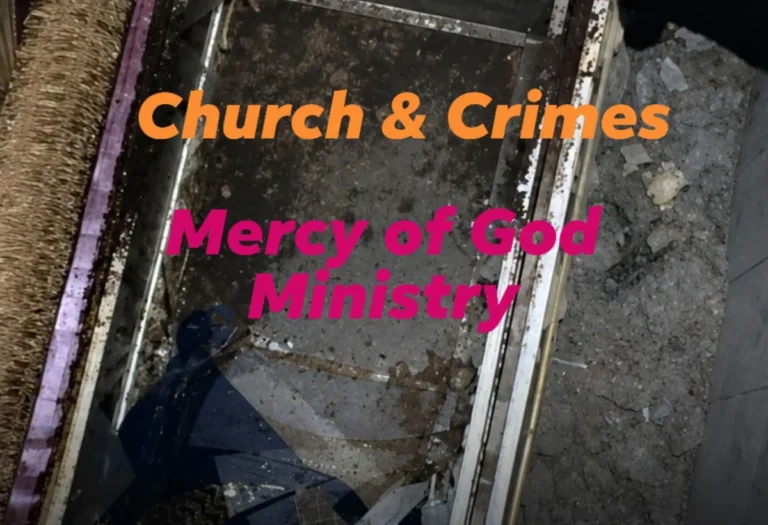
The discovery of a mummified corpse buried beneath the floor of a religious facility in Nkoabang, a district of Yaoundé, Cameroon, has triggered a major criminal investigation and prompted a nationwide manhunt for a Nigerian-born cleric. The remains were uncovered on Saturday, September 19, at the Mercy of God Ministry, a church property under the leadership of Prophet Kedi Samuel Kenechukwu. Law enforcement officials, acting on intelligence gathered during an ongoing inquiry, excavated a concrete slab within the premises to reveal a coffin buried approximately 1.5 meters underground. Inside, authorities discovered the remains of an unidentified individual, whose state of preservation suggests they had been deceased for a significant period.
The Discovery and Preliminary Investigation
The operation to exhume the body was conducted by a team of investigators from the Cameroonian judicial police, supported by local forensic experts. According to reports from the Cameroon Tribune, the site of the discovery was located directly within the sanctuary of the Mercy of God Ministry in the Nkol-Afamba district. Upon breaking through the concrete flooring, authorities identified a wooden coffin, which, once opened, revealed a body in an advanced state of mummification.
Initial forensic observations indicate that the deceased appears to be a woman, as the body was found dressed in traditional attire. However, the advanced state of decomposition—or rather, the desiccation of the soft tissues—has complicated immediate identification. Forensic teams have transported the remains to a mortuary facility in Yaoundé, where a post-mortem examination is expected to establish the cause of death and provide biological markers, such as DNA profiles, that may facilitate identification through the national missing persons database.
Profile of the Subject: Prophet Kedi Samuel Kenechukwu
Prophet Kedi Samuel Kenechukwu, a Nigerian national who established the Mercy of God Ministry in Cameroon, has become the focal point of this investigation. Prior to the discovery of the body, Kenechukwu maintained a prominent, if somewhat enigmatic, presence within the local religious landscape of Yaoundé. His ministry reportedly attracted a diverse following, though his methods and practices had not previously drawn significant public scrutiny from state authorities.
Following the discovery of the remains on September 19, investigators attempted to contact the Prophet for questioning regarding the presence of the coffin on his property. It was determined that Kenechukwu had vacated his residence and the church premises shortly before the authorities arrived. Consequently, the Cameroonian police have officially declared him a wanted person. As of the current reporting cycle, his whereabouts remain unknown, and international cooperation between Cameroonian and Nigerian security agencies may be required to track his movements across borders.

Chronology of Events
The unfolding of this incident suggests a well-planned attempt to conceal the presence of the remains. While the exact date of death remains unknown, the timeline of the investigation provides a clear view of the state’s intervention:
- Early September 2023: Authorities begin receiving intelligence regarding suspicious activities at the Mercy of God Ministry.
- September 19, 2023: Law enforcement officials execute a search warrant at the church premises in Nkoabang. Upon detecting inconsistencies in the concrete flooring, they initiate an excavation.
- Late September 19, 2023: The body is recovered from the coffin buried 1.5 meters below ground. The scene is cordoned off for forensic processing.
- September 20, 2023: The search for Prophet Kedi Samuel Kenechukwu is intensified, and he is officially declared a fugitive by the Yaoundé judicial authorities.
- September 21, 2023 to Present: Forensic analysis of the remains continues, while police appeal to the public for any information regarding the identity of the deceased or the activities at the church.
Broader Implications for Religious Oversight
The incident has sparked a vigorous debate in Cameroon regarding the regulation of "new-age" churches and independent religious ministries. Over the past decade, Cameroon has seen a proliferation of small, independent churches, often led by foreign nationals. While many operate within the legal framework, the lack of strict administrative oversight has periodically led to concerns regarding the conduct of some clergy members.
This case highlights a critical gap in the oversight of private property owned by religious organizations. When a place of worship is also used as a residence or, in this instance, a burial site, it complicates the jurisdictional boundaries between religious freedom and criminal law. Legal analysts note that if the deceased died of natural causes, burying them in a church floor without a permit, death certificate, or notification of the next of kin constitutes a serious violation of Cameroonian health and burial codes. If the death is determined to be the result of foul play, the situation escalates into a capital criminal investigation.
Forensic Challenges and Identification
The process of identifying a mummified body is inherently difficult. Mummification—the preservation of skin and flesh through drying—usually occurs in specific environmental conditions, such as extreme dryness or lack of oxygen, which may have been facilitated by the burial of the coffin under a sealed concrete slab.
Forensic pathologists typically look for dental records, surgical implants, or specific bone fractures to identify remains that are no longer recognizable. In the absence of those, DNA extraction from bone marrow or teeth is the standard procedure. The Cameroonian police are expected to cross-reference these findings with reports of missing persons in the Yaoundé region over the last several years. The traditional clothing found on the body could also serve as a vital clue, as it may be linked to specific ethnic groups or regional styles, helping to narrow the geographic search for the victim’s family.
Public and Official Response
The discovery has sent shockwaves through the community of Nkoabang. Residents have expressed disbelief that such a macabre discovery was made within a site dedicated to worship. The lack of a transparent organizational structure for the Mercy of God Ministry has only served to fuel local anxieties.

While the Ministry of Territorial Administration in Cameroon has not yet issued a formal statement, it is expected that the ministry will review the registration status of all religious organizations in the region. There is a growing demand from civil society groups for the government to implement stricter vetting processes for religious leaders, particularly those operating outside of established, mainstream denominations.
Legal and Ethical Considerations
From a legal standpoint, the case poses several questions regarding accountability. Under Cameroonian law, the owner of a property is held strictly liable for illegal activities conducted within that property, especially when those activities involve the disposal of human remains. The fact that the suspect fled the jurisdiction suggests consciousness of guilt, a factor that will be central to any future prosecution.
Furthermore, the ethical dimensions of the case involve the sanctity of the religious institution. By allegedly using a church as a clandestine burial ground, the suspect has arguably violated the trust of the congregants who frequented the church for spiritual guidance. This incident is likely to result in a broader crackdown on unregistered religious entities, as the state seeks to prevent the misuse of religious spaces for criminal enterprise.
Conclusion and Outlook
As the investigation enters its next phase, the focus remains on the two primary objectives: identifying the victim and locating the prime suspect. The forensic team’s findings will be the key to unlocking the truth behind this incident. Until then, the case serves as a somber reminder of the dangers posed by the lack of transparency in the administration of independent religious organizations.
The international implications are also significant. With the suspect potentially fleeing across borders, the case will test the effectiveness of regional law enforcement cooperation. The Cameroonian government is under pressure to resolve the matter swiftly, not only to ensure justice for the victim but also to maintain public order and confidence in the religious sector. As more information emerges, the public and the media remain in a state of high alert, awaiting the next development in what has become one of the most mysterious and disturbing cases in recent memory.