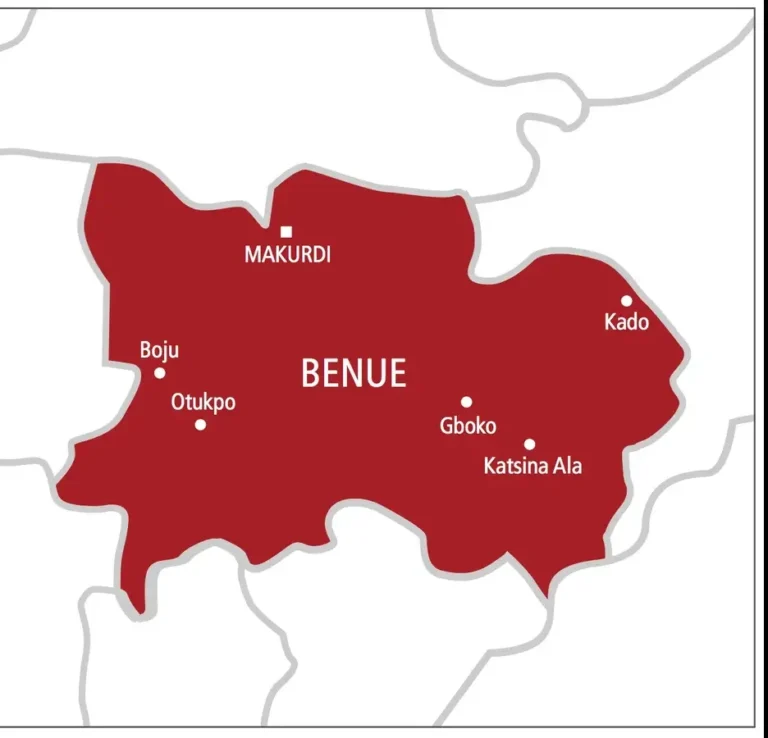
The Executive Chairman of the Benue State Universal Basic Education Board (SUBEB), Dr. Grace Adagba, has donated a heavy-duty hand mower to LGEA Primary School, Mbakpiam, situated in the Konshisha Local Government Area of Benue State. The equipment was officially handed over to the institution during an unannounced working visit on Thursday, designed to assess infrastructural conditions, evaluate environmental sanitation standards, and strengthen community participation in public school management.
The gesture, aimed at bolstering the continuous maintenance and upkeep of the school’s sprawling grounds, underscores the board’s current strategic focus on preventive facility management. Dr. Adagba utilized the occasion to interact extensively with local stakeholders, including traditional rulers, community development association leaders, teachers, and parents. Her engagement highlighted the critical intersection between grassroots ownership of public assets and the sustained delivery of quality basic education in rural Nigerian communities.
Following the presentation of the hand mower, Dr. Adagba revealed that LGEA Primary School, Mbakpiam, has been officially earmarked for a comprehensive, whole-school infrastructural overhaul. This upcoming intervention forms part of a broader, multi-phase developmental agenda spearheaded by the Benue State Government under the leadership of Governor Hyacinth Alia. The state administration has consistently prioritized the revitalization of basic education as a catalyst for human capital development, poverty reduction, and long-term socio-economic transformation across the state’s twenty-three local government areas.
Community Mobilization and Grassroots Sanitation Efforts
During her inspection of the school premises, Dr. Adagba expressed profound admiration for the community’s proactive approach to maintaining a clean, secure, and conducive learning environment. Unlike many rural schools where public infrastructure often suffers from neglect and environmental degradation due to overgrown bushes and lack of maintenance culture, LGEA Primary School, Mbakpiam, showcased a high level of communal dedication. Local residents, working in tandem with the school administration, have routinely organized communal labor to clear weeds, protect school boundaries, and safeguard educational materials against vandalism and weather damage.
Addressing the gathered community members, teachers, and pupils, Dr. Adagba noted that the donation of the hand mower was a direct token of appreciation for their unwavering civic responsibility. She emphasized that the state government cannot manage the affairs of thousands of primary schools in isolation; rather, sustainable educational development requires a symbiotic partnership between the government and host communities.
"The level of dedication demonstrated by the people of Mbakpiam in protecting this institution and maintaining its environment is exemplary," Dr. Adagba stated during her address. "While the government holds the primary responsibility for infrastructural provision and teacher welfare, the safety, cleanliness, and longevity of these facilities depend heavily on the host community. This hand mower is presented to ease your routine sanitation efforts, ensure the school compound remains safe from reptiles and overgrown foliage, and encourage you to sustain this commendable spirit of ownership."
Broader Context of Benue SUBEB Interventions Under Governor Alia
The visit to Konshisha LGA is part of a comprehensive, statewide monitoring and evaluation tour initiated by the Benue State Universal Basic Education Board. Since the assumption of office by Governor Hyacinth Alia’s administration, the education sector in Benue State has witnessed a renewed wave of structural reforms, infrastructural rehabilitations, and strategic policy implementations designed to rescue basic education from decades of systemic decay.
Historically, basic education in Benue State—the nation’s acclaimed food basket—grappled with severe challenges, including dilapidated classroom blocks, lack of instructional materials, a shortage of qualified teachers, and poor sanitation facilities. Many primary schools operated without perimeter fences, potable water, or functional toilet facilities, leading to high rates of absenteeism and declining enrollment figures, particularly among children in remote agrarian communities like Konshisha.
To reverse this negative trajectory, the current administration declared a state of emergency in the education sector. Through targeted disbursements of counterpart funds with the Universal Basic Education Commission (UBEC), the Benue State Government has embarked on the massive construction, renovation, and furnishing of hundreds of primary and junior secondary schools across the state’s three geopolitical zones.
The infrastructural drive is complemented by robust advocacy campaigns. In tandem with various local and international development partners, Benue SUBEB has aggressively pursued out-of-school children, distributing free learning kits, uniforms, and writing materials to encourage enrollment and retention. The board’s recent grassroots advocacy initiatives have successfully bridged the gap between marginalized rural populations and formal educational systems, ensuring that no child is left behind due to financial constraints or socio-cultural barriers.
Chronology of the Executive Chairman’s Working Visit
The Thursday visit to Konshisha Local Government Area followed a meticulously planned itinerary aimed at maximizing administrative oversight and direct stakeholder engagement. The chronology of the day’s events underscores the rigorous operational tempo maintained by the SUBEB leadership:
- Early Morning Arrival: Dr. Grace Adagba and her retinue of board directors and technical engineers arrived in Konshisha LGA, where they were received by local education authority officials and community leaders.
- Inspection of LGEA Primary School, Mbakpiam: The team conducted a comprehensive walk-through of the school grounds, inspecting existing classrooms, assessing structural integrity, and evaluating environmental hygiene.
- Community Town Hall Engagement: The SUBEB Chairman held an interactive session with village heads, youth leaders, and the Parent-Teacher Association (PTA), listening to their specific challenges and outlining the state government’s upcoming developmental plans.
- Presentation of Equipment: Dr. Adagba formally handed over the heavy-duty hand mower to the school administration amidst cheers and cultural displays from the pupils and community members.
- Announcement of Whole-School Intervention: The Chairman formally broke the news that Mbakpiam Primary School had been slated for comprehensive reconstruction and modernization under the next phase of SUBEB-UBEC projects.
- Afternoon Inspection Tour of Zone A and Zone B Projects: Concluding her visit to Konshisha, the SUBEB Chairman led her technical team on an extensive tour to supervise ongoing construction and furnishing projects across designated clusters in Zones A and B, ensuring strict compliance with engineering specifications and project timelines.
Traditional Leadership and Community Response
The traditional leadership and people of Mbakpiam received the SUBEB Chairman with immense enthusiasm. Speaking on behalf of the community, the Ortar of Mbakpiam, Zaki Augustine Wuaga, delivered a passionate address commending the state government for its visible developmental strides in the education sector.
Zaki Wuaga described Dr. Adagba’s visit as unprecedented in the history of the community, noting that physical interaction between high-ranking government functionaries and rural grassroots populations fosters trust and reinforces democratic accountability. He praised Governor Hyacinth Alia for his visionary leadership, noting that the administration’s holistic interventions in basic education have yielded immediate, measurable dividends within the locality.
"We are deeply overwhelmed and profoundly grateful to the Executive Chairman of SUBEB for this historic visit and the generous donation of this hand mower," Zaki Wuaga remarked. "More importantly, we are gladdened by the assurance that our primary school has been earmarked for whole-school intervention. Under the administration of Governor Hyacinth Alia, we have witnessed a genuine transformation in the education sector. The various interventions implemented so far have directly translated to a massive surge in school enrollment within our community, as parents now have renewed confidence in the public school system."
The traditional ruler further offered a solemn pledge on behalf of the entire Mbakpiam community, assuring the state government that all infrastructural assets, furniture, and educational equipment provided to the school would be jealously guarded against theft, vandalism, and misuse. He emphasized that the community views the school as its most valuable collective asset, crucial for breaking the cycle of poverty and securing a prosperous future for the younger generation.
Supervision of Ongoing Construction and Furnishing Projects in Zones A and B
Beyond the symbolic donation in Konshisha, a core operational highlight of Dr. Adagba’s field assignment was the rigorous technical supervision of ongoing infrastructural projects spanning educational facilities in Zone A and Zone B.
As part of the statutory mandate of SUBEB, continuous project monitoring is critical to preventing project abandonment, curbing sub-standard construction practices, and ensuring that public funds are utilized judiciously. Armed with architectural blueprints and engineering reports, the SUBEB Chairman and her technical monitoring team visited multiple construction sites where dilapidated blocks are being demolished and replaced with modern, well-ventilated learning blocks.
The ongoing projects feature contemporary architectural designs, including spacious classrooms equipped with modern pupils’ furniture, administrative offices for headteachers and staff, secure aluminum roofing, tiled floors, and well-designed lightening and ventilation systems. Furthermore, attention is being paid to inclusive education design principles, ensuring that new structures incorporate ramps and accessible pathways to accommodate pupils with physical disabilities.
During the site inspections, Dr. Adagba interacted directly with site foremen, contractors, and resident engineers. She reiterated the zero-tolerance policy of the Benue State Government toward delayed project execution or compromised material quality. She stressed that contractors who fail to meet agreed-upon delivery timelines or deviate from standard building specifications will face severe administrative and legal sanctions.
"The resources we are deploying for the transformation of our basic education sub-sector are hard-earned public funds, supported by the federal government and our committed development partners," Dr. Adagba noted during an on-site media briefing at one of the project locations in Zone B. "Governor Hyacinth Alia has maintained an uncompromising stance on quality, transparency, and accountability. We are on the field today not just to commission or inspect, but to ensure that every kobo spent translates into durable, world-class learning facilities for our children. Our children deserve the absolute best, and we will not accept anything short of excellence from any contractor."
Fact-Based Analysis of Implications for Benue State’s Educational Landscape
The strategic combination of grassroots engagement, targeted material donations, whole-school interventions, and rigorous project monitoring carries profound implications for the future of basic education in Benue State. Education analysts have pointed out several key takeaways from the current SUBEB administration’s methodology:
- Rebuilding Public Trust: Decades of infrastructural neglect and administrative bottlenecks had severely eroded public confidence in public primary schools, driving many parents—even low-income earners—to patronize mushroom private institutions. Visible interventions such as those in Mbakpiam help restore faith in public education, encouraging parents to enroll their children in government-run schools where tuition is free and learning conditions are progressively improving.
- Fostering Sustainable Community Partnership: By actively recognizing and rewarding community-led sanitation and facility protection, SUBEB is cultivating a sustainable model of local governance. When rural communities feel valued and consulted, they transition from passive beneficiaries to active custodians of public infrastructure, drastically reducing maintenance costs for the government.
- Tackling the Out-of-School Children Crisis: Infrastructural development directly correlates with enrollment statistics. As observed by traditional leaders in Konshisha, modern classrooms, adequate seating, and clean environments act as natural magnets for children of school-going age. By expanding capacity and improving school aesthetics, Benue SUBEB is systematically chipping away at the out-of-school children deficit in the state.
- Boosting Teacher Morale and Academic Outcomes: A clean, well-maintained, and structurally sound working environment has a positive psychological impact on teachers. When educators operate in conducive spaces equipped with necessary basic amenities, their job satisfaction increases, leading to better classroom delivery, improved student concentration, and ultimately higher academic performance across foundational levels.
Conclusion
The working visit of Benue SUBEB Executive Chairman Dr. Grace Adagba to LGEA Primary School, Mbakpiam, encapsulates the proactive, hands-on administrative philosophy driving educational reforms in Benue State. Through the thoughtful donation of maintenance equipment, the promise of comprehensive infrastructural upgrades, and the uncompromising supervision of ongoing projects across Zones A and B, the Benue State Government continues to lay a solid, unshakeable foundation for the intellectual and moral development of its future generations. As these multi-layered interventions gather momentum, the state stands firmly on course to reclaim its pride of place as a model of educational excellence and sustainable grassroots development in Nigeria.