The true financial toll of private education in Nigeria has long extended far beyond the bold figure printed next to "tuition fees" at the start of an academic term. Across the bustling commercial hubs of Lagos, the political corridors of Abuja, and northern states like Katsina, Kaduna, and Benue, parents are discovering that educating their children in private institutions is a financial minefield. What begins as an affordable enrollment fee quickly morphs into an accumulation of mandatory extra bills: charges for end-of-session celebrations, costly graduation ceremonies for non-terminal classes, compulsory textbook packages, mandatory feeding levies, and specialized costumes.
This systemic squeeze on household budgets occurs against a backdrop of severe economic hardship, where inflation and rising operational costs have battered the purchasing power of the average Nigerian family. While federal and state governments have increasingly attempted to rein in these extra-curricular expenses through regulatory directives and outright bans, the enforcement of these policies remains fragmented, leaving parents trapped between administrative coercion and the emotional pressure placed on their children.
The Anatomy of Hidden School Costs
For many parents, the pressure begins before the school gates even open. Mrs Kuburat, an Abuja resident and mother of three, found herself facing an unexpected bill of nearly N100,000 at the end of July. Her children were graduating at different levels—nursery, junior secondary, and senior secondary—each incurring separate graduation fees ranging from N20,000 to N50,000. Even in years when none of her children graduate, a blanket N10,000 end-of-session fee is levied for each child.
Similar stories echo across the country. In Lagos, Damilola Ojuolape, a caterer living in Ojo, watched her nine-year-old daughter’s primary school graduation transform into a major financial stressor. The school demanded N45,000 for the event itself, while compelling parents to buy specific costumes, fund dance performances, and purchase class portraits. By the time Ms Ojuolape finished buying a matching green dress, specialized jewelry, a purse, sunglasses, and a wristwatch, she had spent N154,000 on a single elementary school graduation.
These expenses are rarely isolated. Across the board, parents report being billed for:
- Graduation and speech-and-prize-giving ceremonies (often applied to kindergarten and nursery classes).
- Compulsory purchase of textbooks and learning material packs exclusively through the school.
- End-of-year parties, picnics, and excursions.
- Mandatory feeding levies, even when parents prefer to pack meals from home.
- After-school extra-mural lessons and specialized examination fees.
When "Optional" Fees Feel Compulsory

A central point of contention between private school administrators and parents is the voluntary nature of these levies. While schools often classify graduation and party fees as optional, the social and emotional repercussions for children whose parents refuse to pay create a coercive environment.
In Katsina, parents at Mariamoh Ajiri Memorial International School were asked to contribute N5,000 for graduating pupils and N3,000 for other students toward a speech and prize-giving event. While the school’s Head of Quality Assurance, Ugwu Chinedu, maintained that the fees were voluntary and that unpaid children could still attend the ceremony, he conceded that non-payment meant children would not receive the school’s refreshment package. Pupils whose parents did not pay had to bring their own food, setting up visible class divides within the school grounds.
Similarly, Mr Gidado, a parent with children in both a community secondary school and Ayak Academy, noted that while a N5,000 graduation fee was technically optional, non-payment barred a student from participating entirely. "The child will not attend the programme," he said. "Socially, he might be affected emotionally while his contemporaries are celebrating and he is not celebrating."
In Lagos, Emem Paul challenged Ride-On Excellent Ville Nursery and Primary School over a mandatory N10,000 December picnic and a strict feeding levy that prohibited children from bringing food from home. "I had to insist that my children should be exempted from eating the school’s food or I would withdraw them from the school," she said, highlighting the uphill battle parents face when attempting to opt out of ancillary fees.

The Textbook Monopoly
Beyond ceremonies, the requirement to purchase textbooks exclusively through the school represents another significant financial burden. Many private institutions mandate that parents buy books directly from school-designated vendors, citing the need to maintain curriculum uniformity and protect families from pirated copies on the open market.
However, parents frequently question both the pricing and the necessity of these internal monopolies. Lois Ugbede, an assistant editor at DUBAWA whose children attend a Catholic private school in Abuja, noted that parents are explicitly barred from sourcing notebooks and textbooks from independent, more affordable bookstores. Similar restrictions are enforced at Fluorescent Private School in Lagos and Mariamoh Ajiri in Katsina, where learning material packs are compulsory for early-years students.
While some proprietors, such as Abubakar Yunus Abubakar of Ayak Academy, allow parents to source books independently as long as they acquire the correct editions, many administrators argue that specialized curricula leave them little choice. Bernard Ogwuche, head teacher at St Martin’s Nursery and Primary and Secondary School, explained that the textbooks prescribed by his school are uncommon and unavailable in local bookshops, leaving parents with no practical alternative but to buy from the school administration.

Government Interventions and Regulatory Pushback
Recognizing the unsustainable financial pressure placed on families, federal and state governments have stepped up efforts to regulate private school practices.
In January, the Federal Government introduced sweeping education reforms, officially restricting graduation ceremonies to students completing terminal classes: Primary Six, Junior Secondary School Three (JSS3), and Senior Secondary School Three (SSS3). Alongside this directive, the government announced a reusable textbook policy aimed at allowing learning materials to be passed down across multiple academic sessions and between siblings, significantly cutting down recurrent educational expenditures.
State governments have similarly moved to enforce compliance:

- Ogun State: In June, the state government prohibited graduation and end-of-session parties for nursery, kindergarten, and other non-terminal classes across all public and private schools. Terminal graduations were ordered to be modest and organized at zero financial cost to parents.
- Anambra State: In July, the government issued a directive exempting only SSS3 students from a ban on graduation ceremonies, emphasizing that such events must be strictly optional and conducted without any levies on parents. Schools violating the order face sanctions, including permanent closure.
- Benue State: In August of the previous year, Benue banned nursery graduations, restricted customized textbooks that prevent material sharing, and outlawed compulsory extended lessons without parental consent.
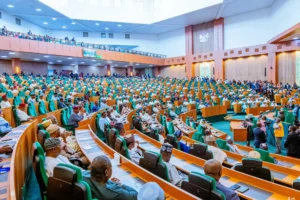
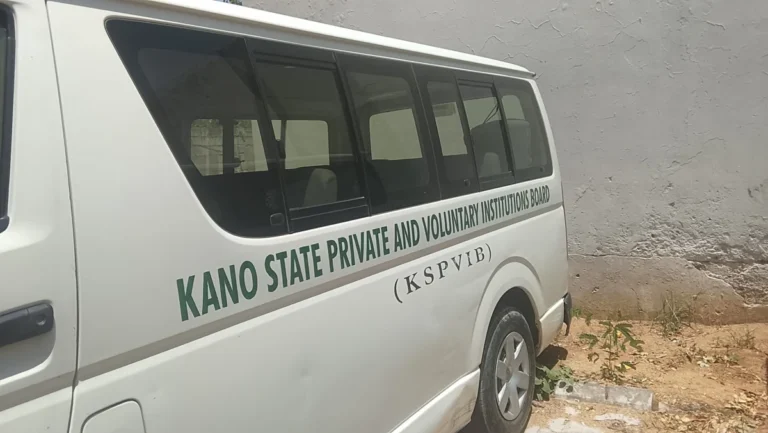
- Kano State: The Kano State House of Assembly passed the Private and Voluntary Institutions Board (Amendment) Bill, introducing stringent regulations requiring mandatory consultation with Parent-Teacher Associations (PTAs) before any private school can increase tuition fees.
Private School Defenses and Economic Realities
Faced with mounting regulatory pressure, private school proprietors and associations have pushed back, arguing that additional charges are essential for survival in a volatile economic climate.
Mansir Sani, the Katsina State chairperson of the National Association of Proprietors of Private Schools (NAPPS), asserted that the majority of member schools do not charge excessive graduation fees, relying instead on standard examination charges. He emphasized that private institutions have largely absorbed the shock of rising operational costs without proportionately hiking tuition.
Other proprietors point to the crushing realities of running non-state-funded educational institutions. Operating out of rented facilities, paying steep commercial utility tariffs, and settling heavy government taxes and regulatory levies leave schools heavily dependent on internally generated revenue.

"The running cost of a private school in Nigeria is very high," an anonymous Kaduna proprietor noted. "These schools receive no government funding; they fund themselves. The sale of books and uniforms helps maintain standards and ensures students have access to verified materials."
Mary Odiba, proprietress of Wusasa Children’s School, defended minor graduation charges, explaining that fees as low as N2,500 are strictly utilized for logistics—renting canopies and chairs, providing student refreshments, and purchasing academic prizes.
Implications for the Future of Private Education
Despite legislative efforts and regulatory bans, the gap between policy formulation and ground-level enforcement remains vast. State ministries of education in regions like Katsina, Lagos, and Abuja report that while verbal complaints from parents are common, formal written petitions are rare. Many parents remain reluctant to report exploitative schools out of fear that their children might face victimization or that the school might be abruptly sealed, disrupting their education.

For the average Nigerian household, the accumulation of hidden school fees underscores a deeper socio-economic reality. As inflation persists and family budgets are stretched to their breaking point, the true cost of private schooling has become a silent crisis. Without aggressive enforcement of regulatory frameworks, open dialogue between PTAs and school management, and affordable public education alternatives, parents will continue to bear the brunt of an unregulated fee regime long after tuition is paid.