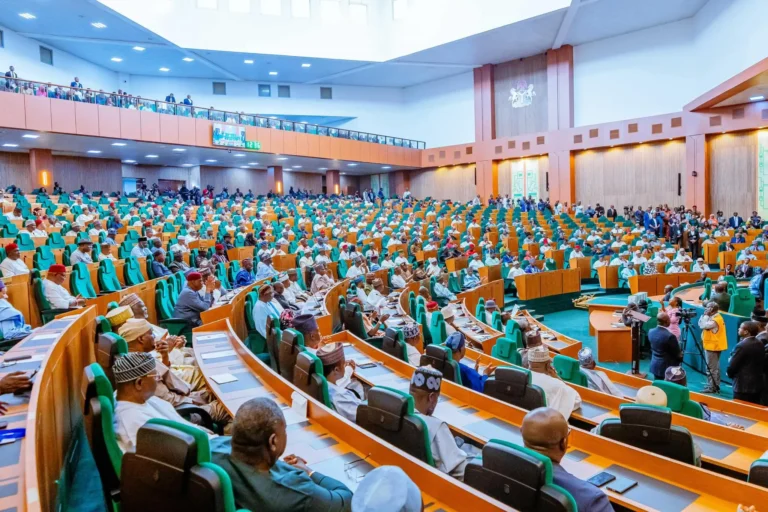
The Nigerian House of Representatives has initiated legislative proceedings on a significant amendment to the Matrimonial Causes Act, 2004, a move that could fundamentally alter the legal landscape for marriage dissolution in the country. The proposed bill, sponsored by Dominic Okafor, the legislator representing the Aguata Federal Constituency of Anambra State, seeks to modernize the criteria for divorce by incorporating contemporary realities of marital discord, including prolonged denial of conjugal rights, domestic violence threats, and psychological abuse.
The proposed legislation, titled A Bill for an Act to Amend the Matrimonial Causes Act (MCA), Cap M7, Laws of the Federation of Nigeria, 2004, and for Matters Related Thereto, passed its first reading on the floor of the House on Tuesday. If enacted, this amendment would mark one of the most substantial revisions to Nigerian family law in two decades, reflecting an evolving judicial approach to the concept of an "irretrievably broken" marriage.
Expanding the Definition of Marital Breakdown
Central to the proposed amendment is the expansion of Section 16 of the principal Act, which currently dictates the circumstances under which a petitioner may seek relief. Under the existing framework, marriage dissolution is primarily predicated on the court’s satisfaction that the union has suffered an irretrievable breakdown. Current recognized grounds include adultery, desertion, persistent refusal to consummate the marriage, and habitual substance abuse.
The bill introduced by Mr. Okafor aims to add three critical categories to these grounds:
- The habitual and constant denial or deprivation of conjugal rights for a continuous period of at least three months.
- The infliction of, or threats to inflict, grievous bodily harm upon a spouse.
- The intentional causing of emotional and psychological trauma.
By codifying these specific grievances, the legislation seeks to provide a more precise legal pathway for spouses who find themselves in environments that are abusive or functionally empty, but which may not currently meet the stringent evidentiary requirements of the existing Act.
Legislative Context and Historical Background
The Matrimonial Causes Act of 2004 has long been the bedrock of family law in Nigeria. Historically, the process of obtaining a divorce in Nigeria is famously rigorous. The legal system emphasizes the preservation of the marital institution, often requiring petitioners to prove specific "fault" rather than simply citing irreconcilable differences, which is a common standard in many Western jurisdictions.
Legal scholars have frequently argued that the current Act is increasingly out of step with the socio-economic and psychological complexities of modern Nigerian life. The proposed amendment arrives at a time when there is growing societal awareness regarding domestic violence and mental health. Advocacy groups have spent years lobbying for legislative changes that recognize non-physical forms of abuse, such as coercive control and psychological manipulation, which are often cited by family counselors as primary drivers of marital collapse.
Analysis of the Proposed Provisions
The inclusion of the "three-month rule" for the denial of conjugal rights is perhaps the most debated aspect of the bill. In legal circles, "conjugal rights" refers to the right of spouses to intimacy. While the law has historically viewed the refusal of intimacy as a ground for divorce, the specific timeframe of three months provides a quantitative benchmark that could, theoretically, simplify litigation. However, critics and legal analysts warn that such a provision might prove difficult to enforce, as it requires courts to peer into the private, bedroom-based interactions of couples—an area where evidence is notoriously difficult to obtain and where the privacy of the parties is paramount.
Similarly, the focus on emotional and psychological trauma represents a shift toward modern international standards of human rights. Psychological abuse is often the precursor to physical violence. By making such trauma an explicit ground for divorce, the legislature is effectively signaling that the state recognizes the long-term impact of mental distress on the viability of a marriage.

Potential Challenges and Evidentiary Thresholds
Despite the progressive nature of the bill, legal practitioners point to the absence of defined evidentiary thresholds as a potential hurdle. The bill does not currently specify how a petitioner is to prove "emotional and psychological trauma" to the satisfaction of a High Court judge. Without clear guidelines, there is a risk of inconsistent judicial rulings across different jurisdictions.
"The challenge," notes a legal analyst familiar with family law, "is not just in the intent of the law, but in its application. If the court is to decide whether a spouse has suffered emotional trauma, will it require expert testimony from psychologists or psychiatrists? Will the testimony of the petitioner alone suffice? These are questions the National Assembly must address during the public hearing stage to ensure the law is not weaponized in acrimonious divorce battles."
Implications for Nigerian Society
The proposed amendment has ignited a broader conversation about the state of the Nigerian family unit. Supporters argue that the law must evolve to protect individuals trapped in toxic or non-functional marriages. By providing clearer legal avenues for exit, the law could potentially reduce the incidence of domestic violence, as victims would have a legitimate legal mechanism to terminate a marriage that has become dangerous or untenable.
Conversely, some conservative stakeholders have expressed concern that broadening the grounds for divorce could make it "too easy" to dissolve marriages, potentially undermining the stability of the family as an institution. They argue that the focus should instead be on mandatory mediation and counseling services to resolve disputes before they reach the stage of litigation.
Next Steps in the Legislative Process
Following its first reading, the bill is slated for a second reading, where members of the House of Representatives will engage in a full debate on its general principles. This stage is crucial, as it allows lawmakers to air concerns, suggest amendments, and evaluate the potential social impact of the proposal.
Should the bill pass the second reading, it will be referred to the House Committee on Judiciary for further legislative scrutiny. This process typically involves inviting stakeholders—including the Nigerian Bar Association, religious leaders, women’s rights organizations, and psychological associations—to provide their input. Only after this committee review and a subsequent third reading will the bill be transmitted to the Senate for concurrence. If the Senate approves, the final document will be sent to the President for his assent, at which point it would become law.
Looking Ahead: A Shift in Legal Culture
The move by the House of Representatives reflects a growing recognition that the legal system must adapt to changing social norms. Whether the bill succeeds in its current form or undergoes significant modification, its introduction is a watershed moment in Nigerian jurisprudence. It acknowledges that the definition of a "broken marriage" is not static and that the law must provide protections for individuals who suffer in ways that are not always visible to the naked eye.
As the bill progresses through the legislative chambers, the public will be watching closely to see how the National Assembly balances the desire for individual rights and protections with the traditional emphasis on marital preservation. For thousands of Nigerians currently navigating the complexities of unhappy or abusive marriages, the outcome of this bill could represent a significant shift in their ability to seek justice and reclaim their lives.
The eventual passage of this amendment would, at the very least, provide a more robust framework for the judiciary to handle the realities of modern marriage, ensuring that the legal system remains relevant in an era where the protection of the individual is increasingly prioritized alongside the preservation of the family unit. The forthcoming debates in the House of Representatives are expected to be vigorous, reflecting the deep-seated cultural and legal importance of the institution of marriage within the Nigerian state.