Aid officials gathered in Berlin on Tuesday for a critical conference on Sudan, issuing stark warnings that the ongoing regional instability and conflict in the wider Middle East, particularly affecting vital shipping lanes, have placed an even greater, unsustainable strain on the supply of essential food and fuel to the war-torn African nation. Three years into Sudan’s devastating civil war, the confluence of internal strife and external economic pressures is pushing millions to the brink of famine and exacerbating an already dire humanitarian crisis.
The situation on the ground in Sudan is deteriorating rapidly, marked by soaring prices for food and fuel. The country’s agricultural sector, a lifeline for its population, is heavily reliant on the Gulf region for deliveries of crucial fertilizers, creating longer-term threats to future harvests and deepening concerns about sustained food security. With an estimated 19 million people in Sudan already facing acute hunger amidst an entrenched internal conflict that has displaced more than 11 million and effectively fractured the nation, the added burden from regional conflicts represents a catastrophic blow.
Sudan’s Descent into Conflict: A Brief Chronology
The current civil war in Sudan erupted on April 15, 2023, but its roots stretch back to a complex post-revolution political landscape. Following the overthrow of long-time dictator Omar al-Bashir in 2019, Sudan embarked on a fragile transition to civilian rule. This period was characterized by an uneasy power-sharing agreement between the Sudanese Armed Forces (SAF), led by General Abdel Fattah al-Burhan, and the paramilitary Rapid Support Forces (RSF), commanded by General Mohamed Hamdan Dagalo, known as Hemedti.
This alliance, always fraught with tension, collapsed spectacularly in October 2021 when the military, with RSF backing, staged a coup, derailing the transition. For the next year and a half, the two generals, once allies, increasingly vied for dominance, their rivalry intensifying over the integration of the RSF into the regular army and control over Sudan’s vast economic resources. On April 15, 2023, their power struggle boiled over into open warfare, primarily centered in the capital Khartoum before rapidly spreading across the country.
The conflict quickly became a brutal urban war, with both sides employing heavy weaponry, displacing millions, and causing widespread destruction. The RSF, tracing its origins to the Janjaweed militia implicated in atrocities in Darfur two decades ago, swiftly gained control of large swathes of western and southern Sudan, including key cities like Nyala and El Geneina. The SAF, meanwhile, maintained control over much of the north and east, and notably reclaimed significant portions of Khartoum in March 2025 after prolonged fighting. The war has been marked by allegations of severe human rights abuses, including war crimes and attacks on non-combatants, from both factions. Observers and human rights organizations have repeatedly warned of potential ethnic cleansing, particularly by the RSF, against non-Arab communities in Darfur, echoing the horrors of the early 2000s.
The Middle East Vortex: A New Strain on Sudan’s Lifelines
The conference in Berlin brought together senior officials from leading humanitarian organizations to underscore how external conflicts are exacerbating Sudan’s internal crisis. Experts from the German food aid organization Welthungerhilfe and the UN’s World Food Program (WFP) detailed the "dramatic consequences" of regional instability, particularly the disruptions in crucial maritime trade routes like the Red Sea and the Strait of Hormuz. While the original source vaguely referenced "the war in Iran," the more direct and impactful issue for Sudan’s supply chains is the broader Middle Eastern volatility, including attacks on shipping in the Red Sea and the ongoing tensions in the Persian Gulf, which impede safe passage through these vital conduits.
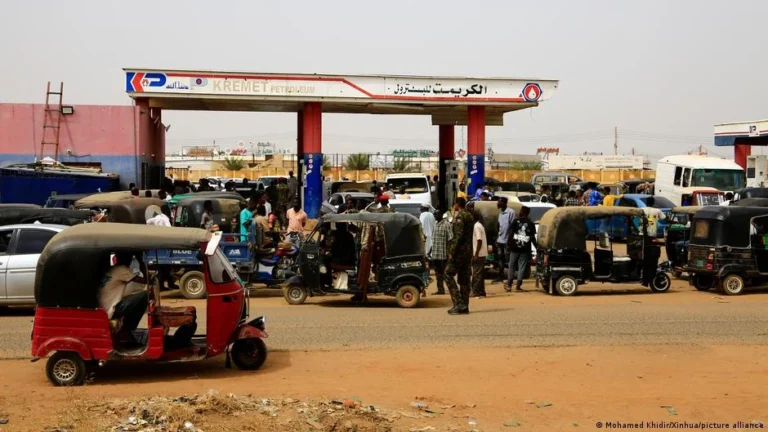
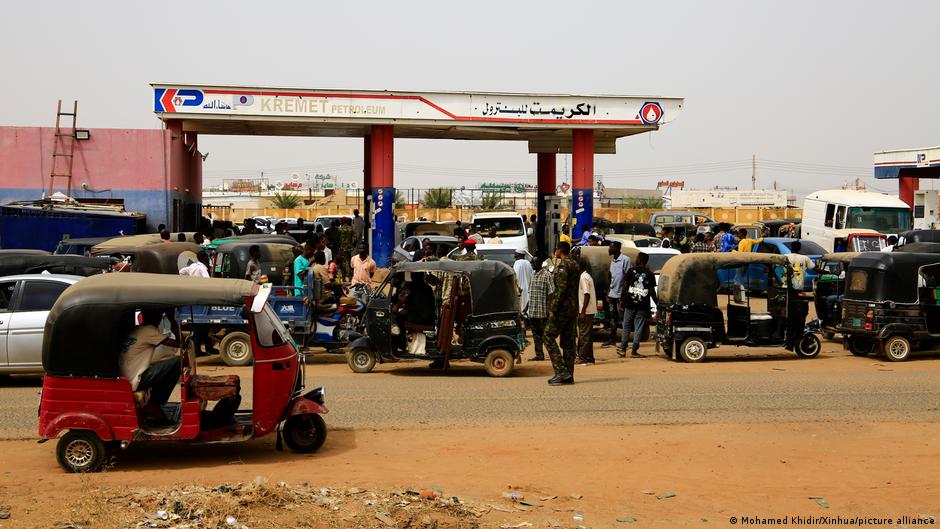
Matthias Mogge, head of Welthungerhilfe, painted a grim picture for reporters in Berlin. "Our teams in Sudan report massive price rises," Mogge stated, highlighting the immediate and severe economic impact. "Fuel has become up to 80% more expensive, and basic foodstuffs like wheat by around 70%." These astronomical price hikes are not merely abstract figures; they translate directly into millions of Sudanese families being unable to afford basic necessities, pushing them deeper into poverty and hunger. Mogge also stressed that the increased costs of delivering aid – including fuel for transport, security, and logistics – have sharply reduced the number of deliveries humanitarian groups can realistically manage, effectively diminishing the reach of crucial assistance.
Carl Skau, Deputy Head of the WFP, further elaborated on the systemic vulnerabilities now exposed. "I’m also worried about the longer-term impact here, because all the fertilizer in the country comes from the Persian Gulf… and there is even lack of access to that fertilizer," Skau warned. This dependency means that disruptions in the Strait of Hormuz, a narrow passage connecting the Persian Gulf to the open ocean, directly threaten Sudan’s agricultural future. Without adequate fertilizer, future harvests will inevitably diminish, creating a cascading effect on food availability and prices in the coming seasons.
Beyond direct imports, much of Sudanese agriculture relies on irrigation, with water pumped from the Nile River. This process is heavily fuel-dependent. "So I’m worried also about the production side here, and down the road — what that would mean for access to food," Skau added. "So this war in the Middle East is hitting us everywhere, but in a place like Sudan, it is really having dramatic consequences." The ripple effect means that even domestically produced food items face inflated costs due to the expense of irrigation and transport, creating a vicious cycle of scarcity and unaffordability.
A Nation on the Brink: Humanitarian Catastrophe
The current estimates paint a terrifying picture of a nation teetering on the edge. The 19 million people at risk of acute hunger represent over 40% of Sudan’s population, with many regions already experiencing emergency levels of food insecurity (IPC Phase 4). Specific areas, particularly those cut off by conflict or under RSF control in Darfur and Kordofan, are facing catastrophic levels (IPC Phase 5), indicating a high risk of famine. The conflict has severely disrupted traditional farming cycles, destroyed infrastructure, and blocked humanitarian access, leaving communities isolated and without sustenance.
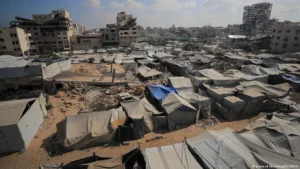
The displacement crisis is equally staggering, with more than 11 million people forced from their homes. This includes over 9 million internally displaced persons (IDPs) within Sudan, many living in overcrowded, unsanitary camps or makeshift shelters, and over 2 million refugees who have fled to neighboring countries such as Chad, South Sudan, Egypt, Ethiopia, and the Central African Republic. These host nations, often already grappling with their own economic and humanitarian challenges, are struggling to cope with the influx, further destabilizing the region. Children make up a disproportionate number of the displaced, facing increased risks of malnutrition, disease, violence, and lack of education.
The health system has largely collapsed across conflict zones. Hospitals have been attacked, looted, or forced to close due to lack of staff, supplies, and electricity. Disease outbreaks, including cholera, measles, and dengue fever, are rampant in crowded IDP camps and underserved communities, exacerbated by poor sanitation and limited access to clean water. Maternal and child mortality rates have soared, and access to essential medicines and medical care is severely restricted.
The de facto partition of the country, with the RSF establishing a parallel administration based in Nyala, has not only complicated governance but also fragmented aid efforts. Humanitarian agencies face immense logistical and security challenges in reaching populations in need, with both warring parties often impeding access or imposing bureaucratic hurdles.
The Shadow of Drones: Civilian Carnage
As if the traditional forms of warfare were not enough, drone strikes have emerged as a chilling and increasingly deadly feature of the Sudanese conflict. The UN reported on Tuesday that nearly 700 civilians were reportedly killed in drone strikes during the first three months of this year alone. These unmanned aerial vehicles have become a near-daily occurrence, utilized by both the SAF and the RSF, often with devastatingly indiscriminate effects on civilian populations.
Drone attacks are particularly prevalent in regions like South Kordofan, currently a primary battleground, and in areas controlled by the RSF in the west, such as Darfur. UNICEF’s spokeswoman in Sudan, Eva Hinds, revealed the horrific toll on the youngest victims, stating that drones were "responsible for nearly 80 percent" of the at least 245 children reported killed or injured during the first three months of the year. "Drones are killing and wounding girls and boys in their homes, in markets, on the roads, near schools and health facilities," Hinds underscored, highlighting the pervasive terror these weapons inflict on daily life.

Further emphasizing this tragic reality, Doctors Without Borders (MSF) reported on the same day two deaths and 56 wounded from five drone attacks carried out by the Sudanese Armed Forces (SAF) in the Darfur region. "As Sudan enters its fourth year of war, these attacks by the Sudanese Armed Forces demonstrate complete disregard for civilian life," the Geneva-based medical charity asserted in a statement, issuing a poignant call: "We call on the warring parties in Sudan to protect civilians." The rise of drone warfare adds a new, insidious layer to the conflict, making no place safe for civilians and further complicating humanitarian protection efforts.
International Response and the Funding Deficit
The Berlin conference, co-organized by France, Germany, the UK, the US, the EU, and the African Union, marked the third anniversary of the war’s outbreak and served as a stark reminder of the international community’s responsibility. One of its most pressing goals was to address the alarming funding gap for humanitarian operations in Sudan. The UN has warned that donors have provided just 16% of the funding required for aid projects this year, a mere fraction of the billions of dollars needed to avert a full-scale famine and support displaced populations.
This significant shortfall means critical programs – from food assistance and emergency medical care to sanitation and protection services – are severely underfunded or cannot be scaled up to meet the soaring needs. The implications are dire: fewer meals distributed, fewer medical supplies available, and fewer lives saved. Officials at the conference emphasized the urgent need for increased financial pledges from international donors, alongside sustained diplomatic pressure on the warring parties to ensure unimpeded humanitarian access throughout Sudan. The African Union, in particular, has a crucial role to play in fostering regional stability and mediating a lasting political resolution to the conflict.
Looking Ahead: A Perilous Path
Sudan’s future hangs precariously in the balance. The convergence of a devastating internal civil war and the economic fallout from wider regional instability threatens to plunge the nation into an even deeper humanitarian catastrophe. The risk of famine is no longer a distant threat but an imminent danger for millions. The ongoing fragmentation of the country, coupled with the relentless violence, including the indiscriminate use of drones, complicates any prospects for peace or recovery.
The long-term implications for Sudan are profound, potentially setting back development for decades. The displacement of millions, the destruction of infrastructure, the collapse of education and health systems, and the loss of an entire generation’s future represent an immense challenge. Furthermore, the crisis poses a significant threat to regional stability, with refugee flows and the potential for spillover violence impacting neighboring countries already struggling with their own vulnerabilities.
The Berlin conference served as a vital platform to reiterate the urgency of the crisis and mobilize international support. However, words must translate into action. A concerted global effort, encompassing sustained financial aid, robust diplomatic engagement, and unwavering pressure on all parties to the conflict to protect civilians and pursue a peaceful resolution, is essential if Sudan is to avert a complete societal collapse and navigate its perilous path toward a more stable future.