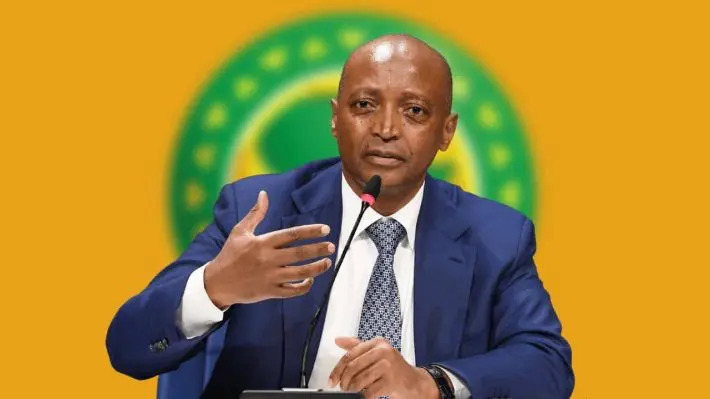
Confederation of African Football (CAF) President Dr. Patrice Motsepe has lauded the remarkable performances of the continent’s national teams at the recently concluded 2026 FIFA World Cup, characterizing the collective campaign as a watershed moment that underscores the ascendant trajectory and burgeoning competitiveness of African football on the global stage. The tournament, notably expanded to accommodate 48 nations for the first time, provided a historic platform for African representation, with a record number of teams making significant inroads into the knockout stages.
In a formal statement released on Wednesday, Dr. Motsepe extended his commendations to the ten African nations that proudly represented the continent in this monumental global spectacle. The statistics emanating from the tournament paint a compelling picture of this progress. A staggering nine out of the ten African representatives successfully navigated the group stages to advance into the Round of 32. This achievement represents the highest qualification rate for African teams in the history of the FIFA World Cup, a testament to the strategic development and elevated standard of play across the continent.
The ten African nations participating in the 2026 FIFA World Cup were Algeria, Cabo Verde, Côte d’Ivoire, Democratic Republic of Congo, Egypt, Ghana, Morocco, Senegal, South Africa, and Tunisia. Their collective presence, along with their subsequent performances, has significantly reshaped perceptions of African football’s potential.
A Statistical Leap Forward
Delving deeper into the data, Dr. Motsepe highlighted the disproportionate impact of African teams in the latter stages of the tournament. While Africa accounted for approximately 20.8% of the total participating nations (10 out of 48), its teams contributed a remarkable 28.1% of the nations that reached the crucial knockout phase (9 out of 32). This statistical anomaly underscores a tangible improvement in both the quality and consistency of African teams on the world’s grandest footballing stage.
Morocco and Egypt Lead the Charge
Among the standout performers, Morocco captured particular praise for its historic achievement of reaching the FIFA World Cup quarter-finals for the second consecutive tournament. This sustained success in the latter stages of the competition signals a maturing of the Atlas Lions’ capabilities and their ability to consistently challenge the world’s elite. Equally commendable was Egypt’s robust performance, securing a coveted place in the Round of 16, demonstrating the Pharaohs’ resurgence on the international scene.
Dr. Motsepe’s accolades extended to a broader spectrum of African teams, acknowledging the spirited efforts and notable progress displayed by Cabo Verde, Senegal, Côte d’Ivoire, the Democratic Republic of Congo, South Africa, Ghana, and Tunisia. Each of these nations, in their unique ways, contributed to the narrative of African football’s ascent.
"Significant progress and successes were achieved by the African National Teams at the FIFA World Cup 2026, and I am very proud of their performances," stated Dr. Motsepe. "The nine African National Teams that qualified from the Group Stage to the Round of 32 made history at the FIFA World Cup 2026, as this is 90 per cent of the African National Teams that participated, and is the highest percentage to qualify to date."
Context of the Expanded World Cup
The 2026 FIFA World Cup, jointly hosted by the United States, Canada, and Mexico, marked a significant expansion from the traditional 32-team format to an unprecedented 48 nations. This alteration was designed to increase global representation and provide more opportunities for nations from diverse confederations, including Africa, to compete at the highest level. For CAF, this expansion presented a golden opportunity to showcase the growing talent pool and tactical advancements within its member associations. The increased number of slots meant that more African teams had the chance to qualify, and the continent seized this opportunity with remarkable efficacy.
The qualification process for the 2026 World Cup saw CAF utilize an expanded format, with several groups and direct qualification spots allocated. The journey to the tournament was arduous, with teams battling for supremacy over an extended period. The success witnessed in the tournament itself is a direct reflection of the intense competition and strategic planning undertaken by these national federations.
Looking Ahead: A Roadmap for Continued Excellence
While celebrating the monumental achievements, Dr. Motsepe also underscored CAF’s commitment to continuous improvement. The confederation has proactively identified specific areas where further development is necessary to ensure even greater successes in future FIFA World Cups.
"We have also identified specific areas where there is room for improvement, and I am confident that the coaches, technical teams and players will implement the necessary improvements. This will ensure even greater successes for African National Teams in future FIFA World Cups," he affirmed.
To institutionalize this pursuit of excellence and build upon the momentum generated, CAF has announced a significant initiative. A comprehensive conference will be convened, bringing together a diverse group of stakeholders including national team coaches, technical staff, revered former players, and leading football experts. The primary objective of this summit will be to conduct a thorough review and analysis of Africa’s collective performance at the 2026 World Cup. The insights gleaned from this intensive evaluation will form the bedrock for developing actionable recommendations and strategic plans aimed at propelling African teams to even greater heights in the lead-up to the 2030 FIFA World Cup, which is set to be co-hosted by Morocco, Portugal, and Spain, with opening matches in Uruguay, Argentina, and Paraguay.
"CAF will be hosting a conference and will invite the National Team coaches, technical teams, former African National Team players and other football experts and stakeholders to evaluate and assess the performances of the African National Teams at the FIFA World Cup 2026, to make recommendations that will ensure that the African National Teams will be even more successful at the FIFA World Cup 2030," Dr. Motsepe stated.
Investment in the Future of African Football
The CAF President’s vision extends beyond the senior national teams, emphasizing a holistic approach to football development across the continent. This includes sustained investment in youth development programs for both boys and girls, strengthening amateur football structures, enhancing the professionalism of domestic leagues, and providing unwavering support to national teams in all 54 African countries.
"We will continue to train and invest in our boys and girls football players, amateur football, professional football leagues and our National Teams in each of the 54 African countries to make African football globally competitive and amongst the best in the world," he concluded.
Broader Implications and Future Prospects
The unprecedented success at the 2026 FIFA World Cup carries profound implications for African football. It not only elevates the continent’s standing in the global football hierarchy but also inspires a new generation of players and fans. The increased visibility and positive performances are likely to attract greater investment, both domestically and internationally, into football infrastructure, talent development, and league structures across Africa.
Furthermore, the collective achievement fosters a sense of continental pride and unity, demonstrating the power of sport to transcend national boundaries. As the continent gears up for the 2030 World Cup, with Morocco playing a significant host nation role, the aspirations are higher than ever. The strategic planning and collaborative spirit championed by CAF President Motsepe suggest a deliberate and well-orchestrated effort to build upon this success and firmly establish Africa as a consistent force in international football. The journey towards making African football a dominant global power appears to be gaining significant momentum.