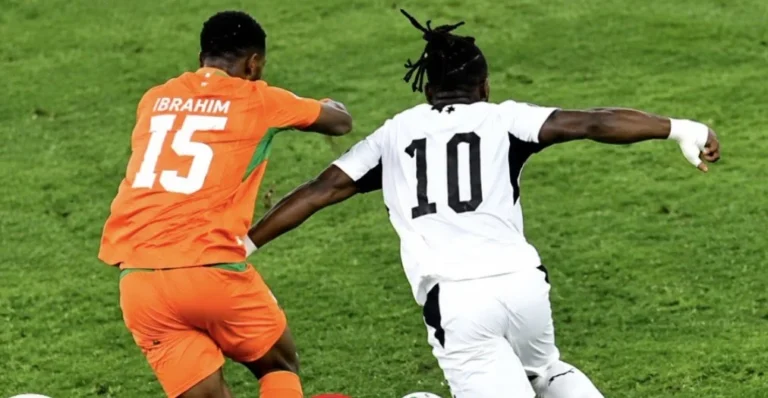
The Stade de la Paix in Bouaké bore witness to a familiar narrative on Thursday evening as Côte d’Ivoire reaffirmed its historical superiority over West African neighbors Ghana, securing a comfortable 2-0 victory in their opening Group C match of the 2027 Africa Cup of Nations (AFCON) qualifiers. The result serves as a stark reminder of the current disparity between the two nations, with the Ivorian Elephants continuing a long-standing trend of tactical and physical dominance over the Black Stars.
For Ghana, the defeat is more than just an opening-day setback; it extends a worrying winless streak in AFCON qualifiers against their rivals to five consecutive matches—a period defined by four defeats and a solitary draw. As the qualification cycle for the 2027 tournament begins, the pressure mounts on the Ghanaian setup, which has struggled to find consistency on the continental stage in recent years.
A Masterclass in Tactical Control
Under the guidance of manager Hervé Renard, a tactician intimately familiar with the demands of African football, Côte d’Ivoire dictated the tempo of the match from the opening whistle. The Ivorian side controlled 66% of possession throughout the first half, pinning a depleted Ghanaian side into their own defensive third for long stretches. The statistics reflected a one-sided affair, with the hosts unleashing 10 shots in the opening 45 minutes, compared to a meager five off-target attempts from the visitors.
The breakthrough arrived in the 44th minute, moments before the halftime interval. Franck Kessié, orchestrating the midfield with his trademark composure, picked out Malick Yalcouyé at the edge of the penalty area. The Brighton midfielder unleashed a thunderous, low drive that bypassed the Ghanaian defensive wall and settled into the bottom corner, leaving the goalkeeper with no chance.
The second half saw no reprieve for the Black Stars. In the 58th minute, the match was effectively put beyond reach. After being fouled in the penalty area, Yalcouyé’s influence on the game was cemented as he won a spot-kick for his side. Kessié stepped up to the mark, confidently slotting the ball into the net to double the lead. The 2-0 scoreline remained unchanged, as Côte d’Ivoire managed the remainder of the game with professional discipline.
Personnel Crisis and Tactical Hurdles
The challenge for Ghana was compounded by a significant injury crisis that forced manager Carlos Queiroz to reshuffle his deck. The squad was notably missing several key pillars, including Mohammed Kudus, Antoine Semenyo, Jordan Ayew, and Thomas Partey. The absence of such influential figures, particularly in the creative and attacking third, left the Black Stars toothless.
Queiroz, a veteran manager known for his defensive organization, faced a difficult task in balancing a makeshift lineup against an Ivorian side operating at near-full strength. The inability of the Ghanaian midfield to transition the ball effectively meant that the forward line was starved of service, leading to a frustrating evening where the team failed to register a single shot on target.
The Historical Context of the Rivalry
The rivalry between Côte d’Ivoire and Ghana is one of the most storied in African football, characterized by high-stakes encounters and narrow margins. However, in recent years, the tide has turned firmly in favor of the Elephants. Since the early 2010s, Côte d’Ivoire has successfully transitioned through several generations of talent, while Ghana has struggled to replace the golden generation that brought them to the cusp of global glory in 2010.
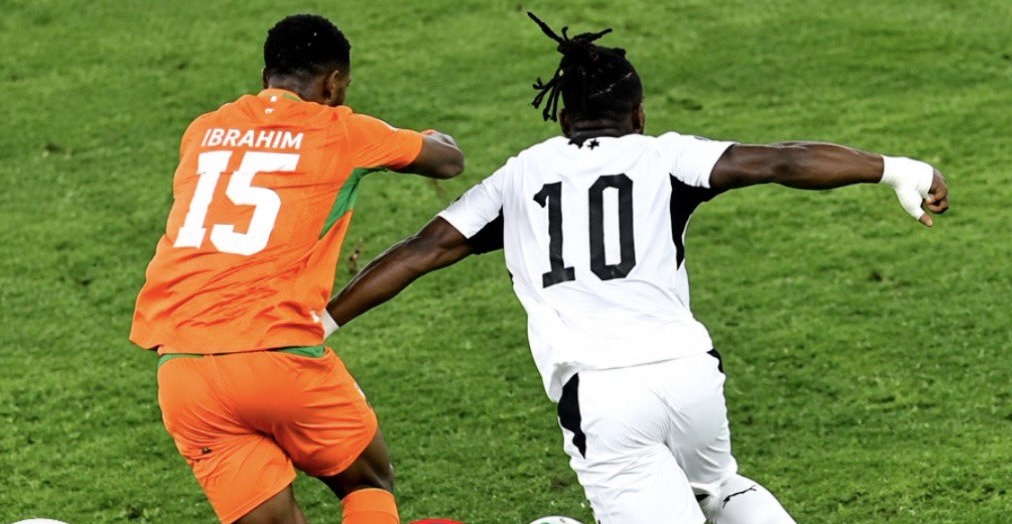
The current statistics paint a bleak picture for the Black Stars. Having failed to qualify for the 2025 AFCON tournament in Morocco, the national team is currently navigating a period of intense scrutiny. With their last continental title dating back to 1982, the urgency to qualify for the 2027 edition is paramount, yet this opening loss leaves them trailing early in a group that also includes The Gambia and Somalia.
Group C Dynamics and Future Outlook
With the three points secured, Côte d’Ivoire sits comfortably at the top of Group C, sending a clear message to their remaining opponents. For Ghana, the focus now shifts to the remaining fixtures, starting with the need to stabilize the squad ahead of the return leg.
The upcoming fixture on March 24, 2027, in Ghana, is already being framed as a potential turning point for the Black Stars. A victory in that encounter would be essential for Ghana to keep their qualification hopes alive and restore confidence among a restless fanbase. Should they falter again, the prospect of missing a second consecutive AFCON tournament would represent a historic low for a nation with such a proud footballing heritage.
Analysis: Implications for the Coaching Staff
The performance in Bouaké has ignited discussions regarding the long-term project under Carlos Queiroz. While the injury list provided a mitigating factor for the poor showing, analysts point to a deeper issue regarding the squad’s depth and tactical adaptability. The reliance on senior figures means that when injuries strike, the team’s identity appears to dissolve.
Conversely, the Ivorian performance under Renard suggests a team that has found a clear tactical identity. The integration of young talents like Yalcouyé into a squad anchored by experienced leaders like Kessié indicates a successful transition period. For the Ivorian Football Federation, the goal is now to maintain this momentum and ensure that they carry their current form into the upcoming matches against The Gambia and Somalia.
Statistical Breakdown
- Matchday: 1 of the 2027 AFCON Qualifiers
- Venue: Stade de la Paix, Bouaké, Côte d’Ivoire
- Result: Côte d’Ivoire 2 – 0 Ghana
- Goalscorers: Malick Yalcouyé (44’), Franck Kessié (58’ P)
- Possession (First Half): 66% (CIV) vs 34% (GHA)
- Shots (First Half): 10 (CIV) vs 5 (GHA)
- Next Encounter: March 24, 2027 (in Ghana)
Looking Ahead
As the dust settles in Bouaké, both teams are now looking toward their next engagements. For the Ivorian supporters, the victory is a vindication of their team’s resurgence and a testament to their dominance in the regional theater. For the Ghanaian faithful, the match serves as a painful reminder of the work required to return the Black Stars to the upper echelons of African football.
The path to the 2027 AFCON remains long, and as history has shown, early results in qualification groups are often deceptive. However, the psychological advantage gained by Côte d’Ivoire, coupled with the organizational challenges faced by Ghana, sets the stage for a compelling remainder of the qualification cycle. Whether Queiroz can engineer a turnaround or if the Elephants will continue their stranglehold on the group remains the primary narrative for the months ahead.
The tournament in 2027 represents a critical juncture for both nations. For Côte d’Ivoire, it is an opportunity to prove they remain a continental superpower; for Ghana, it is a race against time to rebuild a program that currently sits on the precipice of a significant transition. As the teams prepare for the return leg in March, the footballing world will be watching closely to see if the Black Stars can break their winless curse or if the Elephants will continue their march toward qualification.