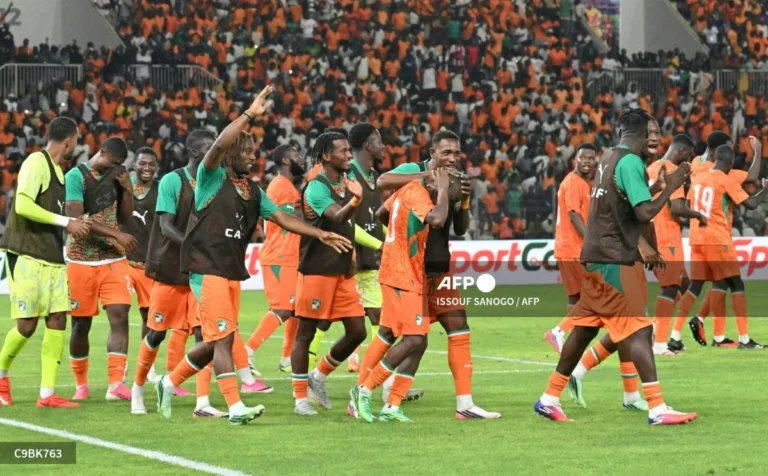
The qualification campaign for the 2027 Africa Cup of Nations (AFCON) officially commenced with a high-stakes fixture that immediately delivered on drama, tactical intrigue, and generational shifting. In a blockbuster West African derby on Thursday, September 24, 2026, the reigning African champions, Ivory Coast, stamped their authority on Group C with a resounding 2-0 victory over Ghana at the Stade de Bouake. The match not only highlighted the enduring brilliance of veteran leadership within the Ivorian setup but also showcased the explosive potential of a new wave of talent, headlined by Brighton striker Malick Yalcouye, who marked his international debut with a decisive goal.
The opening matchday of the preliminary tournament—co-hosted by Kenya, Tanzania, and Uganda—set a frantic and unpredictable tone for the road to the continent’s premier football showcase. Across various neutral and home venues, established powerhouses asserted themselves, underdogs staged remarkable comebacks, and storied managers returned to the dugout to write new chapters in African football history.
Yalcouye Shines on Debut as Ivory Coast Overpowers Ghana
The headline fixture in Bouake pitted two tactical heavyweights against each other: Ivory Coast’s newly appointed French coach, Hervé Renard, and Ghana’s Portuguese tactician, Carlos Queiroz. For the hosts, the match served as an early test of squad depth and tactical evolution following a transitional phase after the expiration of Emerse Fae’s contract subsequent to a round-of-32 exit at the 2026 FIFA World Cup. Renard, who previously guided the Elephants to their historic 2015 AFCON title, injected immediate stability into the side.
Ghana entered the contest severely depleted. Already missing influential midfielder Mohammed Kudus, the Black Stars suffered compounding setbacks prior to kickoff with the late withdrawals of injured strikers Jordan Ayew and Antoine Semenyo. These absences left Queiroz with limited attacking resources to break down a well-organized Ivorian defense marshaled by captain Chancel Mbemba’s domestic and international counterparts.
The breakthrough came just moments before halftime. On the 44th minute, 20-year-old Brighton forward Malick Yalcouye capped off a dream international debut. Exhibiting the composure of a seasoned veteran, Yalcouye collected possession just outside the penalty area and unleashed a sharp, low drive that caught Ghanaian goalkeeper Lawrence Ati-Zigi flat-footed at his near post, sending the Stade de Bouake into raptures.
Ghana attempted to reorganize during the interval, but the Ivorian midfield—orchestrated expertly by captain Franck Kessie—remained impenetrable. Kessie, who had already provided the creative spark for the opening goal, doubled the hosts’ lead in the 58th minute. Stepping up to convert a high-pressure penalty after a swift counter-attacking sequence breached the Ghanaian backline, Kessie calmly sent Ati-Zigi the wrong way to secure the 2-0 scoreline.
The victory places Ivory Coast at an early advantage in Group C, reinforcing their status as formidable contenders to defend their continental crown, while Queiroz’s Ghana faces an uphill battle to recalibrate their offensive strategy ahead of the next round of qualifiers.
Dramatic Comebacks and Tactical Masterclasses Across Group Matches
While Ivory Coast secured a comfortable home victory, other matches on the opening day of the AFCON 2027 qualifiers provided nail-biting finishes and tactical upsets.
In Group E, played at a neutral venue in the Moroccan port city of El Jadida due to stadium compliance issues, Zimbabwe orchestrated a stunning late-match comeback against Sierra Leone. Trailing by a two-goal deficit with less than twenty minutes remaining on the clock, the Southern African side appeared down and out. However, captain Marshall Munetsi sparked a miraculous turnaround in the 71st minute by heading home to reduce the deficit. Galvanized by the goal, Zimbabwe poured forward, overwhelming the Sierra Leonean defense before Munetsi struck again in the 89th minute, completing a dramatic 3-2 victory that instantly became one of the defining narratives of the opening matchday.
Meanwhile, in Kinshasa, the Democratic Republic of Congo delivered a clinical performance to dispatch Equatorial Guinea 2-0 in the same group. The tone was set as early as the fourth minute when captain Chancel Mbemba capitalized on defensive lapses to nod home a precise header from a set-piece. Newcastle United striker Yoane Wissa sealed the result in the second half, utilizing his pace and positioning to exploit gaps in the Equatorial Guinean backline and fire past the goalkeeper, cementing the Leopards’ dominance at the top of Group E alongside Zimbabwe.
In Group H, Libya and Botswana played out a tense, entertaining 2-2 draw in Tripoli. The match seemed destined for a narrow away victory until deep into stoppage time. Demonstrating remarkable resilience, Libya earned a penalty in the sixth minute of added time, which Ezoo El Mariamy calmly converted to rescue a vital point for the North Africans.
Claude Le Roy’s Return and Controversial Allegations
The qualifiers also marked the high-profile return of veteran French coach Claude Le Roy to the dugout. At 78 years of age, Le Roy took charge of Congo Brazzaville for a second stint, adding another chapter to an illustrious 41-year career managing national teams across Africa. Le Roy, who led Cameroon to AFCON glory in 1988 and has managed at nine different tournament editions across six countries (Cameroon, Senegal, DR Congo, Ghana, Congo Brazzaville, and Togo), oversaw a narrow 1-0 defeat against Namibia.
The decisive moment of the match arrived just two minutes after the restart, in the 47th minute. Namibia, forced to play their home fixtures in the Botswana capital of Gaborone due to the lack of a CAF-approved stadium in their own country, capitalized on defensive hesitation. South Africa-based striker Bethuel Muzeu rose imperiously between two defenders to meet a pinpoint cross from Riaan Hanamub, powering a header across Congolese goalkeeper Perrauld Ndinga and into the back of the net.
Prior to the match, Le Roy dominated sports headlines not just for his return, but for making explosive allegations regarding player recruitment in African football. Speaking candidly to reporters, the veteran coach claimed that intermediaries and player agents are increasingly demanding illicit payments to grant national team access.
"Some agents — I will not name them — want up to 40,000 euros ($45,500) for certain players to join national squads," Le Roy stated, drawing widespread condemnation from sports administrators and reigniting debates surrounding the transparency and governance of player representation within the continent’s football ecosystem.
Analysis of Implications and the Road to 2027
As the dust settles on the first matchday of the Africa Cup of Nations 2027 qualifiers, several broader trends and implications emerge for the participating nations:
-
Generational Shifts and Youth Integration: The immediate impact made by debutants like Ivory Coast’s Malick Yalcouye indicates that traditional powerhouses are successfully integrating European-based youth talent into their core structures. This infusion of dynamism is expected to lower the average age of contending squads and increase tactical unpredictability.
-
Infrastructure Deficits Continue to Plague Nations: The reliance on neutral venues—such as Namibia hosting matches in Botswana and Zimbabwe utilizing Moroccan facilities—underscores a persistent continental challenge regarding CAF stadium compliance. These logistical hurdles impose financial strains on football federations and diminish home-advantage benefits for smaller nations.
-
The Weight of Veteran Leadership: Conversely, the performances of seasoned campaigners like Franck Kessie, Chancel Mbemba, and Marshall Munetsi demonstrate that tactical discipline and leadership under pressure remain irreplaceable assets in qualification tournaments where matches are frequently decided by fine margins.
-
Governance and Integrity Challenges: Claude Le Roy’s public statements regarding agent corruption serve as a stark reminder of the non-sporting pressures facing national team coaches. The claims are anticipated to prompt inquiries from football authorities seeking to protect player welfare and national team selections from undue external influence.
As teams prepare for the second matchday of the qualifying series, the race for slots in Kenya, Tanzania, and Uganda intensifies. With established giants striving to maintain their pedigree and ambitious underdogs seeking historic qualification, the journey toward the 2027 tournament promises relentless competition, tactical evolution, and unforgettable sporting moments.