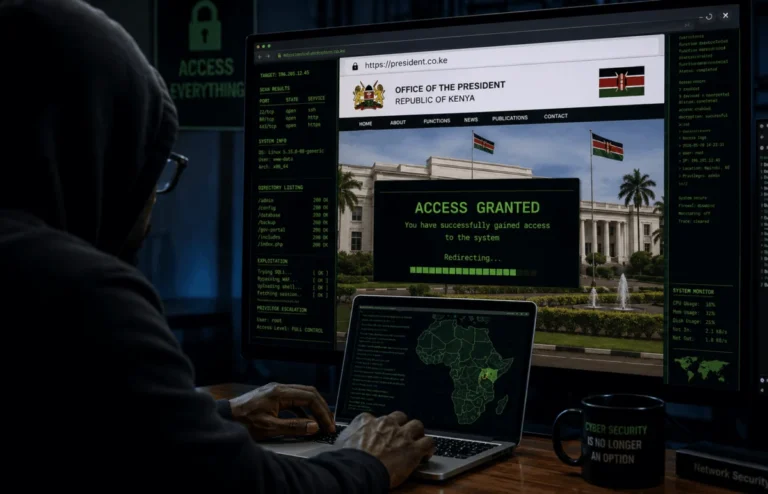
In a significant escalation of cyber warfare targeting East African digital infrastructure, hackers successfully infiltrated and defaced the official website of Kenyan President William Ruto on Saturday, July 18th. The breach, which targeted the primary domain president.co.ke, saw the homepage replaced with a provocative ransom note demanding 5 Bitcoins—valued at approximately $317,215—in exchange for the non-disclosure of allegedly sensitive and "uncomfortable" information. The incident has sent shockwaves through the region’s technology sector, raising urgent questions about the resilience of state-managed digital assets and the growing sophistication of cyber-extortionists operating within the continent.
The unknown group responsible for the attack utilized the presidential platform to issue a direct ultimatum to the Kenyan Head of State. The message, which appeared prominently on the defaced homepage, claimed this was the third attempt to contact the administration before a total data leak. "This message is the third time for you; before we leak everything about you," the hackers stated, providing a specific Bitcoin wallet address for the transaction. The group set a strict deadline of 6:00 PM on the day of the attack, warning that "peace" would only be maintained if the financial demands were met.
Chronology of the Cyber Attack
The breach was first detected in the early morning hours of Saturday, when users attempting to access the presidential portal were redirected to a page featuring the hackers’ demands and demeaning rhetoric. By 9:00 AM, the Information and Communication Technology (ICT) ministry had been alerted, triggering a series of emergency protocols designed to isolate the affected servers.
At approximately 11:30 AM, the website was taken offline entirely by government administrators to facilitate a forensic audit and prevent further unauthorized interactions. During this window, technical teams worked to trace the point of entry, while government spokespeople prepared a public brief to manage the growing concern among the citizenry and the international diplomatic community.
By 4:00 PM, Information and Communication Technology Cabinet Secretary William Kabogo issued an official statement. While acknowledging the breach, the Ministry sought to downplay the severity of the data loss. Kabogo assured the public that despite the visible defacement of the website’s front end, the underlying databases containing sensitive state secrets remained uncompromised. "At this time, there is no evidence of unauthorized access to sensitive data, data exfiltration, or loss of information," Kabogo stated. He emphasized that the restriction of the website was a "precautionary measure" to allow for a thorough forensic analysis and restoration.
A Pattern of Vulnerability
This latest incident is not an isolated event but rather part of a troubling trend of successful penetrations into Kenyan government systems. In November 2025, a massive cyber breach compromised not only the presidential website but also the digital portals of four critical ministries: Education, Health, Interior, and ICT. That previous attack also impacted the Immigration Department and the Directorate of Criminal Investigations (DCI), suggesting a systemic weakness in the way state domains are secured.
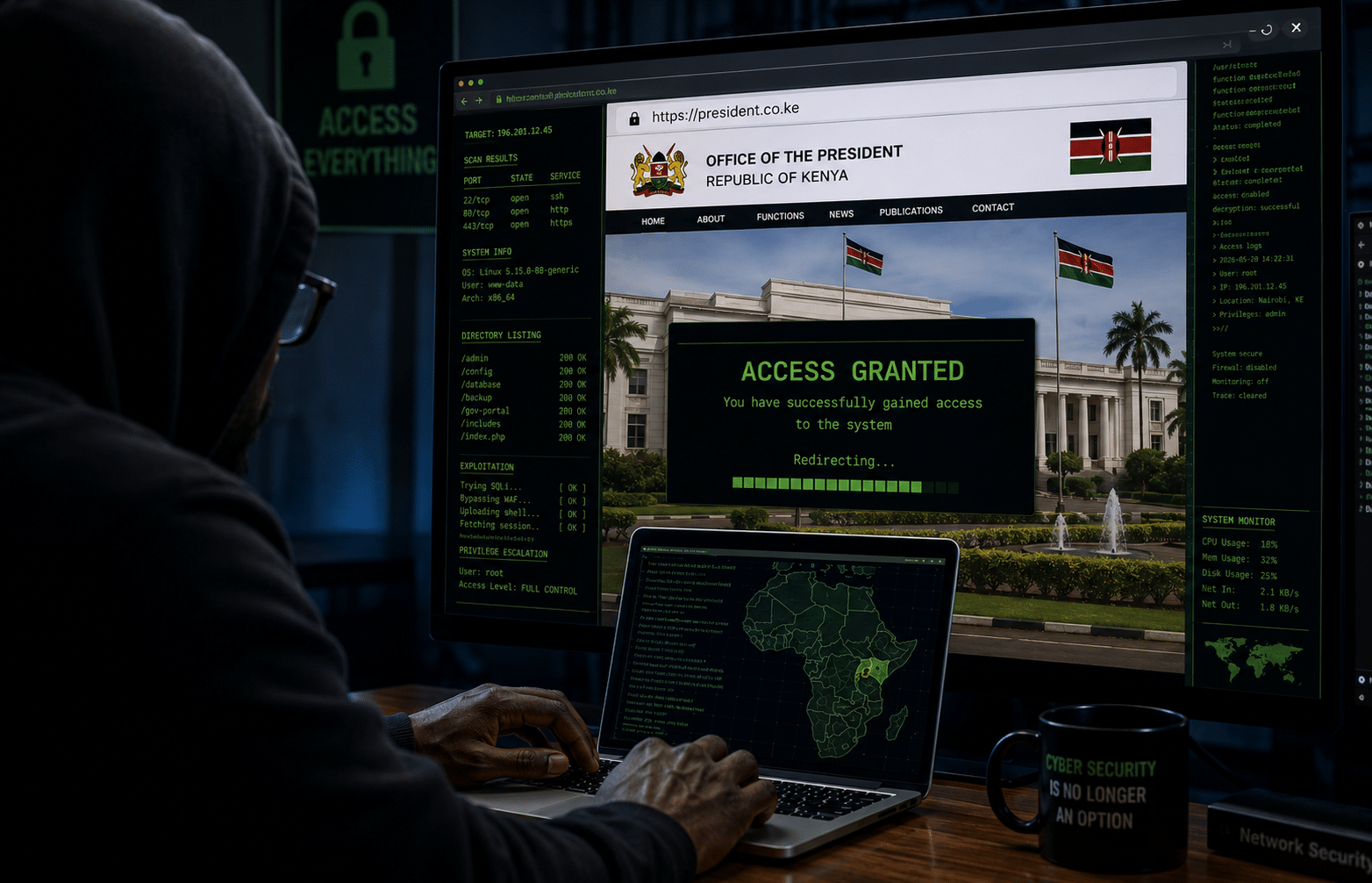
The recurrence of these attacks within a twelve-month period indicates that the "Silicon Savannah," as Kenya is often called due to its thriving tech ecosystem, faces a significant gap between its private-sector innovation and its public-sector security. Experts suggest that the high visibility of the president’s website makes it a "trophy target" for hackers who seek not just financial gain, but global recognition and political leverage.
Technical Analysis: Why Government Sites Remain Soft Targets
Cybersecurity practitioners argue that the motives behind such high-profile attacks are multifaceted. Nick Thiong’o, a Nairobi-based expert in Artificial Intelligence and cybersecurity, notes that targeting a Head of State ensures immediate and widespread media attention. "I don’t think whoever is targeting the president has only financial motives in mind; it’s also for show," Thiong’o explained. "For you to target the head of state, you know you’d actually get the attention that you’re seeking."
From a technical perspective, the vulnerability of government websites often stems from their lifecycle management. Victoria Robinson, a Cybersecurity Research Analyst at Ethnos Cyber Limited, points out that state domains like .go.ke offer instant credibility for any message a hacker chooses to display. This "credibility" creates a powerful tool for extortion and public panic.
Robinson highlights several recurring issues that plague government digital infrastructure:
- Outdated Content Management Systems (CMS): Many sites run on older versions of Drupal, WordPress, or Joomla that have known vulnerabilities.
- Poor Credential Hygiene: Admin credentials are often left as default or are rarely rotated, making them easy targets for brute-force attacks.
- Lack of Multi-Factor Authentication (MFA): Many administrative panels are exposed to the open internet without the basic protection of MFA or IP allow-listing.
- Procurement Gaps: Websites are often built by external contractors who win a tender but provide little to no ongoing maintenance or security patching once the site goes live.
"There is likely no continuous patch cycle," Robinson explains. "Government digital infrastructure tends to get funded and secured as a one-off project—’build the website’—rather than as an ongoing capability with a maintenance and security budget attached for its entire operational life."
The Role of Artificial Intelligence in Modern Hacking
The emergence of Large Language Models (LLMs) and advanced AI tools has significantly lowered the barrier to entry for cybercriminals. Thiong’o warns that AI tools can now be "jailbroken" to bypass safety protocols, allowing even novice hackers to generate sophisticated malware or craft convincing phishing campaigns.
Hackers no longer require deep expertise in complex programming languages. By using precise prompts, they can leverage AI to write code that identifies vulnerabilities in a website’s architecture and automates the exploitation process. "We’re on the cusp of something that would be recurring because we don’t know where the attackers would focus on next," Thiong’o says. The democratization of these tools means that African governments must now defend against a much higher volume of automated attacks.
Broader Implications for National Security and the Economy
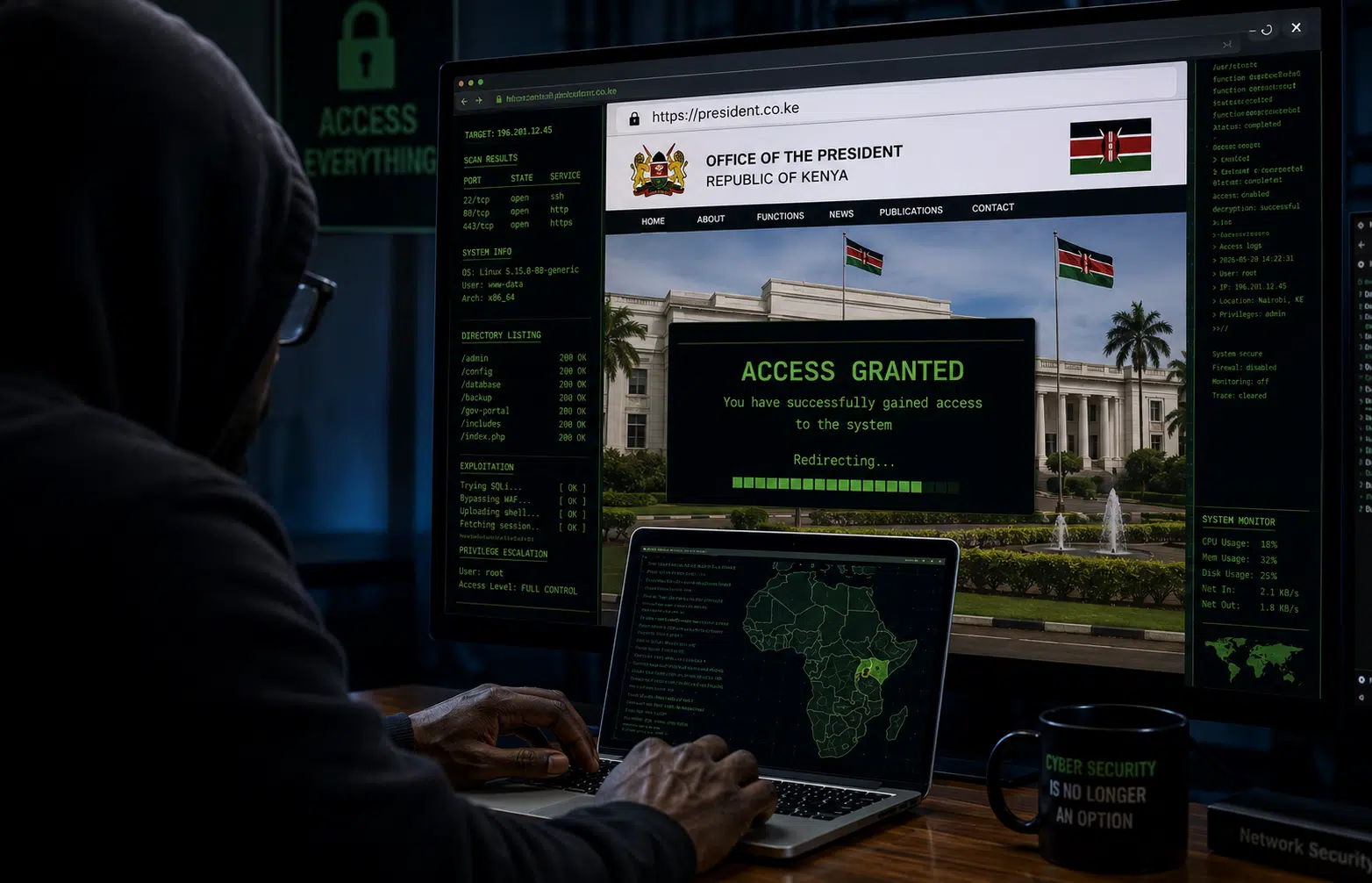
The breach of the presidential website carries implications far beyond a temporary loss of service. In an era where Kenya is pushing for the total digitalization of government services through platforms like e-Citizen, public trust is the most valuable currency. If the highest office in the land cannot secure its own digital front door, citizens may become hesitant to share sensitive personal data with state agencies.
Furthermore, there is an economic dimension. Kenya’s reputation as a safe hub for international tech investment relies on its ability to demonstrate a robust regulatory and security environment. Frequent breaches could lead to a downgrade in international cybersecurity rankings, potentially affecting the country’s ability to attract foreign direct investment (FDI) in the ICT sector.
Recommendations and Proactive Measures
To counter these emerging threats, experts are calling for a structural shift in how African governments approach digital sovereignty. Thiong’o advocates for the development of localized AI models and increased collaboration with Western partners to understand the vulnerabilities inherent in global tech platforms. He emphasizes that investing in AI-driven security tools is no longer optional but a prerequisite for national stability.
Victoria Robinson offers a more grounded, immediate roadmap for state agencies:
- Centralized Security Ownership: Governments should empower a National Computer Emergency Response Team (CERT) with actual authority to mandate security standards across all ministries.
- Mandatory Security Audits: No government website should go live without a baseline security certification and a rigorous penetration test.
- Incident Response Drills: The difference between a minor disruption and a national crisis often depends on whether the technical team has practiced their "runbook" for a breach.
- Treating Tech as Critical Infrastructure: Digital assets should be guarded with the same level of seriousness as physical ministry buildings or power plants.
Conclusion: A Call for Digital Resilience
The July 18th attack on President Ruto’s website serves as a stark reminder that the digital battlefield is constantly evolving. While the Kenyan government maintains that no sensitive data was stolen, the symbolic blow to the administration’s image is undeniable. The hackers’ demand for Bitcoin highlights the borderless nature of this threat, where attackers can remain anonymous while holding a nation’s reputation to ransom.
For Kenya and its African neighbors, the lesson is clear: the era of "set and forget" digital platforms is over. Protecting the state’s digital presence requires a culture of constant vigilance, adequate funding for maintenance, and a shift from reactive fixes to proactive defense strategies. Without these changes, the cycle of defacement, ransom, and restoration is likely to repeat, with potentially more devastating consequences in the future.