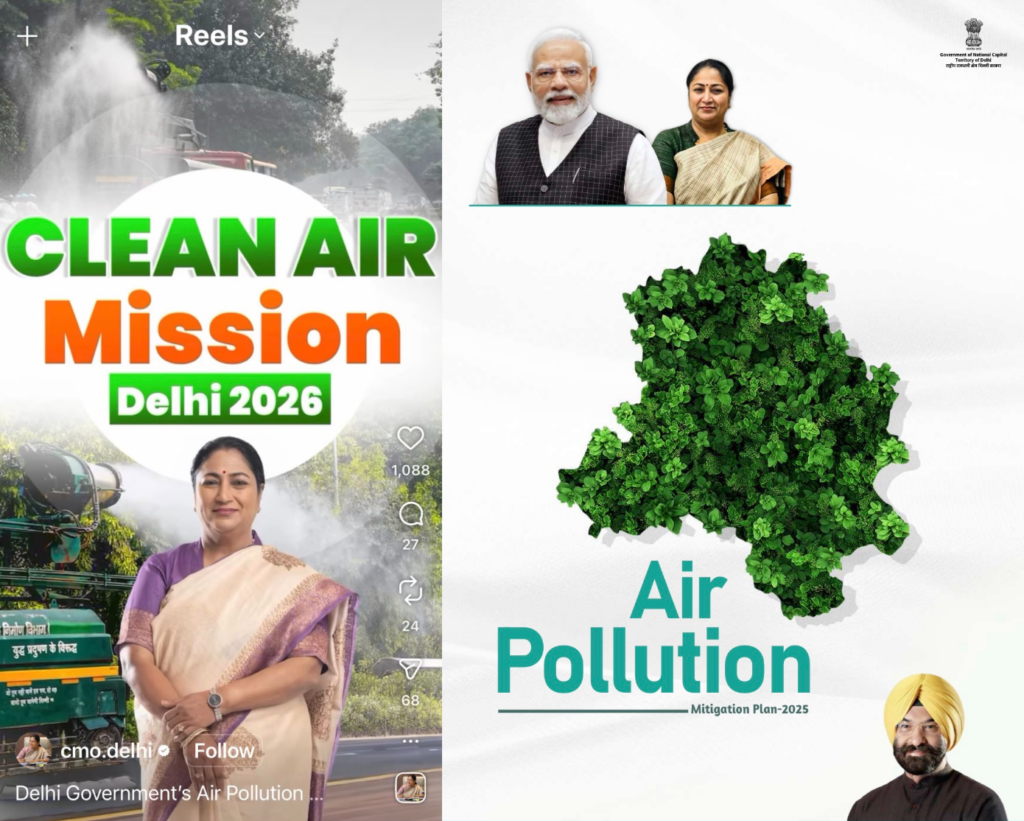
DELHI — In a high-stakes move to address the chronic environmental crisis gripping India’s National Capital Territory, Chief Minister Rekha Gupta has formally announced the Air Pollution Mitigation Action Plan 2026. This new roadmap, which follows the previous 2025 iteration, seeks to implement a series of aggressive measures to curb the toxic smog that blankets the city for much of the year. While the government has promised a 15% reduction in annual average PM2.5 levels by 2026, environmental experts and civil society groups remain cautiously optimistic, pointing to significant gaps in enforcement and a reliance on "technocratic" solutions that have historically yielded limited results.
The announcement, made via a public address on April 3, comes at a time when Delhi’s air quality continues to be a global outlier. For the past seven years, the city’s average PM2.5 concentration has hovered around 100 micrograms per cubic meter—vastly exceeding the World Health Organization’s (WHO) recommended safety limits. The new plan introduces a multi-pronged approach focusing on transport, dust management, and waste monitoring, yet more than a week after the initial announcement, the full technical details of the plan remain largely undisclosed to the public.
The Core Pillars of the 2026 Action Plan
The Delhi government’s strategy is built upon three primary pillars: vehicular transport reform, infrastructure-led dust management, and intensified monitoring of waste and construction activities.
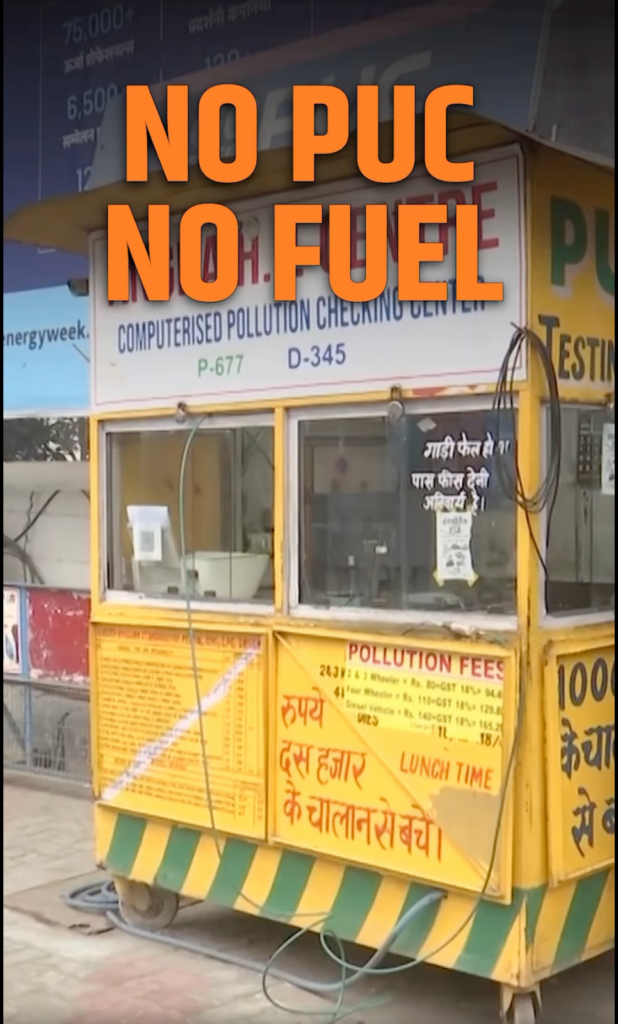
In the realm of transport, the government has pledged to more than double the city’s bus fleet, moving toward a massive expansion of electric buses. Furthermore, the plan includes a controversial proposal to impose pollution-linked curbs on fuel sales. Under this directive, fossil-fuel vehicles without a valid Pollution-Under-Control (PUC) certificate would be barred from purchasing petrol or diesel at filling stations. The government also intends to hike parking fees for fossil-fuel vehicles to discourage private car usage and incentivize the transition to public transit.

Dust management, which contributes significantly to the city’s PM10 and PM2.5 levels, will see the deployment of 500 "anti-smog guns" and a "large-scale" increase in water sprinklers across major traffic corridors. Additionally, the plan calls for the mandatory installation of wind-breaking walls at all construction sites exceeding 500 square meters.
Regarding waste and industrial monitoring, the government has promised 24/7 surveillance of "hotspots"—areas with consistently high pollution readings—using drones and CCTV. Strict penalties are proposed for the open burning of waste, and industrial units will be under increased scrutiny to ensure compliance with emission standards.
The Draft Electric Vehicle Policy 2026: A Roadmap to Decarbonization
Accompanying the broader mitigation plan is a detailed draft for the Delhi Electric Vehicle (EV) Policy 2026. This document provides a clearer timeline for the phasing out of internal combustion engine (ICE) vehicles, which are currently the fastest-growing source of pollution in the megacity.
The draft policy outlines a series of aggressive mandates:
- Delivery and Ride Aggregators: Starting this year, no new petrol or diesel vehicles will be permitted to join delivery or ride-hailing fleets.
- Auto-Rickshaws: From next year, only electric auto-rickshaws will be eligible for registration in the capital.
- Two-Wheelers: By April 1, 2028, all new two-wheeler registrations in Delhi must be electric.
To facilitate this transition, the government has proposed a tiered subsidy structure. Incentives for new EV two-wheelers will range from a few hundred dollars, while electric cars could receive subsidies up to approximately $2,500. Electric trucks, essential for the city’s logistics, are slated for $1,000 incentives in the first year. Notably, while private EV four-wheelers will not receive direct subsidies, they will be exempt from road tax and registration fees for vehicles priced under $32,000. These incentives are designed to be phased out gradually, concluding by 2030.
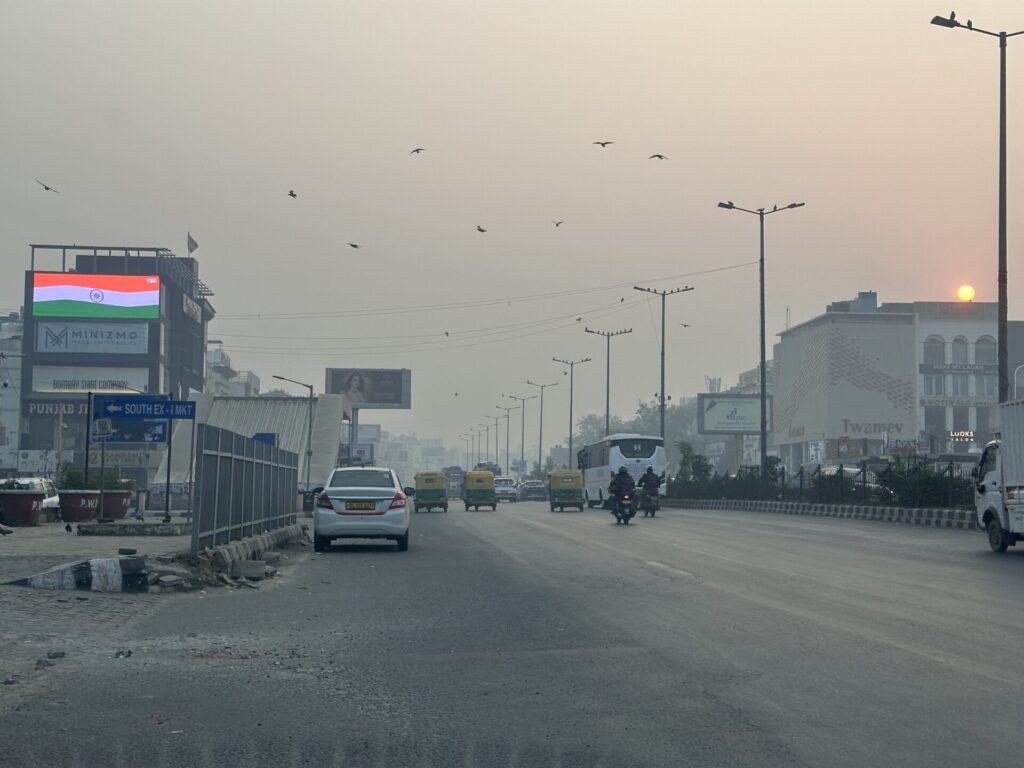
Chief Minister Gupta emphasized that these measures are essential for establishing a "clean, accessible, and sustainable transport system." However, data suggests the challenge is immense; there are currently 8.8 million vehicles on Delhi’s roads, a 7.9% increase from the previous year, with two-wheelers accounting for over two-thirds of that volume.
Scientific Scrutiny and the "Smog Gun" Controversy
One of the most criticized aspects of the 2026 plan is the continued reliance on anti-smog guns and water sprinklers. These devices, often mounted on trucks or atop high-rise buildings, are designed to spray a fine mist of water to settle airborne dust.
However, scientific evaluations have cast doubt on their efficacy. A study conducted by the Indian Institute of Technology (IIT) Delhi found that while water sprinkling can cause a temporary drop in PM2.5 levels immediately after use, the benefits dissipate within two to three hours. The study concluded that the overall reduction in pollution levels over a 24-hour period was a mere 8%. Furthermore, the effective range of these machines is limited to a radius of 100 to 200 meters.
The Council on Energy, Environment and Water (CEEW) also noted that even if these devices were placed on every large building in the city, they would cover less than 0.5% of Delhi’s total geographic area. Critics argue that these measures are "cosmetic" and serve as "red herrings" that distract from the need to tackle pollution at its source. Despite this, the Gupta administration appears set to expand their use, alongside renewed trials for cloud seeding, a process intended to induce rain to wash away pollutants—a method that faced significant criticism and technical failures in previous years.
The Failure of the PUC System and Real-World Emissions
A critical gap identified by experts is the government’s continued reliance on the Pollution-Under-Control (PUC) certification system. Amit Bhatt, Managing Director for India at the International Council for Clean Transportation (ICCT), argues that the current PUC regime is fundamentally flawed.
"The key limitation of the existing PUC system is that it is a stationary test," Bhatt explained. "It does not capture emissions under real-world driving conditions, where the actual impact on human health occurs."
Current PUC tests do not measure Nitrogen Oxides (NOx) or PM2.5—the two most dangerous components of vehicular exhaust. Vehicles are responsible for approximately 60% of NOx emissions in the Delhi region. NOx is a primary precursor to the formation of ground-level ozone and fine particulate matter, both of which are linked to severe respiratory and cardiovascular diseases.
Environmental activist Bhavreen Kandhari, founder of Warrior Moms, warned that the PUC system is widely perceived as outdated and prone to corruption. "Continued reliance on this system, without scaling robust real-time emission monitoring, weakens enforcement," she stated. Kandhari and other advocates are calling for "Remote Sensing Technology" that can measure the exhaust of vehicles as they drive past, providing a more accurate picture of fleet emissions.
Omissions: Firecrackers and Regional Industrial Pollution
Perhaps the most glaring omission in the Air Pollution Mitigation Action Plan 2026 is the lack of a clear policy on firecrackers. Historically, the winter months in Delhi see massive spikes in pollution following the Diwali festival. While previous years saw court-mandated bans, the Rekha Gupta government recently petitioned the courts to lift the ban on "green firecrackers," a move that was eventually successful but remains controversial.
Clean air advocate Jyoti Pande Lavakare noted that without a complete ban on firecrackers from October to March, the city’s winter pollution peaks are unlikely to subside. "Clean air is a fundamental right, but achieving it requires hard decisions that might be politically unpopular," she remarked.
Furthermore, the plan is largely silent on the issue of regional pollution. Delhi’s air quality is heavily influenced by industrial clusters in the neighboring National Capital Region (NCR) and non-compliant thermal power plants located within a 300-kilometer radius of the city. While the Delhi government has jurisdiction over the city itself, it has little power over the neighboring states of Punjab, Haryana, and Uttar Pradesh, where crop residue burning and industrial emissions remain significant contributors to the regional airshed.
Public Health Implications and the Economic Burden
The human cost of Delhi’s air quality cannot be overstated. Long-term exposure to PM2.5 and NOx is linked to a litany of health issues, including chronic lung disease, heart attacks, strokes, and lung cancer. In children, it can lead to stunted lung development and increased rates of asthma.
Economic assessments suggest that air pollution costs the Indian economy billions of dollars annually in lost productivity, healthcare expenses, and reduced tourism. By focusing on "visible" solutions like smog guns rather than structural reforms in the energy and industrial sectors, critics argue the government is merely treating the symptoms of the crisis rather than the cause.
Implementation: The Ultimate Litmus Test
As the Delhi government prepares to roll out the 2026 plan, the focus has shifted to accountability. The Chief Minister has promised "strict timelines" and "measurable outcomes," yet the city’s pollution control agencies are currently grappling with significant staff shortages and a lack of enforcement capacity.
For the plan to succeed, it will require unprecedented cooperation between various government departments—transport, environment, and urban development—as well as coordination with the central government and neighboring states.
"Clean air is not a luxury; it is a fundamental right," Gupta stated during the launch. Whether the 2026 plan becomes a turning point for the city or remains another "old wine in a new bottle" depends entirely on the administration’s willingness to enforce its own mandates and move beyond temporary, localized fixes toward a comprehensive, science-based overhaul of the city’s environmental governance.