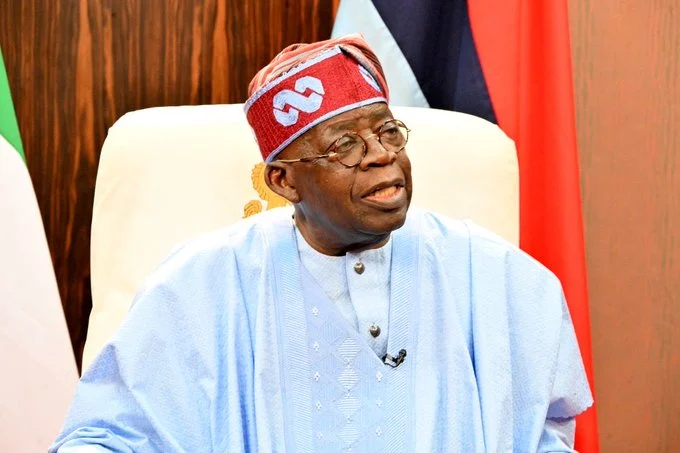
The political landscape in Nigeria has witnessed a notable shift in discourse as Dr. Abass Mimiko, the 2024 governorship candidate of the Zenith Labour Party (ZLP) in Ondo State, has publicly declared his support for President Bola Ahmed Tinubu’s re-election. Speaking in Ondo Town, the younger brother of former Governor Olusegun Mimiko argued that the current administration’s foundational policies, despite the immediate socio-economic hardships they have induced, are necessary precursors to long-term national prosperity. This endorsement marks a significant departure from typical opposition rhetoric, framing the President’s tenure not through the lens of party affiliation, but through an assessment of macroeconomic recovery.
The Economic Context: Inherited Realities and Policy Shifts
To understand the weight of Dr. Mimiko’s assessment, it is essential to examine the economic environment President Tinubu inherited in May 2023. Upon his inauguration, the administration faced a fiscal scenario characterized by a debt-to-revenue ratio that severely limited the government’s capacity to fund essential services. According to reports from the Debt Management Office (DMO) and the World Bank, Nigeria’s debt service cost as a percentage of federal government revenue had reached alarming levels—exceeding 90% by early 2023.
The removal of the fuel subsidy, a cornerstone of the Tinubu administration’s early policy agenda, was a decision that polarized the nation. While the subsidy had been a fixture of the Nigerian economy for decades, it had evolved into a significant drain on the Federation Account, costing the government trillions of naira annually. Economists have long argued that the subsidy mechanism created arbitrage opportunities, discouraged private investment in downstream infrastructure, and constrained liquidity. By eliminating this fiscal burden, the administration aimed to redirect funds toward critical infrastructure and social safety nets, though the immediate effect was a sharp rise in the cost of living, transport, and food prices.
Dr. Mimiko’s perspective aligns with the "pragmatist" school of thought, which posits that the structural decay inherited from the previous administration—specifically the lack of foreign exchange reserves and the reliance on borrowing to service existing debt—left the government with little room for maneuver. By choosing to address these issues head-on, the administration, in Mimiko’s view, demonstrated a commitment to "getting its hands dirty" to perform the necessary, albeit painful, surgery on the Nigerian economy.
Chronology of the Administration’s Fiscal Reforms
The first eighteen months of President Tinubu’s tenure have been defined by a series of aggressive reforms intended to transition the country toward a market-driven economy.
- May 2023: During his inaugural address, President Tinubu announced the immediate removal of the fuel subsidy, declaring that the budget could no longer sustain the cost.
- June 2023: The Central Bank of Nigeria (CBN) unified the multiple foreign exchange windows, allowing the naira to float, a move designed to eliminate the disparity between the official and parallel market rates.
- Late 2023: The administration initiated the removal of the Governor of the Central Bank and launched a comprehensive audit of the banking sector to restore global credibility.
- 2024: The federal government transitioned toward the implementation of the student loan scheme and various conditional cash transfer programs aimed at mitigating the impact of inflation on the most vulnerable demographics.
- Mid-2024 to Present: Focus has shifted toward increasing domestic crude oil production and encouraging states to utilize their increased allocations—bolstered by the removal of the subsidy—to invest in agricultural productivity.
Data-Driven Analysis of the Current Economic State
While Dr. Mimiko emphasizes the stabilization of the economy, official data paints a complex picture. Inflation, particularly food inflation, reached record highs in 2024, driven by currency devaluation and the rising costs of energy and logistics. However, government proponents point to the growth in non-oil revenue as a success story of the administration’s fiscal policies.
The Federal Inland Revenue Service (FIRS) and the Customs Service have reported significant increases in monthly revenue collection since the reforms began. These gains, according to the Presidency, are intended to provide the fiscal space necessary for the government to move away from deficit budgeting. Yet, the challenge remains in the transmission of these macro-level gains to the micro-economic realities of the average Nigerian citizen. Critics of the administration argue that while the macro-indicators may be improving, the purchasing power of the citizenry has remained severely eroded, necessitating a more robust approach to social welfare and food security.
The Debate on Sub-National Accountability
A critical component of Dr. Mimiko’s argument is the need for sub-national accountability. He noted that despite the increased federal allocations flowing to states following the removal of the fuel subsidy, the impact on local food production and infrastructure remains uneven. This sentiment mirrors the President’s own recent critiques of state governors, whom he accused of prioritizing the construction of "overhead bridges" and aesthetic infrastructure over investments in agriculture and human capital development.
The constitutional structure of Nigeria grants state governors significant autonomy over their budgets, often shielding them from direct federal oversight regarding how they utilize their monthly allocations from the Federation Account. This structural limitation has prompted calls for a more collaborative approach between the federal government and state executives to ensure that policies aimed at reducing hunger and poverty are implemented at the grassroots level.
Broader Implications and Political Reactions
Dr. Mimiko’s endorsement has sparked debate within the opposition circles. While some analysts view it as a recognition of the harsh realities of governance, others suggest it reflects a growing consensus among pragmatic politicians that the country requires policy continuity to achieve structural transformation.
The implication of this support is twofold. First, it complicates the narrative of a monolithic opposition to the President’s economic policies, suggesting that there is a faction within the opposition that values long-term stability over short-term political gains. Second, it shifts the focus of the upcoming electoral cycle toward the performance of sub-national leaders. By calling for the state governors to be held to account, Mimiko is effectively broadening the scope of the debate: if the President is to succeed, the governors must match federal fiscal responsibility with local, results-oriented governance.
Conclusion: The Path to 2027
As the nation looks toward the 2027 election cycle, the discourse initiated by figures like Dr. Abass Mimiko highlights the central tension of the current political era. The administration’s supporters argue that the "broken system" inherited in 2023 required a period of painful adjustment, and that the President is merely mid-way through a multi-year recovery plan. Critics, meanwhile, remain focused on the immediate hardship and the perceived failure of the government to provide adequate palliatives for the most vulnerable.
Ultimately, the debate over President Tinubu’s second term will likely hinge on the government’s ability to move beyond fiscal stabilization and demonstrate tangible improvements in the standard of living for the average Nigerian. Whether the administration can successfully translate its macroeconomic reforms into local prosperity, particularly in the agricultural sector, will determine the success of its tenure and the resonance of endorsements such as those offered by Dr. Mimiko. For now, the call for accountability at the state level serves as a stark reminder that in Nigeria’s federal system, the responsibility for national development is a shared burden, and the upcoming political discourse will likely focus heavily on how effectively that burden is being carried across the federation.