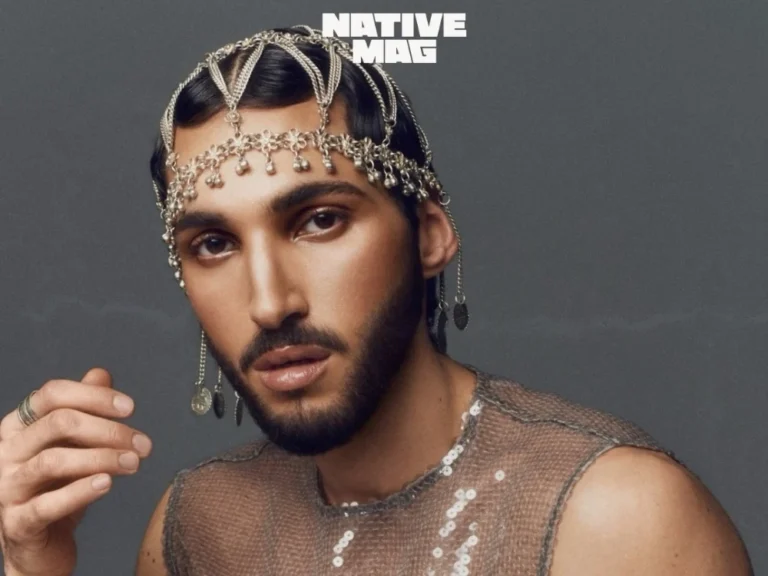
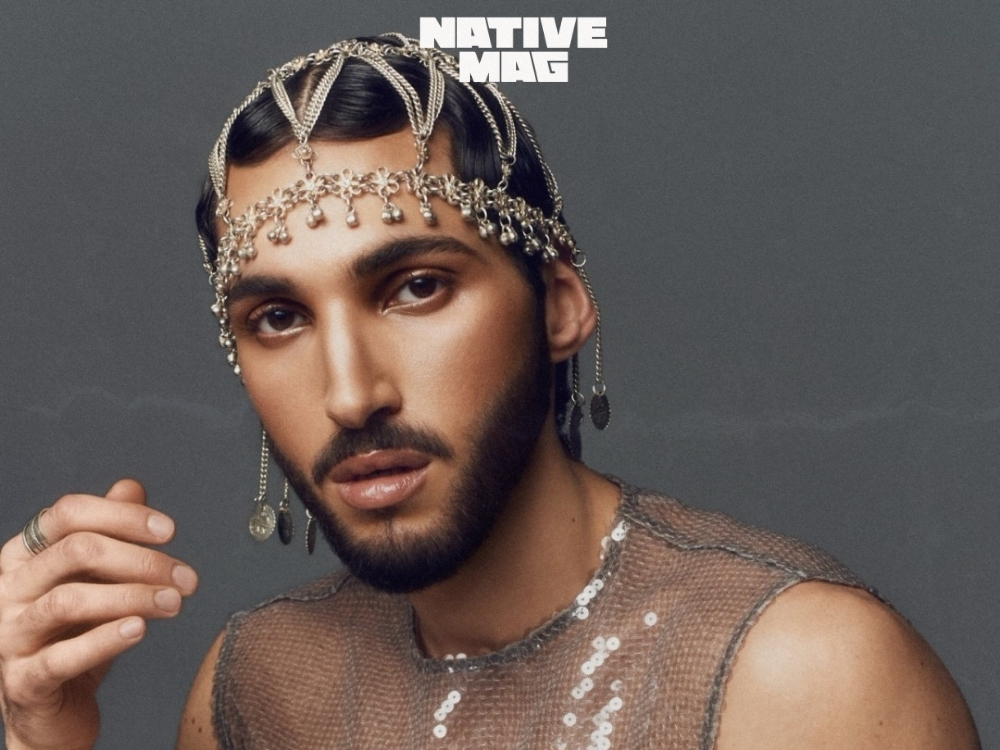
The intersection of queer identity and traditional North African society has long been a subject of intense sociocultural debate, often characterized by erasure and systemic silence. However, the emergence of multi-disciplinary artist El Mehdi, a figure shaped by the disparate cultural landscapes of Morocco, France, and Canada, represents a significant shift in this narrative. Through his debut musical project, SALAM, and his participation in the groundbreaking Moroccan feature film L’Héritier des secrets, El Mehdi is actively dismantling the misconception that LGBTQ+ identities are incompatible with African and Muslim heritage. By synthesizing Gnawa rhythms with contemporary vocal layering and storytelling, he is carving out a public space for discourse that has historically been relegated to the margins.
A Transnational Upbringing and the Roots of Creative Expression
Born in Rabat, Morocco, El Mehdi’s early life was defined by the dualities of migration and cultural negotiation. Following a brief period in the south of France, his family eventually relocated to Canada. This transient upbringing necessitated a constant navigation of cultural expectations. Throughout his formative years, El Mehdi’s creative inclinations—ranging from intricate drawing to sculpture—served as a necessary, if clandestine, refuge from the pressures of a conservative upbringing.
In many North African contexts, the arts are often scrutinized through a lens of traditional morality. For El Mehdi, this manifested in early familial attempts to pathologize his creative interests, a common experience for queer youth in societies where gender non-conformity is frequently viewed through a clinical or moralizing lens. These experiences catalyzed his decision to channel his experiences into music, transforming personal trauma into a medium for cultural reclamation.
Reconnecting with Amazigh Heritage
A central pillar of El Mehdi’s work is his intentional reconnection with his Amazigh ancestry. On his father’s side, the Amazigh identity was, for generations, subordinated to the dominant Arab culture within Morocco. This historical marginalization meant that the linguistic and cultural heritage was not passed down to El Mehdi, leading to a profound sense of loss.
Sociological data on the Maghreb region often highlights the tension between state-promoted national identities and the indigenous Amazigh populations, who have spent decades advocating for the recognition of their language and customs. El Mehdi’s journey reflects a wider trend among the North African diaspora: the use of art as a vehicle to recover lost heritage. His inability to communicate in Chelha—the language of his ancestors—despite having mastered multiple European languages, serves as a poignant critique of the cultural policies that have shaped modern Morocco. By incorporating Amazigh sounds and themes into his work, he is not merely performing; he is engaging in an act of linguistic and cultural decolonization.
The Evolution of SALAM: A Sonic Tapestry
The release of SALAM in 2026 marks a milestone in El Mehdi’s career, functioning as both a debut project and a manifesto. The EP is the culmination of years of development, with production occurring across Canada, France, and Morocco. Musically, the project is characterized by its technical complexity, featuring the integration of traditional Gnawa troupes with modern, lush instrumentation.
The decision to release a version of the project in Darija—the Moroccan dialect of Arabic—was a calculated move to assert his presence within his home culture. For many in the diaspora, language is a tool of exclusion; by reclaiming it, El Mehdi challenges the notion that his identity is "foreign" or "Western-imposed." The project has resonated with a significant portion of the North African audience, as evidenced by the influx of private support from individuals across the region who report feeling a sense of visibility for the first time.
Challenging Cinematic Taboos: L’Héritier des secrets
Beyond the recording studio, El Mehdi has transitioned into the cinematic sphere as a lead in L’Héritier des secrets, a Moroccan feature film directed by Mohamed Nadif. The film addresses the reality of trans identity within a Moroccan context, a subject that remains highly sensitive in public discourse.
The film’s release in August 2026 provided a flashpoint for national conversation. Historically, the representation of LGBTQ+ individuals in North African media has been limited to caricatures or, more frequently, total erasure. L’Héritier des secrets seeks to challenge this by providing a humanized, nuanced portrayal of queer existence. For El Mehdi, the choice to star in the film was motivated by the necessity of visibility. He argues that by portraying these stories using familiar cultural references and faces, the barrier to empathy is lowered, making it increasingly difficult for society to maintain the fiction that queer people do not exist within their borders.
The Politics of Visibility and Public Discourse
The reception of El Mehdi’s work serves as a microcosm of the current cultural divide within North African societies. While his music has garnered private acclaim, it has also faced significant backlash in public, digital spaces. This phenomenon is consistent with global trends in social media usage, where algorithmic bias often amplifies hostile voices, creating a "false consensus" of moral outrage.
A brief analysis of his engagement data suggests that while the "comment sections" are dominated by criticism, the private reception—often expressed through direct communication—is overwhelmingly supportive. This discrepancy highlights a critical implication: there is a silent majority or a suppressed community that finds solace in progressive art, but they are often deterred from engaging publicly due to the prevailing climate of fear. El Mehdi’s insistence on occupying this space serves to normalize the conversation, pushing the boundaries of what is considered "discussable" in Moroccan media.
Broader Implications for African and Muslim Communities
The implications of El Mehdi’s work extend beyond the individual artist. As African and Muslim communities continue to grapple with the pressures of globalization and internal modernization, the status of queer individuals remains a central site of tension. El Mehdi’s assertion that his identity is not a "Western import" but an inherent part of the diversity of the Maghreb is a direct challenge to the rhetoric used by conservative factions to dismiss LGBTQ+ rights as neocolonial influences.
Furthermore, the support he has received from within the African continent—and particularly from his Amazigh kin—suggests that the narrative of universal hostility is being challenged by grassroots solidarity. The collaboration with local Gnawa musicians in his project signifies a bridge between traditional artistic structures and modern identity politics, suggesting that there is space for evolution within these cultures without the total abandonment of tradition.
Chronology of Recent Developments
- August 2026: Release of the Moroccan feature film L’Héritier des secrets, starring El Mehdi, marking a significant moment in regional cinema regarding trans representation.
- September 2026: Formal promotion of the debut project SALAM and its Darija-language edition, focusing on the intersection of identity, music, and heritage.
- Ongoing (2026): Continued expansion of digital engagement, with El Mehdi utilizing various media platforms to advocate for the inclusion of LGBTQ+ individuals in the broader Moroccan national narrative.
Future Trajectory
As El Mehdi continues to produce work that intersects with the sensitive themes of faith, queerness, and belonging, his role as a cultural provocateur is likely to grow. His career provides a clear example of the power of independent artistry to influence social discourse. By navigating the complexities of his dual identity—using his Canadian experience as a vantage point for perspective and his Moroccan heritage as the foundation for his voice—he is building a platform that demands a re-evaluation of what it means to belong to a culture.
The long-term impact of his contributions will likely be measured by the extent to which other artists feel emboldened to follow a similar path. In a landscape where exclusion is often presented as a moral imperative, the simple act of existing openly and creating work that reflects one’s truth is, in itself, a transformative political act. For El Mehdi, the goal remains clear: to ensure that the stories of those who have been made to feel invisible are finally told, and that their place within their own societies is no longer conditional.