In an aggressive, coordinated move to safeguard public health and eradicate medical quackery, the governments of seven North-West states have officially declared a zero-tolerance policy against unlicensed and substandard private health training institutions. The sweeping regional initiative, spearheaded by the Northwestern States Commissioners of Health Forum, aims to root out fraudulent academic operations that have increasingly compromised healthcare delivery across northern Nigeria.
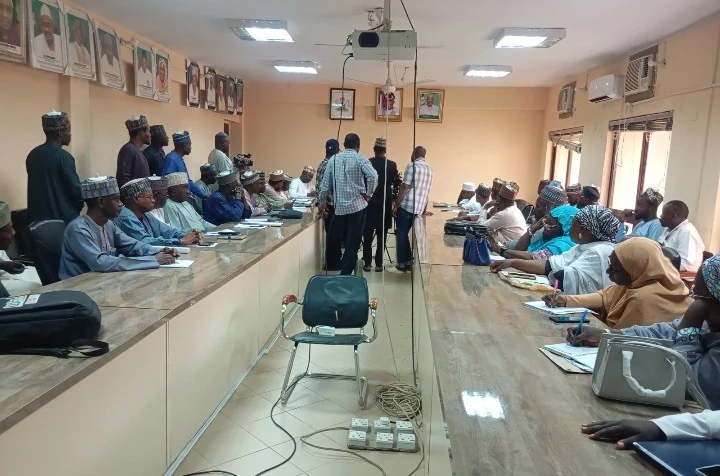
The declaration was made public during a high-profile stakeholder engagement meeting held on Wednesday at the conference hall of the Jigawa State Ministry of Health in Dutse, the state capital. Convened to address the proliferation of substandard health academies, the meeting brought together key government officials, regulatory authorities, and proprietors of private health institutions from across the region.
Dr. Abdullahi Kainuwa, Chairman of the Northwestern States Commissioners of Health Forum and Jigawa State Commissioner of Health, delivered the stern warning to institutional operators. According to Dr. Kainuwa, the unified crackdown spans Kano, Kaduna, Katsina, Kebbi, Sokoto, Jigawa, and Zamfara states. The regional coalition has resolved to deploy joint monitoring teams to inspect all private medical, nursing, and allied health training facilities, with explicit instructions to shutter any establishment failing to meet statutory requirements.
Background and Context of the Regional Crackdown
The proliferation of private health training institutions has accelerated rapidly over the past decade, driven by rising demand for healthcare professions and entrepreneurial opportunities in education. However, this expansion has largely outpaced regulatory oversight. Across many parts of Nigeria’s North-West zone, reports have surfaced of hastily established institutions operating out of unsuitable facilities, lacking functional laboratories, employing unqualified instructors, and admitting students without the requisite foundational qualifications.
For years, medical councils, professional associations, and concerned citizens have raised alarms over the influx of half-baked graduates entering the healthcare ecosystem. These poorly trained auxiliary nurses, community health workers, and laboratory technicians often find employment in rural and under-served communities, where their lack of foundational clinical competence poses catastrophic risks to unsuspecting patients.
The consequences of medical quackery in Nigeria are well-documented. Misdiagnoses, improper medication administration, and botched medical procedures resulting from inadequate professional training contribute significantly to preventable morbidity and mortality rates. By targeting the source of the problem—the training institutions themselves—the North-West states are adopting a preventative strategy rather than merely punishing erring practitioners at the tail end of the pipeline.
Chronology of Regulatory Escalation
The resolve by the North-West health commissioners did not happen in a vacuum. It represents the culmination of mounting regional pressures, policy discussions, and inter-state consultations aimed at harmonizing health sector standards.
In recent months, individual states within the zone grappled with an influx of graduates who failed professional qualifying examinations or displayed glaring deficiencies during mandatory internship and community service postings. Recognizing that fragmented, state-by-state enforcement allowed substandard schools to simply relocate across porous borders, the health commissioners resolved to form a unified regional front.
Wednesday’s stakeholders’ meeting in Dutse served as the official operational launchpad for this synchronized strategy. During the session, the government laid out clear directives, outlining the exact legal, structural, and academic benchmarks required for continued operation. Proprietors were handed explicit timelines to submit their operational licenses, accreditation certificates, and documentation regarding faculty qualifications to state-level taskforces.
Mechanisms of Enforcement and Joint Monitoring
To ensure compliance, the North-West forum is deploying a multi-layered enforcement mechanism led by specialized state taskforces. In Jigawa State, for instance, the Taskforce on Private Health Training Institutions—headed by Isa Surajo, Technical Adviser to Governor Umar Namadi—has been empowered to execute unannounced inspections, physical verifications, and curriculum audits.
Speaking on the modalities of the enforcement exercise, Surajo emphasized that the taskforce’s mandate is absolute and impartial. "Our job is to inspect, verify, and recommend. There will be no sentiment and no cover-up," he stated firmly during the stakeholder engagement.
The verification criteria are rigorous and uncompromising. Joint inspection teams will physically evaluate:
- Laboratory infrastructure and equipment adequacy to ensure hands-on practical training.
- The academic credentials, professional licensing, and teacher-to-student ratios of instructional staff.
- Adherence to standardized curricula approved by national regulatory bodies such as the Nursing and Midwifery Council of Nigeria, the Community Health Practitioners Registration Board of Nigeria, and other relevant entities.
- Admission processes, verifying that enrolled students meet the minimum West African Senior School Certificate Examination (WASSCE) or equivalent prerequisites.
Officials have made it clear that institutions found wanting will not receive soft landings. Those lacking functional facilities or qualified academic personnel will face immediate suspension of operations and outright closure.
Official Responses and Stakeholder Reactions
While the government maintains that the initiative is designed to protect citizens and elevate the professional standing of northern health workers, the reception among private school proprietors has been cautious and guarded.
During the Dutse meeting, government officials repeatedly stressed that private sector investment in education is welcome, provided it adheres strictly to the rule of law. "Government is not against private investment. We are against shortcuts that endanger lives," Dr. Kainuwa reiterated to the gathering. He emphasized that no state within the seven-state bloc would serve as a safe haven for illegal operators, as intelligence and enforcement strategies are being shared seamlessly across borders.
Following the formal presentations and question-and-answer sessions, attempts by journalists to interview individual proprietors yielded little immediate commentary. Many school owners declined to speak on the record, citing a preference to focus their immediate energy on organizing their documentation and rectifying institutional shortcomings.
"We prefer to talk after we have put all our documents in order," one proprietor remarked anonymously, reflecting the tense, reflective mood among private institution operators who now face a strict compliance deadline.
Broader Economic and Social Implications
The implications of this sweeping regional reform extend far beyond administrative compliance; they touch upon public safety, economic development, and professional dignity.
From a public health perspective, eradicating substandard training institutions directly translates to improved health indices over the long term. Ensuring that every graduating nurse, midwife, pharmacy technician, and community health worker possesses standardized clinical competence reduces medical errors and builds public confidence in formal healthcare facilities, particularly primary healthcare centers where the rural populace seeks care.
Economically, the cleanup is expected to restore the market value of health diplomas and certificates issued in the region. For years, graduates from compromised institutions faced discrimination and rejection when seeking employment or further education in other parts of Nigeria or abroad. By enforcing rigorous quality control, the North-West states hope to produce competitive health professionals whose certifications command national and international respect.
However, analysts note that the success of this crackdown will depend heavily on the consistency and political will of the state governments. Observers caution that enforcement must be accompanied by transparent, corruption-free reaccreditation processes to prevent extortion or undue victimization of compliant school owners. Furthermore, governments may need to provide clear, supportive pathways for legitimate institutions struggling with bureaucratic bottlenecks, ensuring that genuine efforts to upgrade facilities are met with institutional facilitation rather than punitive gridlock.
As the joint monitoring teams prepare to roll out across Kano, Kaduna, Katsina, Kebbi, Sokoto, Jigawa, and Zamfara, the message from the North-West health authorities remains unequivocal: the era of profit-driven, substandard medical training is over, and the protection of human lives supersedes all commercial interests.