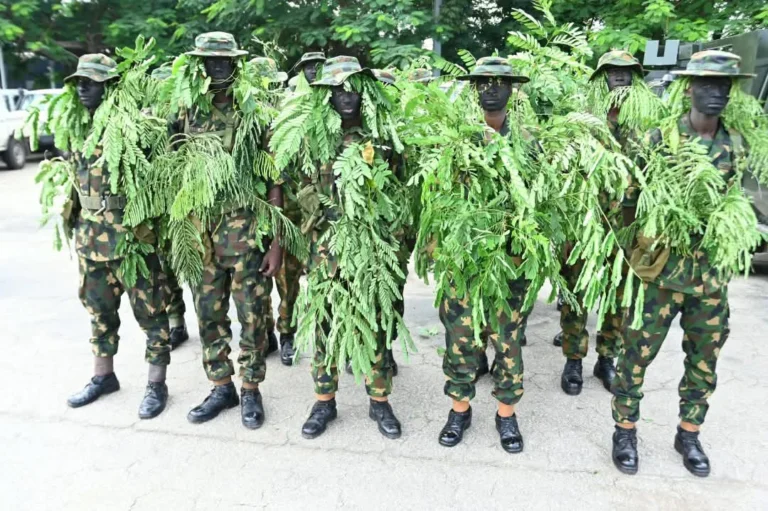
The Nigerian Army has formally tasked the latest cohort of recruits, the 90 Regular Recruit Intake (RRI), to anchor their budding military careers on the twin pillars of discipline and professionalism. This directive was issued during the graduation ceremony for Exercise Shining Star Course 12/2026, which took place at the Army Headquarters Garrison Parade Ground, located within the Mogadishu Cantonment in Asokoro, Abuja. As these soldiers prepare to transition from the structured environment of the training school to their operational units and formations across the country, the military high command has emphasized that their conduct will be the ultimate measure of their readiness to confront the nation’s complex security challenges.
The Significance of Exercise Shining Star
Exercise Shining Star is a specialized capstone training module designed to bridge the gap between basic recruit training and the realities of field operations. By the time recruits reach this stage, they have completed their foundational boot camp, yet they remain in a formative phase of their professional development. The exercise serves as a crucible, testing their ability to translate theoretical knowledge—acquired in classrooms and on drill squares—into tactical competence under simulated field conditions.
Major General Valentine Okoro, the Chief of Training for the Nigerian Army, delivered the keynote address through his representative, Brigadier General Ukeagbu Igbokwe, the Deputy Chief of Training, Linkages and Integration. According to the leadership, the primary objective of this exercise is to ensure that the Nigerian Army maintains a pipeline of combat-ready personnel capable of operating effectively in contemporary security environments. In an era marked by asymmetric warfare, banditry, and internal security threats, the demand for soldiers who possess not only technical proficiency but also sound initiative and moral character has never been higher.
Curriculum and Tactical Focus
Lieutenant Colonel Umar Adamu, the Acting Deputy Chief of Staff for Training at the Army Headquarters Garrison Training School, provided a comprehensive breakdown of the training curriculum. The cohort, consisting of 45 young soldiers drawn from various departments and establishments within the Abuja area, underwent a rigorous period of instruction designed to push their physical and psychological limits.
The curriculum was broad and multifaceted, encompassing:
- Unit Regimentation: Instilling the traditions, customs, and hierarchical discipline essential to the military way of life.
- Basic Infantry Tactics: Training in movement, concealment, and engagement techniques suitable for diverse terrains.
- Physical Fitness and Endurance: Ensuring that personnel can sustain high-intensity operations over extended periods.
- Weapon Handling and Marksmanship: A core requirement for every soldier, focusing on safety, maintenance, and precision.
- Map Reading and Navigation: Essential for operational autonomy in remote or unfamiliar environments.
- Night Operations: Training in low-light tactical environments to ensure dominance in varied conditions.
The assessment process was equally rigorous. Over the duration of the course, these soldiers were subjected to weekly examinations, practical field evaluations, and constant monitoring of their behavioral patterns to ensure that they met the standard expected of the Nigerian Army.
The Mandate for Professionalism
The message delivered to the 90 RRI graduates was clear: military skill is insufficient without the grounding of discipline and loyalty. Major General Okoro’s charge for the soldiers to remain "physically fit, mentally alert, and professionally competent" is part of a broader, ongoing effort by the Nigerian Army to reform its internal culture and enhance its public perception.
Beyond mere technical skill, the graduates were reminded that their status as members of the armed forces carries a heavy social responsibility. The Nigerian Army has, in recent years, faced increased scrutiny regarding human rights, civil-military relations, and operational transparency. By emphasizing that their conduct, both on and off duty, must reflect positively on the service, the command is signaling a commitment to ethical standards. This serves as a vital component in sustaining the confidence that the Nigerian public reposes in the military, which is essential for effective intelligence gathering and community-based security operations.

Contextualizing the Recruitment and Training Cycle
The 90 RRI represents the latest iteration of the Nigerian Army’s ongoing recruitment efforts to replenish its ranks and address the personnel requirements necessitated by the scale of domestic security operations. The Nigerian Army operates a decentralized training structure, where recruits undergo initial screening and basic training at the Depot Nigerian Army in Zaria before being posted to various training schools, such as the AHQ Garrison Training School, for specialized or follow-on training.
This continuous cycle of recruitment and training is a response to the attrition inherent in a large, active-duty force, as well as the need to rotate personnel out of high-intensity conflict zones in the North-East and North-West. By focusing on "Shining Star" training, the Army is attempting to ensure that young soldiers are not merely "trained" but are "ready"—a distinction that is critical when deploying personnel into environments where they may be called upon to make life-or-death decisions in a split second.
Broader Implications for National Security
The graduation of these 45 soldiers, while small in number compared to the total size of the Nigerian Army, is emblematic of the high-level focus being placed on tactical excellence at the unit level. The military’s emphasis on "sound decision-making" and "initiative" suggests an understanding that modern warfare requires soldiers who can function autonomously when disconnected from direct command.
Furthermore, the emphasis on teamwork during the exercise highlights a strategic shift toward more collaborative operations. As the Nigerian Army works alongside other security agencies—such as the Nigeria Police Force, the Nigeria Security and Civil Defence Corps, and various paramilitary bodies—the ability of individual soldiers to act as part of a cohesive, disciplined unit is paramount.
From an analytical perspective, the success of this program will be measured not by the performance of these soldiers on the parade ground, but by their performance in the field. The inclusion of "night operations" and "map reading" in their training indicates that the military is preparing for operations that are becoming increasingly complex and technically demanding.
Future Outlook and Challenges
As these young soldiers head to their respective units, they will face a transition from the controlled, supportive environment of the training school to the unpredictability of operational postings. The challenges they will encounter include:
- Operational Stress: Managing the psychological toll of participating in counter-insurgency and internal security operations.
- Maintaining Standards: The pressure to maintain the high levels of discipline learned during the course despite the potential lack of supervision in remote areas.
- Community Relations: Navigating the delicate balance of enforcing security while maintaining the trust of the local populations they are tasked to protect.
The Nigerian Army’s leadership has acknowledged that the training provided during Exercise Shining Star is only the beginning. The expectation is that the 90 RRI will continue to seek improvement, viewing their graduation not as the end of their education, but as the foundation upon which they will build a lifelong career of service.
In his concluding remarks, Lieutenant Colonel Adamu underscored the necessity of this ongoing growth. By fostering an environment where training is continuous and assessment is objective, the Army aims to build a professional force that is not only capable of defending the nation’s territorial integrity but also one that operates with the integrity and honor expected of a modern military organization.
The graduation ceremony in Asokoro serves as a testament to the resilience of the Nigerian military training apparatus. Despite the myriad logistical and operational hurdles facing the institution, the focus on grooming the next generation of soldiers remains a central pillar of the nation’s security strategy. As these 45 soldiers integrate into their units, their success will contribute to the collective capability of the Nigerian Army to secure the future of the nation, one unit at a time.