
The landscape of African women’s football has shifted irrevocably following the announcement that veteran Nigerian central defender Osinachi Ohale has officially brought down the curtain on her illustrious 16-year international career. At 34 years of age, the consummate professional, who has long served as the defensive bedrock for the Super Falcons, took to social media to confirm her retirement from the national team on Friday, 25 September 2026. This pivotal moment closes a glittering chapter defined by 86 senior international appearances, four FIFA Women’s World Cup campaigns, seven Women’s Africa Cup of Nations (WAFCON) tournaments, and an astonishing five continental championship titles.
Ohale’s departure marks the fading of a generation of players who not only dominated African women’s football with unprecedented authority but also consistently raised the bar for representation on the global stage. While she leaves behind an imposing void in the heart of Nigeria’s backline, her legacy is firmly cemented in the annals of African sports history. Even as she steps away from the green and white of her homeland, Ohale remains active at the club level, currently plying her trade with Mexican Liga MX Femenil powerhouse Pachuca. Her retirement invites a comprehensive reflection on a career built on resilience, tactical intelligence, and unwavering commitment to excellence.
A Chronological Journey: From Debut to Continental Dominance
To fully appreciate the magnitude of Osinachi Ohale’s impact, one must trace the timeline of a career that spanned nearly two decades. Emerging onto the scene as a prodigious talent eager to make her mark, Ohale earned her senior national team debut in 2010. Almost immediately, she integrated herself into the core of the Super Falcons squad, demonstrating a maturity and positional awareness uncharacteristic of a player of her relative youth.
Her introduction to international football coincided with continental success. In 2010, she secured her first Women’s Africa Cup of Nations gold medal, setting a precedent for what would become an extraordinarily decorated career. Over the next decade and a half, Ohale remained an ever-present fixture through various managerial changes, tactical evolutions, and generational shifts within the squad. She added further WAFCON titles to her resume in 2014, 2016, 2018, and most recently in 2024. This rare quintuple of continental triumphs placed her in an elite echelon of African footballers, earning her formal recognition in the prestigious IFFHS CAF Women’s Team of the Decade.

On the global stage, Ohale’s contributions were equally vital. She represented Nigeria at four distinct FIFA Women’s World Cups, standing firm against the world’s most potent attacking lines. Her defining global moment arrived during the 2023 FIFA Women’s World Cup co-hosted by Australia and New Zealand. In a high-stakes group fixture in Brisbane against the host nation Australia, Ohale rose above the defense to score a crucial header, propelling the Super Falcons to a historic 3-2 victory. Her stalwart defensive performance throughout the tournament earned her the official Player of the Match accolade and cemented her reputation as a player who thrived under the brightest lights.
Club Career and Global Footprint
While Ohale’s heart always beat loudest for the Super Falcons, her club career took her across continents, allowing her to test her mettle in some of the world’s most competitive women’s leagues. Her domestic journey saw her transition from local Nigerian leagues to prominent international arenas. In North America, she showcased her defensive capabilities with the Houston Dash in the United States’ National Women’s Soccer League (NWSL).
Her career trajectory subsequently led her to Europe, where she adapted seamlessly to different tactical systems and styles of play. She enjoyed notable stints with Växjö DFF in Sweden’s Damallsvenskan, Italian giants AS Roma in the Serie A, and Spanish side Deportivo Alavés. Following her European adventures, Ohale crossed the Atlantic once more, securing a high-profile move to Mexican club Pachuca. Her recent success with Pachuca—highlighted by lifting the Liga MX Femenil trophy—proves that even in the twilight of her career, her competitive drive and elite standards have not diminished.
Heartfelt Farewell and Personal Reflections
Announcing her departure from the international scene, Ohale penned an emotional farewell that resonated deeply with supporters, pundits, and former adversaries alike. Rather than viewing her retirement as a somber occasion, she framed it as an expression of profound gratitude for the privilege of representing her nation.

"From the young girl dreaming of green and white to earning 86 caps, I look back with a heart overflowing with gratitude," Ohale shared in her statement. She elaborated on the physical and emotional toll required to sustain a 16-year career at the highest level, noting that she poured her youth, strength, sweat, tears, and heart into the Super Falcons jersey. "If given the chance, I would choose Nigeria every single time," she affirmed, before delivering the poignant closing sentiment: "While the jersey leaves my shoulders, it will never leave my heart."
Tributes from Peers, Officials, and the Global Football Community
The announcement triggered an outpouring of tributes from across the global football ecosystem. The Confederation of African Football (CAF) led the institutional acknowledgments, releasing a statement that encapsulated her historic achievements: "Five WAFCON titles represent one immortal legacy. Thank you for every battle, every trophy, and every unforgettable memory."
Current and former Super Falcons teammates rushed to social media to honor their senior leader. Captain and talisman Rasheedat Ajibade thanked Ohale for "defending the badge with her whole heart every single time," while legendary striker Asisat Oshoala and defender Michelle Alozie hailed her simply and emphatically as a "legend."
Fellow veteran defender Onome Ebi, who shared numerous defensive partnerships with Ohale over the years, affectionately referred to her as her "best ever number six," expressing deep gratitude for making the rigors of international football thoroughly enjoyable. Younger members of the squad also acknowledged Ohale’s mentorship. Glory Ogbonna thanked her for the opportunity to play alongside her "senior commander," and Tosin Demehin noted that learning directly from Ohale’s tactical discipline was a cornerstone of her own development. Forward Rinsola Babajide added her voice to the chorus, praising Ohale as the "absolute best" both on and off the pitch.
Implications and the Future of the Super Falcons Defense
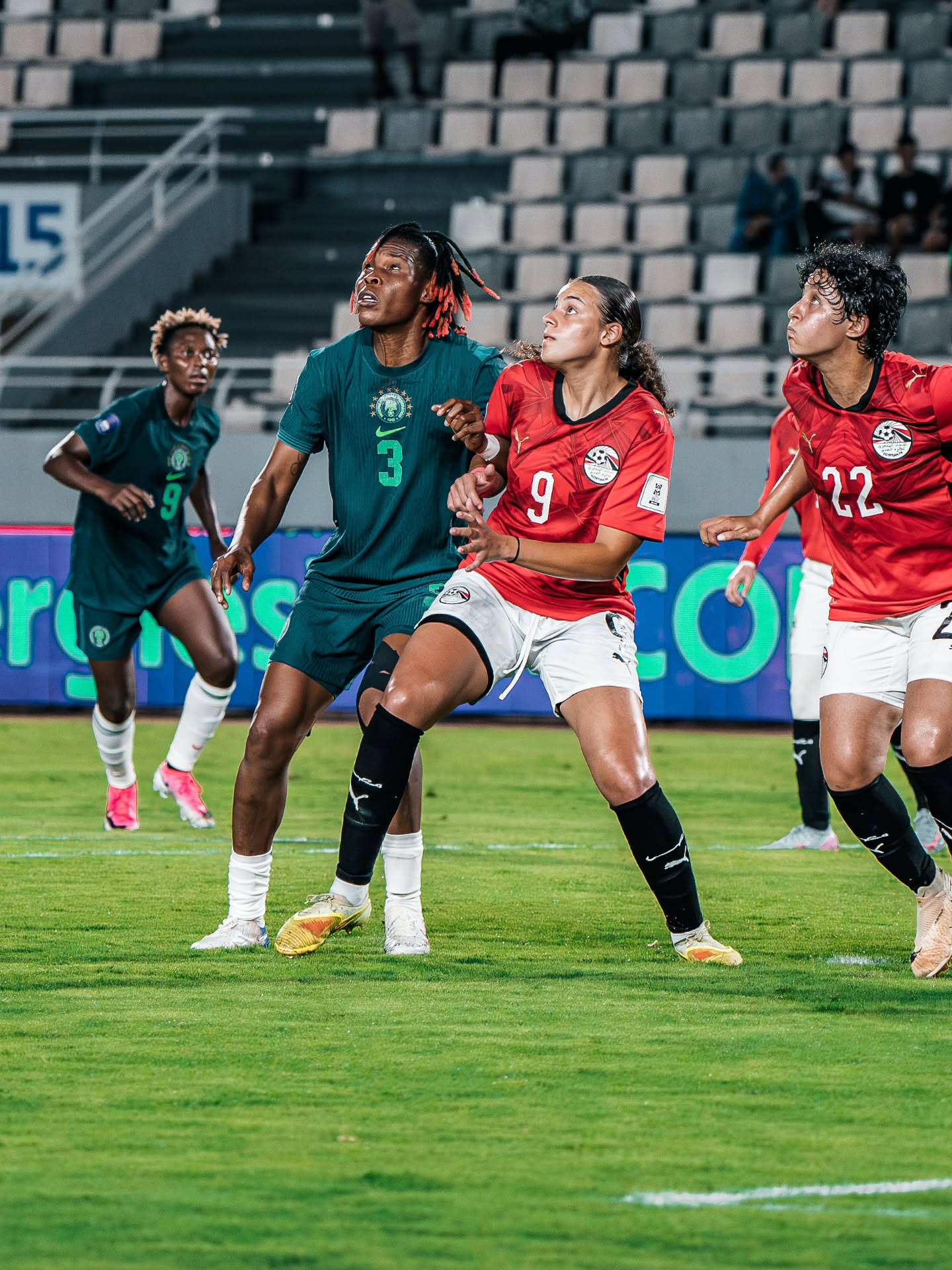
Ohale’s retirement presents both a challenge and an opportunity for the technical crew of the Super Falcons. Tactically, replacing a player with 16 years of accumulated experience, leadership qualities, and institutional knowledge is an arduous task. Her vocal presence on the pitch, ability to organize a defensive line under immense pressure, and composure in high-stakes moments have been foundational to Nigeria’s defensive stability for over a decade.
However, her departure also clears the runway for the next generation of central defenders. Players like Tosin Demehin and other emerging talents who spent years absorbing Ohale’s wisdom in training camps must now step into leadership roles. The transition will require patience from the Nigerian faithful as the technical staff constructs a new defensive partnership capable of maintaining the high standards set by Ohale and her contemporaries.
Ultimately, Osinachi Ohale leaves the international game with her head held high, having authored one of the most remarkable and decorated careers in the history of African women’s football. As she focuses the remainder of her playing days on club success with Pachuca in Mexico, her footprint on Nigerian football remains indelible—a standard-bearer of excellence, grit, and undying patriotism whose influence will inspire generations of African girls to lace up their boots and dream of the green and white.