The idyllic town of Ikogosi in Ekiti State, renowned globally for its unique confluence of warm and cold springs, has long been a crown jewel of Nigeria’s domestic tourism sector. Yet, for decades, the economic potential of this natural wonder remained largely underutilized, serving more as a nostalgic weekend getaway than a thriving, self-sustaining economic powerhouse. This narrative is undergoing a radical transformation, spearheaded by visionary leaders, private sector investment, and a renewed commitment to community-driven development.
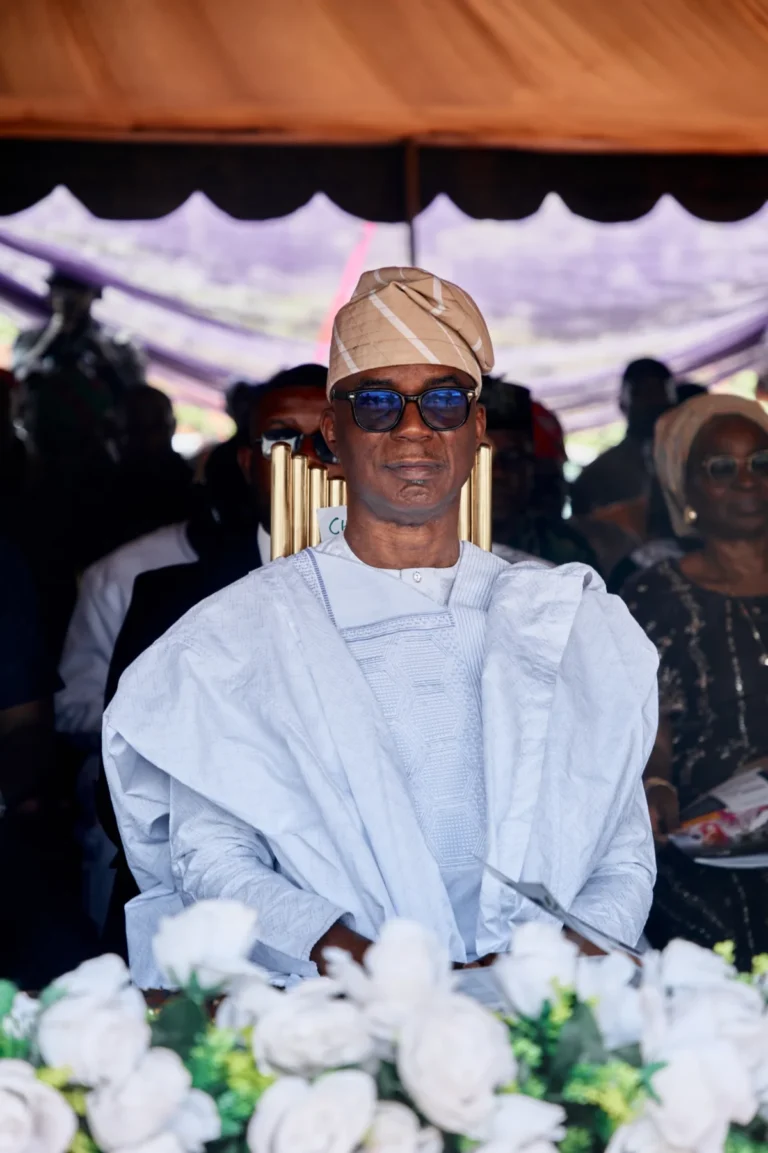
At the recently concluded Ikogosi Day 2026, Thanksgiving, and Launch of the Oba’s Palace Project, held on Saturday, November 14, 2026, Dr. Tunji Olowolafe delivered a compelling masterclass in regional economic transformation. Serving as the Chairman and Chief Launcher of the event—as well as the Chancellor of Ekiti State University—Olowolafe laid out a comprehensive, actionable blueprint for Ikogosi. His vision moves beyond the traditional paradigm of scenic tourism, pivoting aggressively toward intentional enterprise, world-class hospitality training, industrial resource utilization, and deep-rooted heritage preservation.
Reflecting on a personal history deeply intertwined with the town, Dr. Olowolafe recalled his childhood memories. Growing up, his parents made it a mandatory family tradition to travel from Lagos to Are-Ekiti every Christmas, with a compulsory pilgrimage to the Ikogosi warm springs. Decades later, his return to the historic town alongside family, friends, and business partners was driven by a profoundly different motivation. “We are not here to take away,” he declared to a rapt audience of community leaders, dignitaries, and well-wishers, “but to help build something enduring in Ekiti.”
Moving Beyond Sightseeing: The Blueprint for Extended Hospitality and Lifestyle Tourism
The core of Dr. Olowolafe’s economic thesis for Ikogosi centers on extending the average visitor’s stay. Historically, tourists have treated Ikogosi as a day-trip destination—arriving in the morning, viewing the confluence of the springs, and departing by evening. This pattern leaves minimal economic impact on the local community, as short-term visitors contribute little to local accommodation, dining, or retail businesses.
To dismantle this cycle, Dr. Olowolafe argued that Ikogosi must offer compelling, multi-faceted reasons for travelers to arrive, check in, stay longer, and spend across a broad spectrum of local enterprises. He highlighted the recent success of the inaugural Ikogosi 17.5km Race as a prime example of this strategy in action. The athletic competition successfully attracted elite and amateur runners from across Nigeria, alongside international participants from Ghana, Kenya, and Ethiopia. By combining sporting events with local hospitality, the town demonstrated its capacity to host large-scale, multi-day gatherings.
Building on this momentum, Olowolafe urged local stakeholders and investors to capture the lucrative lifestyle and executive tourism market. His ambition is to position Ikogosi as West Africa’s premier international destination for destination weddings, milestone birthdays, high-level corporate retreats, and landmark cultural gatherings.
“Our natural landscape will draw people in,” Olowolafe observed during his keynote address. “But only the quality of the experience we deliver, through warmth of welcome, impeccable service, and attention to detail, will bring them back.”
Elevating Standards: Bridging Academia and the Hospitality Industry
Recognizing that world-class tourism cannot exist without a matching service culture, Dr. Olowolafe proposed a structural overhaul of how hospitality personnel are trained in the region. He called for an aggressive, deeply integrated partnership between the iconic Ikogosi Resort and the Hospitality Management Technology Department of the Federal Polytechnic, Ado-Ekiti.
This academic department has already made significant strides, having successfully produced two sets of National Diploma graduates equipped with foundational knowledge. However, Olowolafe’s proposal takes education a step further by advocating for a dual-training model. Under this framework, students would train side-by-side with seasoned industry professionals while actively serving real guests at the resort. This hands-on immersion ensures that graduates transition seamlessly from the classroom to the workforce, possessing both theoretical grounding and practical, high-pressure operational experience.
Furthermore, to ensure that Ekiti’s service standards can compete on the global stage, Olowolafe proposed strategic alliances and institutional linkages with leading international hospitality institutes. By benchmarking local teaching methodologies and service delivery against international gold standards, the state can systematically transform world-class hospitality into its definitive socioeconomic signature.
Unlocking Industrial Potential: Scientific Exploration of Mineral Deposits
While tourism forms the glamorous surface of Ikogosi’s economic renaissance, Dr. Olowolafe emphasized that true, resilient prosperity must also draw from the literal foundations of the earth. The region is rich in mineral resources, yet historical exploitation has often been rudimentary, yielding low economic returns for the local population.
Addressing the commercialization of natural assets, Olowolafe adopted a rigorous, analytical tone. “It is not enough to say we have clay or kaolin,” he stated, challenging the traditional, passive approach to mineral wealth. “We must ask: What are their exact industrial specifications? What can we competitively manufacture? And who is ready to buy?”
To answer these critical market questions, Olowolafe officially tasked the Department of Geology at Ekiti State University, under the leadership of Professor Yinka Aturamu. The department has been mandated to establish precise, scientifically validated data on local mineral deposits. Beyond mere geological mapping, the directive requires researchers to outline the commercial pathways necessary to transform raw clay, kaolin, and other resources into viable, market-ready industrial enterprises.
For Olowolafe, macroeconomic metrics and industrial blueprints are ultimately means to an end, with success measured by tangible changes in the daily lives of everyday citizens. “For a young person growing up in Ikogosi,” he noted, “the result must be tangible: a marketable skill, a steady job, a supply contract, or a thriving enterprise.”
Private Sector Catalysts: The Saroafrica Group and Landmark Investments
Economic theories and developmental blueprints require formidable private-sector execution to materialize. In Ikogosi, this realization is already manifesting through substantial corporate investments, serving as concrete proof of the town’s viability as an industrial and commercial hub.
Dr. Olowolafe pointed directly to the transformative trajectory of the Saroafrica Group, led by Rasheed Sarumi. The conglomerate’s strategic acquisition of Gossy Warm Springs in 2018 marked a turning point for the local economy. Following the takeover, Saroafrica systematically rehabilitated the industrial plant, returning it to full production capacity by 2019.
Building upon that foundational success, Saroafrica and its consortium of strategic partners are currently executing a massive US$25 million investment to expand manufacturing capabilities in Ikogosi. Notably, this industrial expansion is designed with modern infrastructural realities in mind; the new manufacturing facility will run independently on its own dedicated 2MW gas-fired power plant. This energy autonomy not only shields the enterprise from the perennial vulnerabilities of the national grid but also signals to external investors that Ikogosi is fully equipped for heavy, continuous industrial operations.
Preserving Identity: The Oba’s Palace Project as a Cultural Anchor
Even as industrialization and commercial tourism reshape the geographical landscape of Ikogosi, community leaders remain acutely aware of the necessity to preserve the soul and heritage of the town. Economic progress, without cultural grounding, risks alienating the very people it aims to uplift.
This philosophy underpins the Oba’s Palace Project, which served as a central pillar of the November 14 events. Dr. Olowolafe articulated that the primary purpose of the palace redevelopment is to reinforce the traditional institution, fostering unity and stability within the community. However, he stressed that the architectural and cultural design must also function as a living museum—a space dedicated to preserving and showcasing Ikogosi’s rich history.
“Visitors should meet not merely a scenic resort,” Olowolafe explained, “but a proud people with a rich story to tell.”
As the Chief Launcher of the project, Dr. Olowolafe formally inaugurated the fundraising campaign, issuing a rallying cry to sons and daughters of Ikogosi both at home and in the diaspora, as well as business leaders and friends of the community. The initiative carries an ambitious financial target exceeding ₦1 billion. Demonstrating immediate confidence in the vision, momentum had already gathered prior to the formal launch, with more than thirty-five prominent individuals across Lagos and Abuja stepping forward to pledge substantial financial support.
Socioeconomic Implications and the Path Forward
The convergence of initiatives unveiled at Ikogosi Day 2026 points toward a broader analytical conclusion regarding rural-urban economic integration in Nigeria. For decades, secondary towns outside major metropolitan centers like Lagos, Abuja, and Port Harcourt have suffered from brain drain, capital flight, and economic stagnation.
The strategy being deployed in Ikogosi—championed by figures like Dr. Olowolafe and supported by industrial actors like Saroafrica—offers a replicable model for localized economic development. By integrating tertiary education with immediate vocational needs, mapping local geology for industrial supply chains, upgrading infrastructure through private energy investments, and anchoring development in cultural preservation, Ikogosi is constructing a diversified economic ecosystem.
If successfully executed, this model will mitigate the reliance on federal allocations, create sustainable employment opportunities for youth, and establish Ekiti State as an unassailable benchmark for rural industrialization and premium tourism in West Africa.
Dr. Olowolafe concluded his address by bringing the narrative full circle, returning to the emotional resonance of his childhood memories. “I enjoyed Ikogosi as a young boy,” he reflected. “It will give me infinitely greater joy to see today’s children grow up knowing they can build a prosperous future right here at home.”
With a clear roadmap, institutional backing, and substantial private capital now flowing into the heart of Ekiti State, that childhood dream of enduring prosperity is rapidly crystallizing into an economic reality.