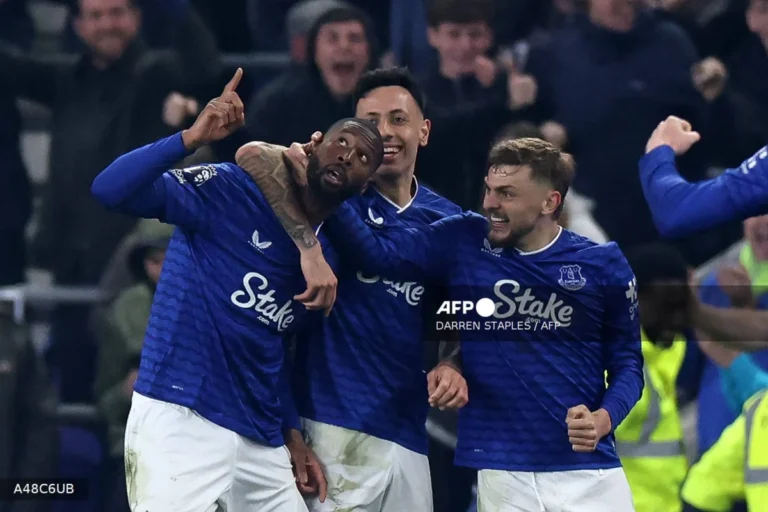
The Hill Dickinson Stadium played host to a commanding display of domestic cup football on Thursday evening, as Everton cruised to a comfortable 3-1 victory over Newcastle United to book their place in the quarter-finals of the League Cup. David Moyes’ side put aside recent domestic inconsistencies to deliver a thoroughly professional performance, punctuated by goals from James Garner, Hayden Hackney, and Thierno Barry. A late header from Newcastle’s Dan Burn proved to be nothing more than a consolation, leaving the Magpies to ponder a frustrating evening on Merseyside.
With this victory, the Toffees successfully halted a three-match winless run and moved one step closer to ending a decades-long domestic trophy drought. Everton will now travel to face fourth-tier giant-killers Fleetwood Town during the week commencing December 14, with a coveted spot in the semi-finals at stake. Meanwhile, Matthias Jaissle’s Newcastle side will be forced to lick their wounds quickly, as the two teams prepare to lock horns once again in the Premier League at St James’ Park on Monday.
A Dominant Display on Merseyside
The fixture carried significant weight for both clubs as they navigated a congested mid-season schedule. Everton entered the match under a cloud of minor off-field drama following the club’s pre-match announcement that winger Jack Grealish was unavailable for selection due to a breach of club discipline. Media reports indicated that the on-loan Manchester City player had taken an unauthorized absence from training, drawing sharp criticism regarding his off-pitch conduct. However, the absence of the England international did little to disrupt the home side’s tactical rhythm.
Newcastle began the contest with aggressive intent, probing the Everton defense early on. Midfielder Joe Willock tested England international Jordan Pickford with a sharp low drive that was expertly palmed away by the veteran goalkeeper. Moments later, Fabian Schar unleashed a trademark long-range effort that Pickford dealt with comfortably, neutralizing the visitors’ early momentum.
As the first half progressed, Everton began to assert control through disciplined midfield pressing and swift transitions. The deadlock was broken in the 34th minute when Hayden Hackney orchestrated a clever build-up, teeing up James Garner just inside the penalty area. Garner showed great composure, stretching to guide a precise, clinical finish into the far corner of the net. The goal, Garner’s first since January, provided a palpable sense of relief for the home faithful and shifted the psychological advantage firmly toward the Toffees.
Just as the first half drew to a close, Everton struck a devastating psychological blow. A blistering counter-attack caught the Newcastle defense completely out of position. Thierno Barry surged down the flank before curling a teasing cross into the six-yard box. Hackney, timing his late run to perfection, met the cross cleanly, volleying past a helpless Lukas Hornicek to double Everton’s advantage right on the stroke of halftime.
Tactical Shifts and Second-Half Control
Recognizing the defensive frailties exposed during the opening 45 minutes, Newcastle manager Matthias Jaissle made a triple substitution at the interval, introducing Joelinton, Anthony Elanga, and Yoane Wissa in an aggressive bid to alter the tactical landscape.
The changes almost yielded an immediate dividend. Wissa capitalized on a swift through-ball from Willock, sprinting into space behind the Everton backline. However, misjudging the high bounce of the ball on the turf, the forward could only direct a weak header straight into the grateful arms of Pickford.

That missed opportunity proved exceptionally costly for the visitors. In the 69th minute, Everton effectively extinguished any hopes of a Newcastle comeback. Midfielder Kiernan Dewsbury-Hall delivered an inviting cross into the danger zone, where Barry was waiting to lash the ball home from close range. The strike marked Barry’s seventh goal of the season, underlining his growing importance to Moyes’ attacking schemes.
Newcastle refused to surrender entirely and found a late response in the 88th minute. Willock turned provider once more, floating an accurate cross toward the back post where towering defender Dan Burn rose highest to head home. The goal sparked a brief melee between frustrated players from both sides, highlighting the high-stakes competitive tension inherent in late-stage cup football. Despite the commotion, Newcastle’s late surge arrived far too late to alter the outcome, leaving the final score at 3-1 and sending the home supporters into raptures.
Historical Context and the Road to Wembley
For Everton supporters, the pursuit of domestic silverware remains an obsessive ambition. The club has notoriously never won the League Cup, having suffered defeats in their only two final appearances in 1977 and 1984. Furthermore, the club’s wider trophy drought is a frequent point of discussion among the fanbase; it has now been 31 years since Everton last lifted a major piece of silverware, claiming the FA Cup in 1995.
Among the notable faces in the stands cheering on Moyes’ men was British Prime Minister Andy Burnham, a lifelong Everton supporter old enough to vividly remember the club’s 1995 triumph. His presence underscored the cultural and civic significance of the club’s ongoing cup run to the local community in Liverpool.
The quarter-final draw has presented Everton with a fascinating and historic fixture against Fleetwood Town. The League Two side, affectionately known as the "Cod Army," manufactured one of the most astonishing upsets in the history of the League Cup just days prior. Fleetwood stunned reigning Premier League champions Arsenal, advancing via a dramatic penalty shoot-out following a 1-1 draw at Highbury Stadium. Consequently, Everton will travel to the Fylde coast fully aware that complacency could prove fatal to their ambitions of reaching a first League Cup final in over four decades.
Implications for the Premier League and Beyond
The immediate aftermath of this fixture leaves both managers with contrasting logistical and psychological challenges. For David Moyes, the performance demonstrated tactical resilience and squad depth, particularly in how seamlessly the team adapted without the suspended Grealish. The ability of players like Garner, Hackney, and Barry to step up under pressure validates the club’s recruitment strategy and squad management over recent transfer windows.
Conversely, Matthias Jaissle faces an urgent defensive assessment ahead of a quickfire rematch. Conceding three goals while displaying structural vulnerabilities in transition will be a chief concern for the Newcastle coaching staff. With the two sides scheduled to meet again in league action at St James’ Park on Monday, tactical adjustments will be paramount. Newcastle will view the upcoming fixture not only as an opportunity to secure crucial three points in the league standings, but as an immediate avenue for athletic redemption.
As the festive period approaches, the demands of the domestic calendar will intensify. For Everton, maintaining momentum across multiple competitions will test the physical limits of a squad striving to transition from mid-table contenders to genuine trophy challengers. The upcoming quarter-final against Fleetwood represents an unprecedented opportunity, but the immediate focus remains firmly fixed on the tactical battle awaiting them in the North East.